27Aug

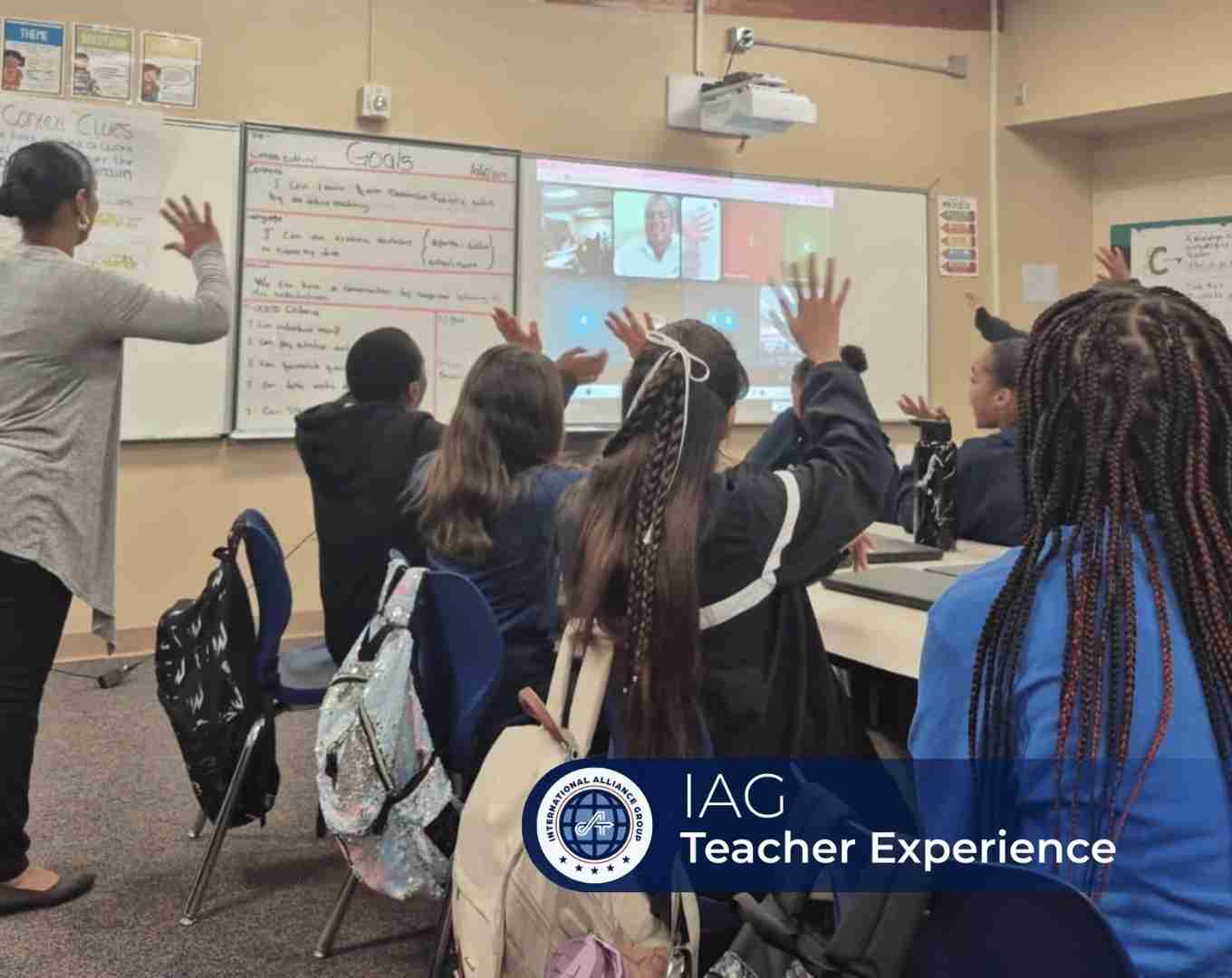
IAG Teacher Jessebel Teves-Keil Receives Glendale Teacher of the Year Recognition

A meaningful cultural exchange can create an impact that reaches far beyond one classroom—or even one country.

For Jessebel Teves-Keil, an English teacher from the Philippines, her experience through the BridgeUSA J-1 Teacher Exchange Program became a journey of teaching, cultural connection, professional growth, and ultimately, educational leadership.

During her time at William C. Jack School in Arizona, Jessebel built meaningful relationships with students, families, colleagues, and school leaders. Her dedication was recognized in April 2025 when she received Glendale Elementary School District’s Teacher of the Year – James Philip Lively Inspirational Award during the district’s annual Celebration of Excellence.

Today, her journey continues thousands of miles away in New Zealand, where the lessons and practices she gained during her U.S. cultural exchange experience continue to influence her work as an educator.

Celebrating Excellence at William C. Jack School

Jessebel participated in the BridgeUSA J-1 Teacher Exchange Program at Glendale Elementary School District in Arizona from August 2022 through December 2025.

Throughout her exchange, she became more than an educator in the classroom. She developed strong relationships throughout her school community and created opportunities for students to learn about a culture beyond their own.

Her dedication to education and her school community culminated in an important recognition in April 2025: the Teacher of the Year – James Philip Lively Inspirational Award.

For IAG, Jessebel’s recognition represents exactly the kind of impact worth celebrating—not simply because of the award itself, but because of the relationships, learning, and cultural connections behind it.

Bringing the Philippines Into the Classroom

Cultural exchange was an intentional part of Jessebel’s teaching experience.

As an educator from the Philippines, she created opportunities for her U.S. students to learn about her home country through classroom presentations about Filipino culture.

But she took that exchange one step further.

Jessebel developed a pen-pal project connecting students in the United States and the Philippines. Through their conversations, students were able to compare their cultures, schools, traditions, and everyday lives.

Instead of learning about another country only through a textbook, students had the opportunity to connect directly with young people living there.

That is cultural exchange in action: creating authentic opportunities for students to become curious about one another, recognize their differences, discover what they have in common, and develop a broader understanding of the world.

When the Exchange Continues Beyond the U.S.

Jessebel’s BridgeUSA experience eventually came to an end, but the impact of that experience did not.

Today, Jessebel teaches in New Zealand, where she has incorporated instructional practices developed during her time in the United States into her new educational environment.

Her experience in Arizona introduced and strengthened practices involving learning objectives, student data tracking, positive behavior supports, classroom routines, and the gradual-release instructional model. Rather than leaving those lessons behind when she departed the United States, Jessebel carried them forward.

This is an important part of the BridgeUSA Teacher Program story.

International educators don’t only bring their own culture and educational perspectives into U.S. classrooms. They can also return—or move forward—to other educational communities with new knowledge, methodologies, relationships, and perspectives gained during their exchange.

The result is an exchange whose influence can continue traveling long after the original experience ends.

From International Teacher to Educational Leader

Perhaps one of the strongest examples of Jessebel’s continued professional growth can be seen in what happened after she arrived in New Zealand.

Within her first five months, Jessebel was appointed to two leadership roles: sports coordinator and English department team leader.

Her progression from an international teacher in Arizona to an educator taking on leadership responsibilities in another country illustrates the long-term professional impact cultural exchange can have.

The knowledge teachers gain during an exchange can become something they share with new colleagues and students elsewhere. New instructional approaches can be adapted to different educational systems. Experiences working across cultures can strengthen communication and leadership skills.

In Jessebel’s case, an experience that began with a journey from the Philippines to Arizona continues today in another part of the world.

Cultural Exchange Creates a Ripple Effect

Jessebel’s story beautifully illustrates why the BridgeUSA J-1 Teacher Exchange Program is about much more than teaching in the United States.

What began with bringing Filipino culture into an Arizona classroom grew into meaningful connections between students in the United States and the Philippines. Along the way, the exchange also became an opportunity to discover new educational practices, develop professionally, and gain experiences that would continue shaping her journey as an educator.

Today, those lessons have traveled with Jessebel to New Zealand, where they continue to influence her classroom and her growing role as an educational leader.

One teacher. Three countries. And an impact that continues to grow.

That ripple effect is one of the most meaningful outcomes of international teacher cultural exchange.

Celebrating Jessebel Teves-Keil

At IAG, we are proud to celebrate Jessebel not only for receiving the Teacher of the Year – James Philip Lively Inspirational Award, but for everything that recognition represents.

Her journey demonstrates what can happen when an educator approaches cultural exchange with curiosity, commitment, and a willingness to both share and learn.

From the Philippines to Arizona and now New Zealand, Jessebel continues to build connections, share knowledge, and grow as an educator and leader.

Congratulations, Jessebel, on this well-deserved recognition—and on the impact you continue to make around the world.

Discover More IAG Teacher Stories

Every IAG Teacher brings a unique culture, perspective, and experience to their school community—and the impact of those experiences can continue long after the exchange ends.

Discover more stories from IAG Teachers and the communities they have inspired.

Explore IAG Teacher Stories

25Aug

What is it really like to teach in the United States as an international teacher?

For Erika Fuerte, an educator from Ciudad Obregón, Sonora, Mexico, the experience began with excitement, uncertainty, and plenty of questions. Today, Erika lives in Phoenix, Arizona, and teaches at Bicentennial South in Glendale, where her journey has become about much more than adapting to a new classroom. 

It has been an experience of learning, professional growth, collaboration, and discovering just how much impact a teacher can have on the lives of students.  

Through Erika’s story, future international educators can get a closer look at what teaching in a U.S. classroom can really feel like—from the nerves of the first day to finding confidence, building relationships, overcoming challenges, and watching students grow. 

From First-Day Nerves to Feeling Welcome 

Erika still remembers her first day at school. She was nervous and didn’t know exactly what to expect. Entering a different educational environment meant adjusting not only to a new classroom, but also to new colleagues, expectations, resources, and ways of teaching. 

What she remembers most, however, is how welcomed she felt. 

Her colleagues, team leaders, and administrators were willing to help from the beginning. She was also surprised by the amount of resources available to educators, particularly professional development and coaching opportunities throughout the school year.  

That support became an important part of her experience. Instead of feeling like she had to figure everything out on her own, Erika discovered that collaboration and asking questions were part of becoming successful in her new environment. 

What Does a Day in a U.S. Classroom Really Look Like? 

For Erika, teaching kindergarten means that no two moments are exactly the same. 

Her mornings begin before her students arrive. She likes to get to school early so she can prepare the classroom, turn on her computer and projector, organize materials, and have breakfast ready on the tables. When the bell rings, she greets her students at the door before they put away their backpacks and settle into their morning routine.  

From there, the classroom becomes an active learning environment. 

One morning might begin with a reading lesson about the zoo. Instead of simply opening a book, Erika introduces the topic through a morning message such as “Good morning, zoologists.” Students then interact with the message by identifying capital letters, recognizing sight words, answering questions, and coming to the board. 

Those small interactions became meaningful milestones for Erika. Watching a student recognize a new word or confidently participate in an activity showed her that learning was happening right in front of her. 

Throughout the rest of the day, her kindergartners transition between reading, writing, math, specials, independent reading, small-group instruction, lunch, and other activities. Because young students need movement, Erika also uses brain breaks between longer lessons to help keep them active and engaged.  

It’s a busy routine, but it also illustrates something important about teaching in a new educational system: you bring your experience with you, while remaining open to learning new approaches. 

Learning, Adjusting, and Trying Again 

One of Erika’s biggest challenges when she began teaching kindergarten was learning how to structure learning centers effectively. She quickly realized that each center needed to be more than an activity—it needed to have an educational purpose and reinforce what students were currently learning. 

Getting there required patience. 

Erika remembers staying after school to plan and adjust her centers. If something didn’t work one day, she changed it and tried again. The process took days, weeks, and eventually months before she felt that she truly understood how to plan those activities according to her students’ needs.  

That challenge became part of her professional growth. 

Teaching internationally doesn’t mean arriving with every answer. It means being willing to observe, adapt, learn from others, and continue improving. 

One of the Biggest Differences: Resources and Collaboration 

When Erika compares her teaching experience in Mexico with teaching in the United States, one of the differences she highlights most is the availability of resources and support. 

That support doesn’t come from just one person. Erika describes being able to learn from coaches, team leaders, administrators, and fellow educators—even teachers outside her own grade level. 

If another teacher has an idea that works well, Erika can learn from it and then adapt it for her own kindergarten classroom. That exchange of knowledge has become one of her favorite parts of her experience. 

In many ways, this is also cultural exchange happening at a professional level. International teachers bring their own educational experiences and perspectives into U.S. schools while simultaneously learning from the educators around them. 

Knowledge moves in both directions. 

If Erika could emphasize one lesson from her experience, it would be surprisingly simple: Ask questions. 

She admits that teachers can sometimes hesitate to ask for help because they don’t want others to think they don’t know something. Her experience taught her the opposite. Asking questions became one of the ways she learned, adapted, and became more confident. 

Erika describes receiving coaching through both her program and her school. She recommends taking advantage of those resources, talking to colleagues, keeping a notebook if necessary, and writing down questions as they arise.  

Her message to other educators is important because international teaching requires openness. Experience matters, but so does the willingness to keep learning. 

The Moments That Made Everything Worth It 

When Erika talks about what has made her proudest, she doesn’t immediately mention her own accomplishments. 

She talks about her students. 

Seeing how much they grew between the beginning and end of the school year—particularly the children who initially struggled—became one of the most rewarding parts of her experience.  

But sometimes the impact showed up in much smaller and more unexpected ways. 

Students told Erika they wanted to dress like her or be like her when they grew up. One parent even told her that their child wanted the same air freshener Erika used because they loved the way her classroom smelled. 

It sounds like a tiny detail. For Erika, it represented something much bigger. 

Her students were paying attention not only to what she taught, but to the environment she created and the person she was in their classroom. 

And that helped her realize the influence an educator can have. 

Growing as a Teacher—and as a Person 

Looking back, Erika sees a very different educator from the one who first arrived in the United States. 

She has learned new methodologies, developed her classroom management and planning skills, collaborated with educators from different backgrounds, and become more confident navigating a different educational environment. 

But she also describes the transformation as personal. 

When reflecting on how much she knew when she first arrived compared with what she knows today, Erika says she can see enormous growth. She credits both the program and her school with contributing to that development.  

That is one of the most valuable dimensions of cultural exchange: educators arrive ready to share what they know, but the experience also gives them opportunities to discover new perspectives and continue evolving themselves. 

What Erika Wishes She Had Known Before Arriving 

At the end of her conversation with IAG, Erika was asked what she wishes she had known before beginning her experience. 

Her answer wasn’t about lesson plans, paperwork, or moving to another country. 

It was about impact. 

She wishes she had known how much of an impact she would have on her students. 

There were difficult moments. There were things she had to learn. And there were times when she had to keep adjusting until everything began to make sense. But looking back, she describes the experience as truly amazing. 

And if she had the opportunity to do it all over again? 

She would. Without a doubt.  

More Than Teaching in the United States 

Erika’s experience shows why international teaching is about much more than entering a classroom in another country. 

It is an opportunity to bring your culture, knowledge, and experience into a new community while also allowing that community to teach you something in return. 

For Erika, that has meant learning from colleagues, discovering new teaching approaches, becoming more confident, watching her students grow, and understanding the influence she can have as an educator. 

That is what meaningful cultural exchange can look like in real life: teachers sharing what they bring while remaining open to everything they can learn along the way. 

Ready to Explore Your Own Cultural Exchange Journey? 

If Erika’s story has you wondering what your own experience as an international teacher could look like, you can begin by learning more about the J-1 Teacher Cultural Exchange Program and the requirements for participating through IAG (link a blog requirements) 

At IAG, we’re looking for educators who are ready not only to teach, but to learn, share their culture, grow professionally, and create meaningful connections with their students and communities. 

Your international teacher story could be the next one we share. 

Watch Erika’s Teacher Experience:

Frequently Asked Questions About Teaching in the U.S. as an International Teacher 

What is it like to teach in a U.S. classroom as an international teacher? 

Every school and teacher experience is different. In Erika’s experience, adapting involved learning new classroom practices, working with new educational resources, collaborating with colleagues, receiving coaching, and becoming comfortable asking questions when she needed support.  

What is the J-1 Teacher Cultural Exchange Program? 

The J-1 Teacher Cultural Exchange Program gives qualified international educators the opportunity to teach in U.S. schools while participating in a cultural exchange experience. Teachers share their culture and perspectives with students and their school communities while gaining exposure to the U.S. educational system. 

Is teaching in the U.S. different from teaching in my home country? 

Yes, there can be differences in classroom routines, curriculum, teaching methodologies, school expectations, available resources, and student needs. Part of the cultural exchange experience is learning how to adapt your existing teaching experience to a new educational environment. 

Do international teachers receive support while teaching in the U.S.? 

Yes. At IAG, support begins before teachers arrive in the U.S. and continues throughout their cultural exchange experience. From guidance and preparation before arrival to ongoing support once teachers are in their schools and communities, IAG is there throughout the journey. 

During the program, teachers can also receive support from their schools, including administrators, instructional coaches, team leaders, and fellow educators. As Erika shared from her own experience, having access to coaching, asking questions, and knowing there are people available to guide you can make an important difference when adapting to a new educational environment.  

Do I need teaching experience to participate in the J-1 Teacher Program? 

Yes. Teachers participating through IAG must have at least two years of teaching experience and meet the other eligibility requirements of the J-1 Teacher Cultural Exchange Program. 

What English level do I need to teach in the U.S. through IAG? 

A minimum B2 level of English is required. International teachers need to be able to communicate effectively with students, colleagues, administrators, and members of their school community. 

Can international teaching help me grow professionally? 

Yes. An international teaching experience can expose educators to different teaching methodologies, classroom practices, professional development opportunities, and collaboration with educators from different backgrounds. As Erika’s story demonstrates, the experience can contribute to both professional and personal growth. 

What qualities can help an international teacher adapt successfully? 

Being open-minded, adaptable, curious, collaborative, and willing to ask questions can make a significant difference. International teaching is not about arriving with all the answers—it is also about being willing to learn, share, and grow throughout the cultural exchange experience. 

24Mar

Rhythms of Success: Eliderky Sanchez’s Cultural Exchange Journey in Arizona 

For Eliderky Sanchez Mercedes, the classroom is a space where language, culture, and academic excellence converge. Originally from the Dominican Republic, Eliderky has brought over a decade of expertise to Littleton Elementary District in Arizona, where she inspires 6th-grade students in English Language Arts (ELA). 

A Foundation of Academic Mastery 

Eliderky arrived in the U.S. with a profound academic background, including a Master’s Degree in Applied Linguistics for Teaching English as a Foreign Language. With 12 years of teaching experience in her home country and certifications from institutions like Cambridge University and the National Writing Project, she represents the high caliber of international educators participating in this exchange. 

Her motivation for joining the IAG program was rooted in a passion for continuous learning and a desire to immerse herself in a multicultural environment where she could exchange innovative instructional strategies. 

Bringing the Spirit of the Caribbean  

Eliderky has transformed her Arizona classroom into a vibrant hub of cultural awareness. By sharing the traditions of the Dominican Republic, she has fostered a deeper global understanding among her students and colleagues: 

  • Music and Dance: She introduced her school community to the rhythmic heritage of merengue and bachata. 
  • Culinary History: Discussions about traditional dishes like mangú and sancocho sparked meaningful conversations about history and culture. 
  • Festivals: She organized interactive activities centered around Dominican Independence Day and Carnival. 

In return, Eliderky has embraced the unique cultural tapestry of Arizona, exploring Native American art and the vibrant Mexican influences found in local food and community events. 

Award-Winning Impact and Academic Growth 

The results of this cultural exchange are reflected in the outstanding achievements of her students. Under Eliderky’s guidance, her 6th-grade ELA students achieved first place in the district on the state assessment. This incredible success earned her the prestigious “Best 6th Grade Achievement of the Year” award in her district. 

Administrators and families have praised her dedication, noting her ability to foster effective academic conversations and create a supportive, high-achieving environment. 

Innovative Strategies for the Classroom 

By integrating successful methods from the Dominican Republic, Eliderky has enriched the American learning experience: 

  • Interactive Learning: Using storytelling, music-based lessons, and interactive group activities to make learning dynamic. 
  • Communication Skills: Implementing oral presentations, role-playing, and debates to build student confidence and critical thinking. 
  • Peer Mentoring: Emphasizing collaborative learning where students support one another’s growth. 

“Cultural exchange in education is invaluable for preparing students to thrive in a diverse and interconnected world. It fosters empathy, critical thinking, and global awareness.” — Eliderky Sanchez Mercedes. 

Join the Global Exchange

Every cultural exchange experience creates opportunities for learning, connection, and mutual understanding. Through the Teacher Exchange Program, educators like Eliderky share their culture, exchange ideas, and contribute to globally minded classrooms while growing alongside the communities they serve.

Thank you for following our “Teacher Experiences” series! Stay tuned for more stories of impact and cultural connection. 

24Feb

A Taste of Mexico in the Midwest: How Andrea Inspires Her 2nd Grade Class

For many educators, the call to teach transcends borders. Andrea Primavera Rodriguez Reyes, an experienced teacher from Mexico, is a prime example of how international exchange enriches the lives of students and teachers alike. Currently teaching 2nd Grade at Ypsilanti Community School in Michigan, Andrea has brought her passion for Elementary Dual Immersion to a whole new multicultural setting. 

Bringing a Taste of Mexico to Michigan 

Andrea joined the International Alliance Group (IAG) with a clear mission: to share her culture in a meaningful way while growing as a professional. She has achieved this by turning her classroom into a space for cultural discovery. 

To celebrate Mexican Independence Day, she introduced her students to: 


    • The History of “El Grito de Dolores”: Sharing the story of Miguel Hidalgo y Costilla. 


    • Hands-on Activities: Students created Mexican flags and engaged with traditional music and visuals. 


    • Cultural Curiosity: These lessons fostered a deeper sense of empathy and respect for traditions beyond the students’ own borders. 

Innovative Strategies for Student Success 

Andrea’s academic background in Early Childhood Education from Benemérita Escuela Normal Estatal has shaped her student-centered teaching approach. Through the Teacher Exchange Program, she has shared several successful educational practices from Mexico that have positively supported her second-grade students.


    1. Class Chants & Routines: Using rhythmic chants helps students transition smoothly between activities and remain focused. 


    1. Outdoor Exploration: She incorporates nature into her lessons, allowing for hands-on learning experiences. 


    1. Student-Centered Learning: By incorporating students’ personal interests into her lessons, she makes learning more engaging and relevant. 

The results speak for themselves. Andrea has noticed significant progress in her students’ behavior and cooperation. Families and administrators have also praised her dedication to her students’ emotional well-being and the caring environment she has built. 

Looking Toward the Future 

As she continues her journey, Andrea remains focused on becoming a more adaptable and confident educator in diverse environments. Her message to school leaders is simple: cultural exchange is an invaluable tool that strengthens a district’s commitment to innovation and inclusivity. 

“Cultural exchange fosters curiosity, empathy, and respect among students, while also encouraging collaboration and professional growth among teachers.” 

Growth and Global Impact 

For Andrea, this journey is about more than just a single school year; it is a long-term commitment to professional and personal evolution. Her primary goals for her time in the U.S. include strengthening her classroom management skills and gaining a much deeper understanding of diverse educational approaches. By fully immersing herself in the local culture and building meaningful connections with both colleagues and students, she aims to become a more adaptable and confident educator. 

Ultimately, Andrea feels a deep sense of gratitude for the chance to share her heritage while developing new skills that she can eventually bring back to benefit students and colleagues in Mexico. Her journey with IAG illustrates the profound impact that international teachers have on their school districts—fostering curiosity, empathy, and a more inclusive environment for the next generation of global citizens. 

Inspired by Andrea’s journey? Through the Teacher Exchange Program, educators can share their culture, learn from new perspectives, and build meaningful connections with students and school communities in the United States. Discover how you can take part in an educational and cultural exchange that promotes mutual understanding and enriches classrooms across cultures.

23Feb

Bringing Your Culture to Life: A Guide for J-1 Exchange Teachers 

The true heart of the BridgeUSA program is the role of the Cultural Ambassador. As an international educator with International Alliance Group, you are more than a teacher; you are a living window into another world. Your mission is to weave your cultural heritage into the daily fabric of the U.S. curriculum, fostering a spirit of global citizenship. 

Wisdom from the Heart: Real Exchange Stories 

Our educators are already transforming U.S. classrooms by bringing the “soul” of their home countries into their daily interactions. When you join this exchange, you bring unique models of community and creativity that resonate far beyond the chalkboard: 

The Spirit of Bayanihan with Jeanie Mae Hernal 

Jeanie Mae, a Physics and Astronomy teacher in Colorado, brought a powerful Filipino concept to her classroom: Bayanihan. In the Philippines, this represents community unity—the spirit of neighbors coming together to achieve a common goal. By introducing the “Classroom Bayanihan” model, Jeanie Mae transformed her students from individualistic learners into resilient teammates. She openly shares her heritage, from values like pag-aaruga (nurturing) to sharing traditional foods like lumpia and pancit, sparking a “global curiosity” that makes her students wonder how problems are solved in other parts of the world. 

The Power of Narrative with Krizel Abat 

Krizel has shown that storytelling is a universal bridge that connects hearts. By sharing personal stories and cultural legends, she doesn’t just teach a lesson; she transforms the very atmosphere of the room. Her narratives help students develop deep empathy, allowing them to see the world through her eyes while finding the common threads that unite our shared human experience. 

Confidence Through Lyrics with Azenith Torda

Azenith, a Kindergarten teacher in Missouri, uses the power of song to bridge cultures. In the Philippines, education relies heavily on stories and group activities, and Azenith has seamlessly integrated these into her U.S. classroom. She shares that seeing her students’ faces light up while learning traditional Filipino lyrics is unforgettable. Through music, her young learners have become more confident, asking questions without hesitation and celebrating diversity from an early age. 

Practical Ways to Share Your Heritage: A Multi-Sensory Approach 

Integration doesn’t always require a grand event; it is most powerful when it becomes a natural, daily thread woven into the learning experience. As a Cultural Ambassador with IAG, you can transform your classroom into a global laboratory by engaging students’ curiosity through diverse activities: 

Cross-Cultural Math and Science 

Bring a global perspective to the “hard sciences” by highlighting the global contributions to human knowledge. 


    • The Global Lab: Share how mathematicians or scientists from your home country contributed to universal theories. 


    • Ecosystem Exchange: Use the unique geography, flora, and fauna of your region to illustrate environmental science or biology lessons, turning a standard chapter into a virtual field trip across the world. 

Language, Literature, and Oral Traditions

Introduce students to the sounds and stories that shaped your own childhood. 


    • The Storyteller’s Corner: Share poems and folk tales that resonate with universal themes of growth and humanity. These stories help students realize that while our languages may differ, our fundamental values and dreams are often identical. 


    • Word of the Day: Introduce simple greetings or idiomatic expressions from your native tongue, fostering a playful and respectful curiosity about linguistics. 

Gastronomy and the “Global Kitchen”

When we say food reaches the “heart and mind,” we are talking about how a traditional dish serves as a sensory history lesson. It’s the most accessible form of storytelling.


    • Flavor Diplomacy: While following school safety guidelines, you can share recipes or host “tasting moments.” As Jeanie Mae Hernal does with lumpia and pancit, food can be a starting point for discussions on history, agriculture, and the importance of family meals in your culture. 

Traditional Games and Play 

Play is a universal language that breaks down barriers instantly. Whether it’s a strategy board game, a street game, or a sport, the objective creates a shared reality.


    • Recess Revolution: Teach your students the games you played at their age. Whether it’s a strategy board game, a traditional rhythmic jump-rope, or a group coordination game, play fosters the Filipino spirit of pakikisama (getting along) and collective joy. 

Tactile and Auditory Traditions 

Bring your culture into the room through touch and sound to create lasting memories. 


    • Sensory Immersion: Let students feel the texture of traditional fabrics like piña or batik, listen to the unique rhythm of a native instrument, or try their hand at an ancestral art form. These tactile tools help students visualize and respect life in different parts of the world in a way a textbook never could. 

Celebrations and Daily Rituals

Cultural exchange is often found in the smallest gestures. While major holidays offer grand insights into a culture’s significance, daily rituals—like a shared moment of reflection or a traditional greeting—provide the most consistent ‘window’ into a culture’s daily life. 


    • The Calendar of the World: Mark your home country’s holidays on the classroom calendar. Briefly explain their significance or adopt a small daily ritual—like a specific way of greeting or a moment of reflection—that provides a window into your culture’s daily life. 

The Long-Term Benefit of Exchange 

When students interact daily with a teacher from a different background, their world shrinks in the best way possible. They develop cultural intelligence (CQ)—the ability to relate and work effectively across cultures—which is an essential skill for the 21st century. 

For the educator, this process is a journey of self-discovery. Seeing your own culture through the curious eyes of your students often brings a renewed sense of pride and a deeper understanding of your identity as a global professional. 

How to Start Your Cultural Journey 

Whether you are a specialist in Special Education or a passionate general educator, the path to becoming a Cultural Ambassador starts with your registration. At IAG, we are ready to guide you through the preparation of your professional portfolio to ensure your exchange experience is transformative for both you and your future host community. 

Register Today to Begin Your 2026 Exchange Journey!

16Feb

How International Expertise is Redefining U.S. Special Education 

In the world of Special Education (SPED), the language of inclusion is universal, yet its application varies beautifully across different cultures. Participating in a J-1 Teacher Cultural Exchange offers a unique laboratory for professional growth, where educators from around the world bring their diverse perspectives to the U.S. classroom. This collaboration does more than fill a seat; it enriches the lives of students with diverse needs through a globalized approach to learning. 

The Strategic Benefits of International SPED Expertise 

Bringing international Special Education educators into U.S. schools provides a wealth of benefits that extend far beyond the lesson plan: 

  • Diverse Pedagogical Perspectives: International teachers often bring different philosophies of care and intervention. This diversity helps U.S. schools move beyond “standard” protocols, fostering innovation in how they approach individual education plans (IEPs). 
  • Cultural Competency for Students: Students in special education benefit deeply from interacting with mentors from different backgrounds. This exposure helps them develop social-emotional skills and a broader understanding of the world, which is essential for their integration into a globalized society. 
  • Enhanced Language Support: Many international SPED educators are multilingual, providing an invaluable bridge for English Language Learners (ELL) within the special education system. 

The Power of Shared Methodologies 

When a SPED teacher joins the International Alliance Group (IAG) exchange program, they aren’t just entering a new classroom; they are entering a vibrant, two-way dialogue of pedagogical strategies. This exchange allows for a high-level professional synthesis: 

1. Alignment with U.S. Standards  

By blending their home-country intervention techniques with U.S. legal and educational standards, they create a more robust, multi-layered support system for their students. 

2. Assistive Technology Exchange 

The exchange serves as a bridge for technological innovation. Educators learn and share how different technologies—from advanced speech-to-text tools to specialized sensory equipment—are utilized globally to foster independence in students with disabilities. 

3. Empathetic and Inclusive Classroom Design 

International educators often bring cultural nuances of “patience,” “resilience,” and “collectivism” from their home countries. These values help design nurturing environments that prioritize the student’s holistic well-being alongside their academic goals. 

Your Journey as a Cultural Ambassador 

In this exchange, you are so much more than an educator; you are a Cultural Ambassador and a heart-centered bridge between two worlds. While you bring your specialized expertise to advance the field of Special Education, your most profound impact will be the love, patience, and unique cultural perspective you share with every student. 

By choosing this journey, you are doing something truly brave and beautiful: you are weaving your own story into the lives of your students and their families. You aren’t just exchanging teaching methods; you are planting seeds of global understanding and kindness that will stay in their hearts long after the academic cycle ends. 

Your role is to be a guiding light—showing your students that despite our different backgrounds, the language of care and the commitment to their growth is universal. As you share your culture and professional excellence, you also open your heart to be transformed by the community that welcomes you, completing a circle of mutual respect and lifelong connection. 

Ready to contribute your expertise to a global classroom? Start Your Professional Exchange Profile Today!


10Feb

A Legacy of Excellence: The Impact of a Master Teacher in the Bilingual Classroom 

With a PhD in Education and over 24 years of experience in her home country of Honduras , Alma Lizzeth Gómez Guevara is the definition of a lifelong educator. Driven by a desire to expand her international teaching experience and promote cultural exchange, Alma joined the International Alliance Group (IAG) to bring her expertise to the United States. Today, she serves as a 1st Grade Bilingual teacher in the San Antonio Independent School District (SAISD) in Texas. 

Bringing the Heart of Honduras to San Antonio 

For Alma, being a cultural ambassador goes far beyond the curriculum. She has transformed her classroom into a vibrant hub of Honduran heritage by: 


    • Sharing Traditions: Introducing her students and colleagues to Independence Day celebrations, typical dances, and traditional attire. 


    • A Taste of Home: Sharing the stories of iconic Honduran dishes like baleadas and tamales. 


    • Folklore and Legends: Sharing fascinating legends from her hometown to teach values and spark the imagination of her 1st graders. 


    • Global Pedagogy: Integrating music, storytelling, and visual movement—strategies rooted in her Honduran teaching background—to make lessons more engaging for her American students. 

Recognized for Excellence: The TEA Master Teacher 

Alma’s impact has not gone unnoticed. Her dedication to her students’ academic growth and language development led her to be recognized as a TEA Master Teacher in Texas. This prestigious designation reflects the significant progress her students have made in their confidence and problem-solving skills since she joined the district. 

“Cultural exchange in education is an opportunity where everyone benefits—students, teachers, and the entire school community”. 

Looking Toward the Future 

While Alma is currently making a difference in the elementary classroom, her professional journey is far from over. Teaching in the U.S. is an incredible experience full of growth, learning, and cultural exchange that will be forever etched in your heart. 

Check our eligibility criteria today and see how you can change the world as an international educator. 


09Feb

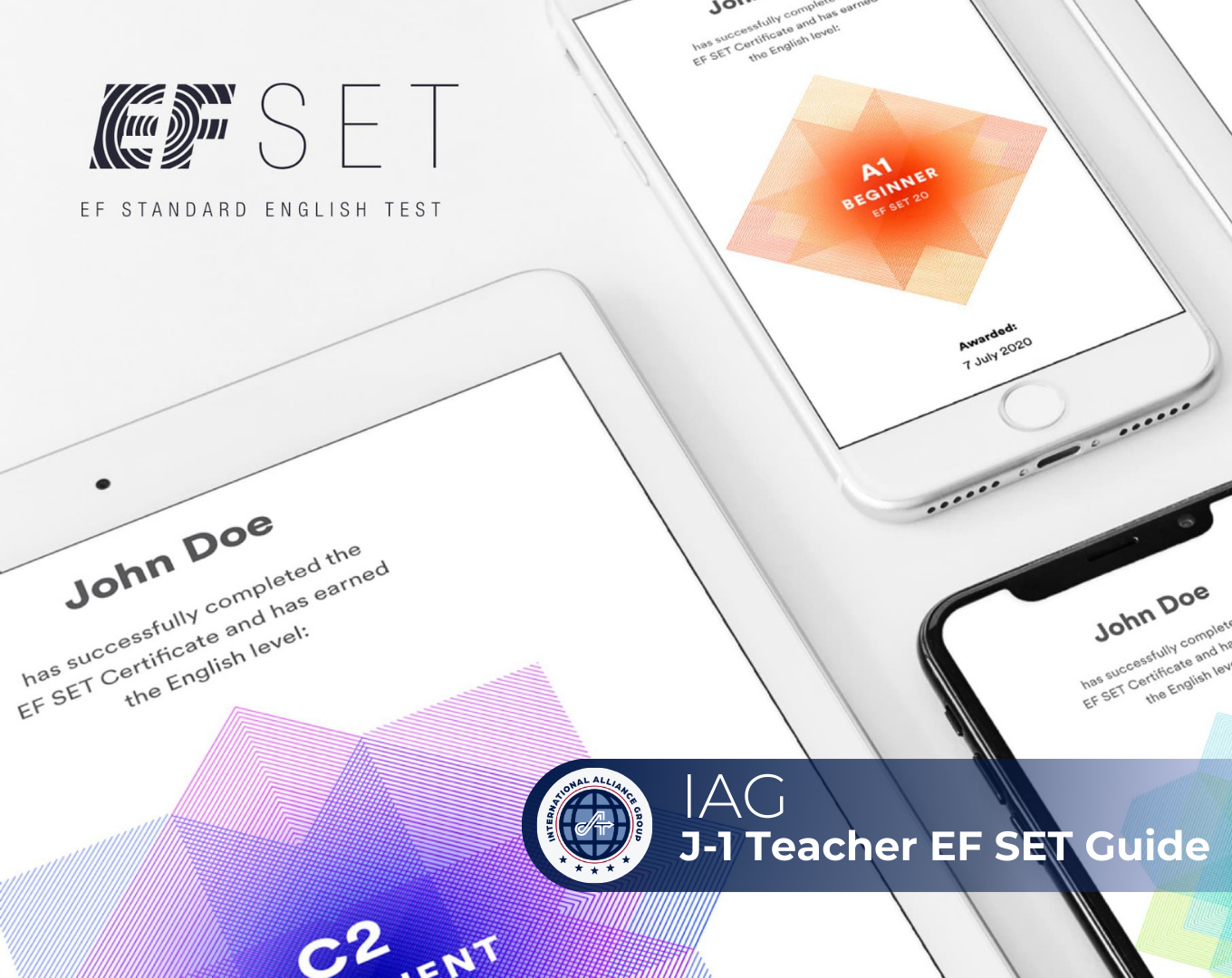
Mastering the EF SET: A Comprehensive Guide for J-1 Teacher Exchange Applicants 

For international educators, proving English proficiency is a pivotal step in participating in the J-1 Teacher Cultural Exchange Program. While there are several assessment options, the EF SET (EF Standard English Test) has become a preferred choice due to its accessibility, professional rigor, and direct alignment with international standards. 

This guide provides official information and links to help you navigate the EF SET process as part of your exchange journey with International Alliance Group (IAG). 

What is the EF SET? 

The EFSET is a standardized English test developed by EF Education First in collaboration with top language assessment experts. It is designed to provide a reliable and professional measure of English proficiency for non-native speakers, making it an ideal tool for educators preparing for a U.S. cultural exchange. 

Key Official Features 

  • 100% Free: There are no costs to take the test or to receive your official certificate. 

  • CEFR Aligned: Scores are mapped directly to the Common European Framework of Reference for Languages (CEFR), from A1 (Beginner) to C2 (Proficient). 

  • Professional Certification: Upon completion, you receive a personalized digital certificate that is recognized globally. 

The 90-Minute 4-Skill Test: Why It’s Required 

While EF SET offers shorter versions, the 90-minute 4-Skill Test is the comprehensive standard for the J-1 Teacher program. This version ensures you have the necessary fluency to lead a classroom and engage in a deep cultural exchange. 

Test Structure and Duration 

  • Reading (20 minutes): Evaluates your ability to understand professional and academic texts. 

  • Listening (20 minutes): Tests your comprehension of spoken English in various accents and educational contexts. 

  • Writing (35 minutes): Assesses your ability to articulate complex ideas clearly in written form. 

  • Speaking (15 minutes): Measures your verbal fluency, pronunciation, and instructional clarity. 

To ensure you are taking the correct version for your IAG application, please use the official links below: 

How to Succeed: Preparation Tips 

Because the EF SET uses adaptive testing technology, the difficulty of the questions changes based on your answers. This ensures your final score is a highly accurate reflection of your true level. 

  1. Check Your Tech: Ensure you have a stable internet connection and functioning speakers/microphone for the listening and speaking portions. 

  1. Choose a Quiet Environment: Since the test is 90 minutes long and includes speaking, find a space where you will not be interrupted. 

  1. No Preparation Needed: The EFSET is designed to measure your current level. However, taking a few minutes to explore the platform ensures that your score truly reflects your skills by eliminating any “technical surprises” on the day of the assessment. 

The Standard for Success 

For a successful application with International Alliance Group (IAG) and for the J-1 visa program, it is essential to demonstrate at least a B2 level (Upper Intermediate). This level ensures you can communicate complex pedagogical concepts with clarity and engage fully in the depth of the cultural exchange experience. 

Once you complete the assessment, ensure you keep the unique digital URL or download the PDF version of your certificate for your professional records. It is then essential to provide this certificate link to your IAG coordinator during your initial registration to confirm your profile eligibility for the cultural exchange program. 

Ready to Embark on Your Cultural Exchange Journey? 

The path to becoming a global educator and a cultural ambassador starts with a single, decisive step. You do not need to have every document ready today to begin your journey for the 2026 cycle. The most important action you can take right now is to confirm your eligibility and verify your English proficiency. 

At International Alliance Group (IAG), we are looking for dedicated professionals ready to share their culture and instructional expertise in a U.S. classroom. Even if your portfolio is still in progress, starting your registration now allows our team to guide you through the process and help you prepare for a successful exchange experience. 

Take the first step toward your 2026 cultural exchange today! 

03Feb

How a Filipino Math Expert is Elevating Student Achievement in the U.S. 

For many students, mathematics can feel like a daunting challenge, but in Ainee Grace Dollete’s classroom in Broward County, Florida, it sounds more like a song. Ainee, a dedicated educator from the Philippines, transitioned to the U.S. school system with a clear mission: to make math accessible, engaging, and fun for her 6th and 8th-grade students. 

From Mindanao to the Sunshine State 

With a Master of Arts in Education and five years of teaching experience in her home country, Ainee brought a wealth of academic expertise to the International Alliance Group (IAG) program. A graduate of Mindanao State University, she was motivated by the opportunity to contribute to a global community and grow professionally in a multicultural environment. 

Overcoming Challenges with “Math Magic” 

Every international teacher faces an adjustment period, and for Ainee, the most challenging part was adapting to new classroom routines and expectations. However, she quickly bridged the gap by introducing innovative strategies from her home country. 

  • The Power of Song: One of her most rewarding moments was seeing her sixth graders master the addition of integers through the “integer song”. 
  • Multiplication Tricks: Ainee’s colleagues and students’ families were amazed by the basic hand tricks she teaches to simplify multiplication. 
  • Active Engagement: She begins every class with an “energizer” or motivational activity to ensure students are ready to learn. 

A Culture of Collaboration 

While Ainee is focused on numbers, she hasn’t forgotten the importance of cultural connection. She shares the Filipino tradition of “Bayanihan” with her colleagues, emphasizing the value of communal unity and helping one another. Simultaneously, she has embraced U.S. traditions, such as Hispanic Heritage Month, finding inspiration in the diverse cultures of her students. 

Recognized Excellence 

Ainee’s impact hasn’t gone unnoticed by her administration. During a recent classroom walkthrough, her Assistant Principal recognized her with “Super Star Moments,” highlighting her ability to create “Level-Up Opportunities” for her students. 

Today, Ainee sees a significant change in her classroom: students are more willing to participate in discussions and enjoy solving problems through instructional software. For Ainee, the journey with IAG it is about proving that international teachers are resilient, dedicated, and capable of bringing unique value to any school district. 

“I am thankful that school districts are open to us and to what we can bring to the school,” Ainee shares. 

Looking Ahead: A Legacy of Resilience and Excellence 

For Ainee, the journey is just beginning. Her goals for the coming years are focused on achieving excellence in classroom management and continuing to bridge the gap between complex mathematical concepts and student understanding. Her story is a testament to what happens when school districts remain open to the diverse perspectives and dedication that international educators bring to the table. 

Ainee’s message to superintendents and district leaders is one of gratitude and advocacy: international teachers are not only highly qualified but also incredibly resilient and dedicated to their students’ success, even when faced with the challenges of a new country. As she continues to transform her classroom in Broward County, Ainee proves that when we share our cultures and our “tricks,” everyone wins. 

Are you ready to follow in Ainee’s footsteps and become a cultural ambassador? This journey with IAG is about more than an international experience—it is a unique opportunity to bridge cultures, share your heritage, and return home with a global perspective that will transform your classroom forever. 

02Feb

The J-1 Teacher Toolkit: Mastering Your Essential Exchange Documents

Teaching in the United States through the J-1 Teacher Cultural Exchange Program is a unique professional and cultural opportunity. It allows you to share your heritage and instructional methods while experiencing American culture firsthand. Because this is an exchange program, your documentation must reflect your role as a professional educator and cultural ambassador. 

Before reviewing documents, it’s important to confirm that you meet the basic program requirements. 

J-1 Teacher Program Requirements 

You may qualify for the J-1 Teacher Program if you: 

  • Hold a Bachelor’s degree or higher in Education or a related teaching field. 
  • Completed formal teacher preparation, including supervised teaching practice. 
  • Have at least two years of full-time teaching experience. 
  • Are currently teaching or have taught within the last academic year. 
  • Can demonstrate advanced English proficiency to engage effectively in a U.S. school environment. 
  • Are eligible to participate in a cultural exchange program under U.S. regulations. 

Required Documents  

Below is the complete list of documents required for your participation, focused on your professional journey and cultural eligibility. 

1. Resume / CV and Cover Letter 

Your resume introduces your professional background to U.S. schools. It must: 

  • Be written in English. 
  • Be updated to the current academic year. 
  • Include education, teaching experience, subjects, grade levels, certifications, and languages. 

2. Valid Passport 

Your passport confirms your identity and eligibility for international travel. 

  • Must be valid for at least 3 years, or the maximum allowed by your country. 
  • The biographical page must clearly show your photo and personal information. 

3. Foreign Credential Evaluation (FCE) 

The FCE provides a U.S. equivalency of your academic studies. 

  • Must be issued by a NACES-member evaluation agency. 
  • Include a course-by-course analysis of all college-level coursework. 
  • Show teacher preparation and K–12 teaching practice. 

4. Letter Verifying Full-Time Teaching Experience 

This letter confirms your current professional status as an active educator. 

  • Confirms current full-time classroom teaching experience. 
  • Is issued by your school on official letterhead. 
  • Is signed and dated during the current academic year. 
  • Note: This is an administrative verification, not a recommendation letter. 

5. Professional License or Letter of Good Standing 

This document verifies your eligibility to teach in your home country. 

  • If your country issues a teaching license (like the Cédula Profesional in Mexico), it is required. 
  • Otherwise, a Letter of Good Standing from an education authority may be used. 

6. Approved English Proficiency Assessment 

Mastering the English language is more than just a requirement; it is the foundation of your entire experience as an international teacher. In the U.S. education system, your fluency directly impacts your ability to lead a classroom effectively, explain complex concepts with clarity, and build meaningful relationships with your colleagues and the community. 

Beyond your daily lessons, you will be expected to collaborate in professional meetings, advocate for your students, and maintain open, fluid communication with parents. Because we want you to feel confident in every interaction, demonstrating a high level of proficiency is a critical step in our selection process. 

To ensure you are ready for this journey, you must demonstrate fluency through an approved exam taken within the last two years. Accepted exams include: 

  • TOEFL iBT 
  • Cambridge English (B2 or higher) 
  • EFSET – 90-minute version. You can take the 4-skill comprehensive exam directly through the following link: 

Take the EFSET 90-Minute English Test 

7. Letters of Reference 

Two professional references are required: one from a supervisor and one from a colleague. They must address your teaching ability, professional character, and be dated during the current academic year. 

8. One-Way Interview and Teaching Demonstration 

  • One-Way Interview: A structured video evaluating your professional knowledge and communication skills. 
  • Teaching Demonstration Video: Conducted in English, this showcases your subject knowledge and classroom presence. It does not require a live classroom setting. 

You Don’t Need All Documents to Get Started 

You do not need to have every document ready to begin your application. At the initial registration stage, the focus is on: 

  1. Confirming that you meet the teacher profile. 
  1. Demonstrating your English proficiency. 

Once you register, a recruiter will review your profile and guide you through the next steps, requesting remaining documents only when needed. 

If you’re just getting started, focus on these essentials: 

  • Have your Bachelor’s degree information available. 
  • Confirm your degree includes formal teacher preparation. 
  • Take an approved English test to verify you meet at least a B2 level. You can take the EFSET 90-minute English test for free. 

The IAG Advantage: Total Support Every Step of the Way  

Once you are accepted into the IAG family, we prepare you for success with an intensive orientation program designed to ease your transition into American life. From your first steps at home to your first days in the classroom, our full-circle support system ensures you feel fully supported and excited—a premium level of preparation that sets IAG apart. 

Ready to Start Your Journey? Collecting your documents is the first step toward your new life in a U.S. classroom. Take your time to ensure everything is accurate, and remember: we are here to support you throughout the process. Once your file is ready, you’re one step closer to joining the IAG family. Start preparing your application today and turn your dream into a reality!