27Aug

Celebrating Excellence: IAG Teacher Janett Canlas Named a Richland One Teacher of the Year Finalist

At International Alliance Group (IAG), we believe some of the most meaningful examples of cultural exchange can be found in the impact international educators make every day—in their classrooms, their schools, and the communities they become part of.

Today, we are proud to celebrate one of those educators.

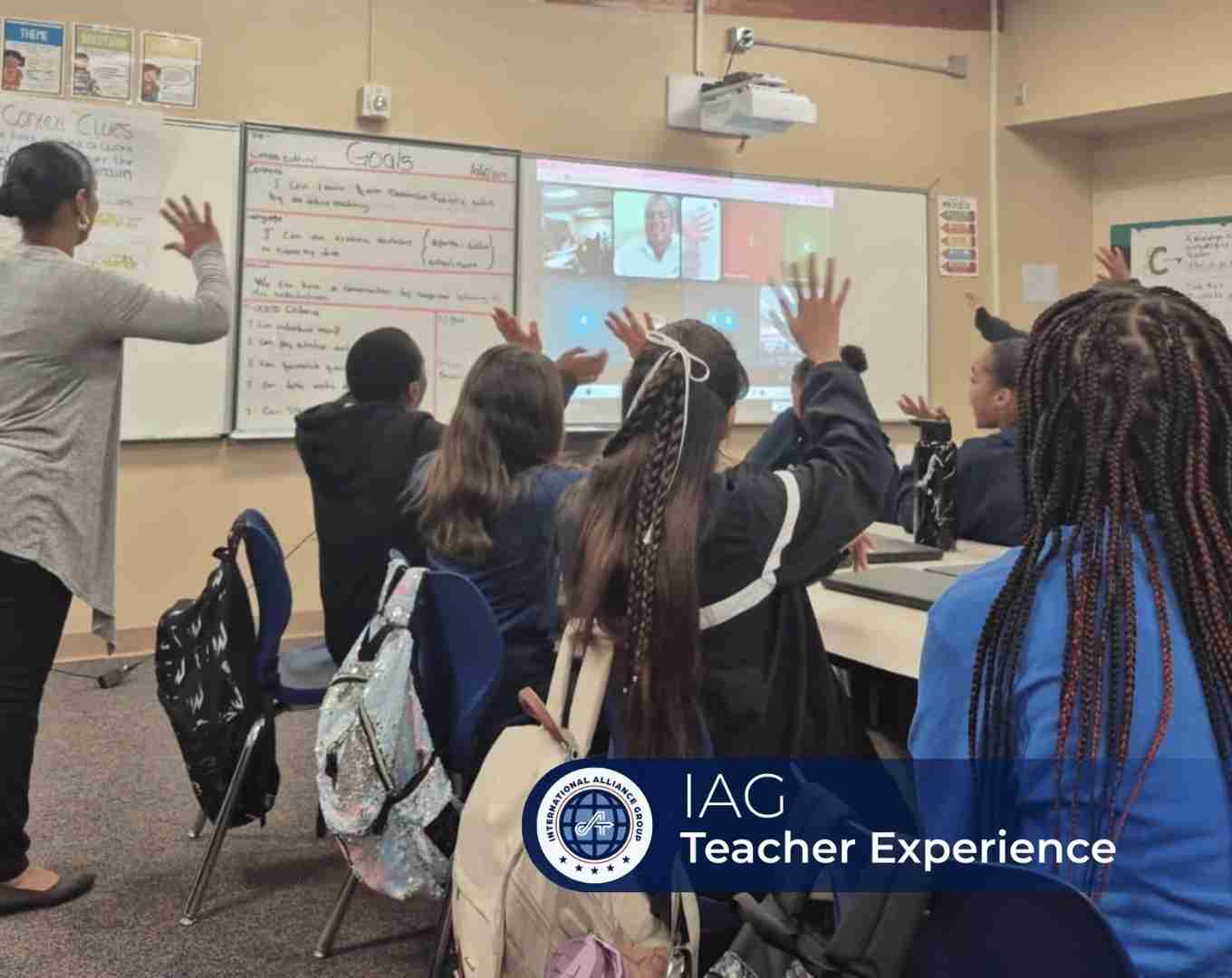
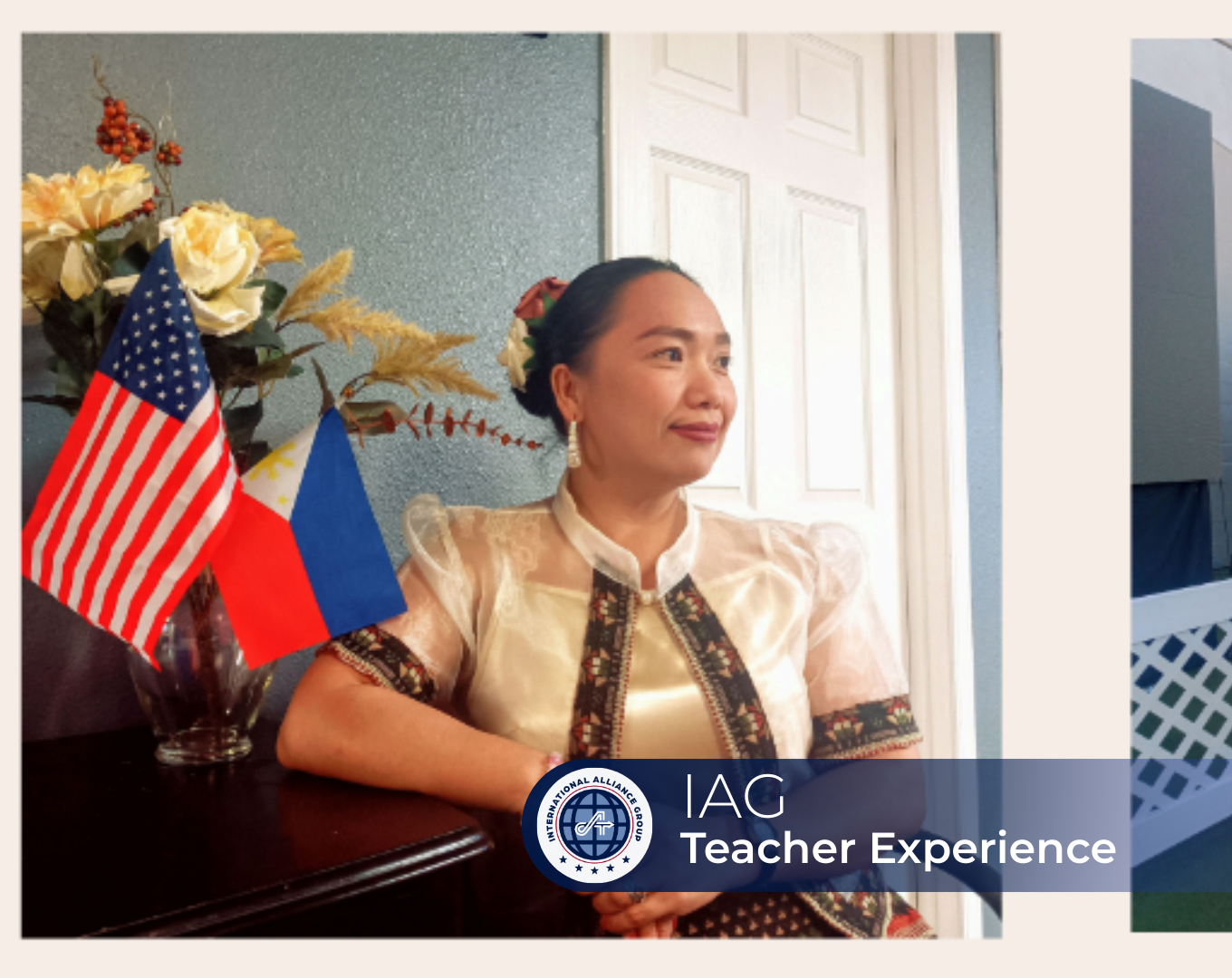
Janett A. Canlas, an IAG Teacher and sixth-grade teacher at Alcorn Middle School, was selected as one of five finalists for Richland One’s 2026–2027 Teacher of the Year.

Being selected among the district’s finalists is a meaningful recognition of the dedication, passion, and commitment educators bring to their students every day.

Recognized Among Richland One’s Outstanding Educators

Richland One announced its five Teacher of the Year finalists as part of its annual recognition of outstanding district employees.

When announcing the finalists, Superintendent Dr. Todd Walker highlighted the dedication and passion represented by the educators selected and their role in helping students succeed, reach their potential, and pursue their dreams.

Janett was recognized alongside educators from schools throughout the district before the final Teacher of the Year was announced during Celebration 2026, Richland One’s year-end employee recognition event, held May 22 at the Columbia Metropolitan Convention Center. Alexandria Fogle of Brennen Elementary School was ultimately named the district’s 2026–2027 Teacher of the Year.

For IAG, however, Janett’s place among the five finalists represents something worth celebrating on its own.

A Story of Continued Recognition

This is also not the first time Janett’s commitment to education has been recognized.

At Alcorn Middle School, Janett previously received Teacher of the Year recognition for 2024–2025 as well as the Knight of Excellence Award, honoring her professionalism, leadership, and contributions to her school community.

Her selection as a district-level finalist builds on that story and reflects the kind of impact an educator can create through consistent dedication to students and the school community.

International Teachers Making an Impact

For IAG, Janett’s recognition also represents something bigger.

The J-1 Teacher Cultural Exchange Program is about much more than teaching in another country. International educators bring their experiences, perspectives, cultures, and knowledge into U.S. classrooms while becoming part of the communities they serve.

Over time, those everyday interactions can create meaningful connections between teachers, students, colleagues, families, and communities.

Janett’s recognition is a powerful example of an international educator becoming an active and valued member of her school community—and being recognized for the contribution she makes there.

Celebrating Janett Canlas

We are incredibly proud to see an IAG Teacher recognized among Richland One’s top educators.

Being selected as one of five Teacher of the Year finalists represents an important achievement and reflects the dedication Janett continues to bring to her students and school community.

Congratulations, Janett, on this well-deserved recognition.

Your journey is another reminder of the meaningful impact international educators can make through education and cultural exchange.

Discover More IAG Teacher Stories

Every teacher brings a different story, culture, and perspective to the classroom. Discover how IAG Teachers are creating meaningful connections and making an impact in school communities across the United States.

Explore IAG Teacher Stories

25Aug

What is it really like to teach in the United States as an international teacher?

For Erika Fuerte, an educator from Ciudad Obregón, Sonora, Mexico, the experience began with excitement, uncertainty, and plenty of questions. Today, Erika lives in Phoenix, Arizona, and teaches at Bicentennial South in Glendale, where her journey has become about much more than adapting to a new classroom. 

It has been an experience of learning, professional growth, collaboration, and discovering just how much impact a teacher can have on the lives of students.  

Through Erika’s story, future international educators can get a closer look at what teaching in a U.S. classroom can really feel like—from the nerves of the first day to finding confidence, building relationships, overcoming challenges, and watching students grow. 

From First-Day Nerves to Feeling Welcome 

Erika still remembers her first day at school. She was nervous and didn’t know exactly what to expect. Entering a different educational environment meant adjusting not only to a new classroom, but also to new colleagues, expectations, resources, and ways of teaching. 

What she remembers most, however, is how welcomed she felt. 

Her colleagues, team leaders, and administrators were willing to help from the beginning. She was also surprised by the amount of resources available to educators, particularly professional development and coaching opportunities throughout the school year.  

That support became an important part of her experience. Instead of feeling like she had to figure everything out on her own, Erika discovered that collaboration and asking questions were part of becoming successful in her new environment. 

What Does a Day in a U.S. Classroom Really Look Like? 

For Erika, teaching kindergarten means that no two moments are exactly the same. 

Her mornings begin before her students arrive. She likes to get to school early so she can prepare the classroom, turn on her computer and projector, organize materials, and have breakfast ready on the tables. When the bell rings, she greets her students at the door before they put away their backpacks and settle into their morning routine.  

From there, the classroom becomes an active learning environment. 

One morning might begin with a reading lesson about the zoo. Instead of simply opening a book, Erika introduces the topic through a morning message such as “Good morning, zoologists.” Students then interact with the message by identifying capital letters, recognizing sight words, answering questions, and coming to the board. 

Those small interactions became meaningful milestones for Erika. Watching a student recognize a new word or confidently participate in an activity showed her that learning was happening right in front of her. 

Throughout the rest of the day, her kindergartners transition between reading, writing, math, specials, independent reading, small-group instruction, lunch, and other activities. Because young students need movement, Erika also uses brain breaks between longer lessons to help keep them active and engaged.  

It’s a busy routine, but it also illustrates something important about teaching in a new educational system: you bring your experience with you, while remaining open to learning new approaches. 

Learning, Adjusting, and Trying Again 

One of Erika’s biggest challenges when she began teaching kindergarten was learning how to structure learning centers effectively. She quickly realized that each center needed to be more than an activity—it needed to have an educational purpose and reinforce what students were currently learning. 

Getting there required patience. 

Erika remembers staying after school to plan and adjust her centers. If something didn’t work one day, she changed it and tried again. The process took days, weeks, and eventually months before she felt that she truly understood how to plan those activities according to her students’ needs.  

That challenge became part of her professional growth. 

Teaching internationally doesn’t mean arriving with every answer. It means being willing to observe, adapt, learn from others, and continue improving. 

One of the Biggest Differences: Resources and Collaboration 

When Erika compares her teaching experience in Mexico with teaching in the United States, one of the differences she highlights most is the availability of resources and support. 

That support doesn’t come from just one person. Erika describes being able to learn from coaches, team leaders, administrators, and fellow educators—even teachers outside her own grade level. 

If another teacher has an idea that works well, Erika can learn from it and then adapt it for her own kindergarten classroom. That exchange of knowledge has become one of her favorite parts of her experience. 

In many ways, this is also cultural exchange happening at a professional level. International teachers bring their own educational experiences and perspectives into U.S. schools while simultaneously learning from the educators around them. 

Knowledge moves in both directions. 

If Erika could emphasize one lesson from her experience, it would be surprisingly simple: Ask questions. 

She admits that teachers can sometimes hesitate to ask for help because they don’t want others to think they don’t know something. Her experience taught her the opposite. Asking questions became one of the ways she learned, adapted, and became more confident. 

Erika describes receiving coaching through both her program and her school. She recommends taking advantage of those resources, talking to colleagues, keeping a notebook if necessary, and writing down questions as they arise.  

Her message to other educators is important because international teaching requires openness. Experience matters, but so does the willingness to keep learning. 

The Moments That Made Everything Worth It 

When Erika talks about what has made her proudest, she doesn’t immediately mention her own accomplishments. 

She talks about her students. 

Seeing how much they grew between the beginning and end of the school year—particularly the children who initially struggled—became one of the most rewarding parts of her experience.  

But sometimes the impact showed up in much smaller and more unexpected ways. 

Students told Erika they wanted to dress like her or be like her when they grew up. One parent even told her that their child wanted the same air freshener Erika used because they loved the way her classroom smelled. 

It sounds like a tiny detail. For Erika, it represented something much bigger. 

Her students were paying attention not only to what she taught, but to the environment she created and the person she was in their classroom. 

And that helped her realize the influence an educator can have. 

Growing as a Teacher—and as a Person 

Looking back, Erika sees a very different educator from the one who first arrived in the United States. 

She has learned new methodologies, developed her classroom management and planning skills, collaborated with educators from different backgrounds, and become more confident navigating a different educational environment. 

But she also describes the transformation as personal. 

When reflecting on how much she knew when she first arrived compared with what she knows today, Erika says she can see enormous growth. She credits both the program and her school with contributing to that development.  

That is one of the most valuable dimensions of cultural exchange: educators arrive ready to share what they know, but the experience also gives them opportunities to discover new perspectives and continue evolving themselves. 

What Erika Wishes She Had Known Before Arriving 

At the end of her conversation with IAG, Erika was asked what she wishes she had known before beginning her experience. 

Her answer wasn’t about lesson plans, paperwork, or moving to another country. 

It was about impact. 

She wishes she had known how much of an impact she would have on her students. 

There were difficult moments. There were things she had to learn. And there were times when she had to keep adjusting until everything began to make sense. But looking back, she describes the experience as truly amazing. 

And if she had the opportunity to do it all over again? 

She would. Without a doubt.  

More Than Teaching in the United States 

Erika’s experience shows why international teaching is about much more than entering a classroom in another country. 

It is an opportunity to bring your culture, knowledge, and experience into a new community while also allowing that community to teach you something in return. 

For Erika, that has meant learning from colleagues, discovering new teaching approaches, becoming more confident, watching her students grow, and understanding the influence she can have as an educator. 

That is what meaningful cultural exchange can look like in real life: teachers sharing what they bring while remaining open to everything they can learn along the way. 

Ready to Explore Your Own Cultural Exchange Journey? 

If Erika’s story has you wondering what your own experience as an international teacher could look like, you can begin by learning more about the J-1 Teacher Cultural Exchange Program and the requirements for participating through IAG (link a blog requirements) 

At IAG, we’re looking for educators who are ready not only to teach, but to learn, share their culture, grow professionally, and create meaningful connections with their students and communities. 

Your international teacher story could be the next one we share. 

Watch Erika’s Teacher Experience:

Frequently Asked Questions About Teaching in the U.S. as an International Teacher 

What is it like to teach in a U.S. classroom as an international teacher? 

Every school and teacher experience is different. In Erika’s experience, adapting involved learning new classroom practices, working with new educational resources, collaborating with colleagues, receiving coaching, and becoming comfortable asking questions when she needed support.  

What is the J-1 Teacher Cultural Exchange Program? 

The J-1 Teacher Cultural Exchange Program gives qualified international educators the opportunity to teach in U.S. schools while participating in a cultural exchange experience. Teachers share their culture and perspectives with students and their school communities while gaining exposure to the U.S. educational system. 

Is teaching in the U.S. different from teaching in my home country? 

Yes, there can be differences in classroom routines, curriculum, teaching methodologies, school expectations, available resources, and student needs. Part of the cultural exchange experience is learning how to adapt your existing teaching experience to a new educational environment. 

Do international teachers receive support while teaching in the U.S.? 

Yes. At IAG, support begins before teachers arrive in the U.S. and continues throughout their cultural exchange experience. From guidance and preparation before arrival to ongoing support once teachers are in their schools and communities, IAG is there throughout the journey. 

During the program, teachers can also receive support from their schools, including administrators, instructional coaches, team leaders, and fellow educators. As Erika shared from her own experience, having access to coaching, asking questions, and knowing there are people available to guide you can make an important difference when adapting to a new educational environment.  

Do I need teaching experience to participate in the J-1 Teacher Program? 

Yes. Teachers participating through IAG must have at least two years of teaching experience and meet the other eligibility requirements of the J-1 Teacher Cultural Exchange Program. 

What English level do I need to teach in the U.S. through IAG? 

A minimum B2 level of English is required. International teachers need to be able to communicate effectively with students, colleagues, administrators, and members of their school community. 

Can international teaching help me grow professionally? 

Yes. An international teaching experience can expose educators to different teaching methodologies, classroom practices, professional development opportunities, and collaboration with educators from different backgrounds. As Erika’s story demonstrates, the experience can contribute to both professional and personal growth. 

What qualities can help an international teacher adapt successfully? 

Being open-minded, adaptable, curious, collaborative, and willing to ask questions can make a significant difference. International teaching is not about arriving with all the answers—it is also about being willing to learn, share, and grow throughout the cultural exchange experience. 

24Mar

Rhythms of Success: Eliderky Sanchez’s Cultural Exchange Journey in Arizona 

For Eliderky Sanchez Mercedes, the classroom is a space where language, culture, and academic excellence converge. Originally from the Dominican Republic, Eliderky has brought over a decade of expertise to Littleton Elementary District in Arizona, where she inspires 6th-grade students in English Language Arts (ELA). 

A Foundation of Academic Mastery 

Eliderky arrived in the U.S. with a profound academic background, including a Master’s Degree in Applied Linguistics for Teaching English as a Foreign Language. With 12 years of teaching experience in her home country and certifications from institutions like Cambridge University and the National Writing Project, she represents the high caliber of international educators participating in this exchange. 

Her motivation for joining the IAG program was rooted in a passion for continuous learning and a desire to immerse herself in a multicultural environment where she could exchange innovative instructional strategies. 

Bringing the Spirit of the Caribbean  

Eliderky has transformed her Arizona classroom into a vibrant hub of cultural awareness. By sharing the traditions of the Dominican Republic, she has fostered a deeper global understanding among her students and colleagues: 

  • Music and Dance: She introduced her school community to the rhythmic heritage of merengue and bachata. 
  • Culinary History: Discussions about traditional dishes like mangú and sancocho sparked meaningful conversations about history and culture. 
  • Festivals: She organized interactive activities centered around Dominican Independence Day and Carnival. 

In return, Eliderky has embraced the unique cultural tapestry of Arizona, exploring Native American art and the vibrant Mexican influences found in local food and community events. 

Award-Winning Impact and Academic Growth 

The results of this cultural exchange are reflected in the outstanding achievements of her students. Under Eliderky’s guidance, her 6th-grade ELA students achieved first place in the district on the state assessment. This incredible success earned her the prestigious “Best 6th Grade Achievement of the Year” award in her district. 

Administrators and families have praised her dedication, noting her ability to foster effective academic conversations and create a supportive, high-achieving environment. 

Innovative Strategies for the Classroom 

By integrating successful methods from the Dominican Republic, Eliderky has enriched the American learning experience: 

  • Interactive Learning: Using storytelling, music-based lessons, and interactive group activities to make learning dynamic. 
  • Communication Skills: Implementing oral presentations, role-playing, and debates to build student confidence and critical thinking. 
  • Peer Mentoring: Emphasizing collaborative learning where students support one another’s growth. 

“Cultural exchange in education is invaluable for preparing students to thrive in a diverse and interconnected world. It fosters empathy, critical thinking, and global awareness.” — Eliderky Sanchez Mercedes. 

Join the Global Exchange

Every cultural exchange experience creates opportunities for learning, connection, and mutual understanding. Through the Teacher Exchange Program, educators like Eliderky share their culture, exchange ideas, and contribute to globally minded classrooms while growing alongside the communities they serve.

Thank you for following our “Teacher Experiences” series! Stay tuned for more stories of impact and cultural connection. 

23Feb

Bringing Your Culture to Life: A Guide for J-1 Exchange Teachers 

The true heart of the BridgeUSA program is the role of the Cultural Ambassador. As an international educator with International Alliance Group, you are more than a teacher; you are a living window into another world. Your mission is to weave your cultural heritage into the daily fabric of the U.S. curriculum, fostering a spirit of global citizenship. 

Wisdom from the Heart: Real Exchange Stories 

Our educators are already transforming U.S. classrooms by bringing the “soul” of their home countries into their daily interactions. When you join this exchange, you bring unique models of community and creativity that resonate far beyond the chalkboard: 

The Spirit of Bayanihan with Jeanie Mae Hernal 

Jeanie Mae, a Physics and Astronomy teacher in Colorado, brought a powerful Filipino concept to her classroom: Bayanihan. In the Philippines, this represents community unity—the spirit of neighbors coming together to achieve a common goal. By introducing the “Classroom Bayanihan” model, Jeanie Mae transformed her students from individualistic learners into resilient teammates. She openly shares her heritage, from values like pag-aaruga (nurturing) to sharing traditional foods like lumpia and pancit, sparking a “global curiosity” that makes her students wonder how problems are solved in other parts of the world. 

The Power of Narrative with Krizel Abat 

Krizel has shown that storytelling is a universal bridge that connects hearts. By sharing personal stories and cultural legends, she doesn’t just teach a lesson; she transforms the very atmosphere of the room. Her narratives help students develop deep empathy, allowing them to see the world through her eyes while finding the common threads that unite our shared human experience. 

Confidence Through Lyrics with Azenith Torda

Azenith, a Kindergarten teacher in Missouri, uses the power of song to bridge cultures. In the Philippines, education relies heavily on stories and group activities, and Azenith has seamlessly integrated these into her U.S. classroom. She shares that seeing her students’ faces light up while learning traditional Filipino lyrics is unforgettable. Through music, her young learners have become more confident, asking questions without hesitation and celebrating diversity from an early age. 

Practical Ways to Share Your Heritage: A Multi-Sensory Approach 

Integration doesn’t always require a grand event; it is most powerful when it becomes a natural, daily thread woven into the learning experience. As a Cultural Ambassador with IAG, you can transform your classroom into a global laboratory by engaging students’ curiosity through diverse activities: 

Cross-Cultural Math and Science 

Bring a global perspective to the “hard sciences” by highlighting the global contributions to human knowledge. 


    • The Global Lab: Share how mathematicians or scientists from your home country contributed to universal theories. 


    • Ecosystem Exchange: Use the unique geography, flora, and fauna of your region to illustrate environmental science or biology lessons, turning a standard chapter into a virtual field trip across the world. 

Language, Literature, and Oral Traditions

Introduce students to the sounds and stories that shaped your own childhood. 


    • The Storyteller’s Corner: Share poems and folk tales that resonate with universal themes of growth and humanity. These stories help students realize that while our languages may differ, our fundamental values and dreams are often identical. 


    • Word of the Day: Introduce simple greetings or idiomatic expressions from your native tongue, fostering a playful and respectful curiosity about linguistics. 

Gastronomy and the “Global Kitchen”

When we say food reaches the “heart and mind,” we are talking about how a traditional dish serves as a sensory history lesson. It’s the most accessible form of storytelling.


    • Flavor Diplomacy: While following school safety guidelines, you can share recipes or host “tasting moments.” As Jeanie Mae Hernal does with lumpia and pancit, food can be a starting point for discussions on history, agriculture, and the importance of family meals in your culture. 

Traditional Games and Play 

Play is a universal language that breaks down barriers instantly. Whether it’s a strategy board game, a street game, or a sport, the objective creates a shared reality.


    • Recess Revolution: Teach your students the games you played at their age. Whether it’s a strategy board game, a traditional rhythmic jump-rope, or a group coordination game, play fosters the Filipino spirit of pakikisama (getting along) and collective joy. 

Tactile and Auditory Traditions 

Bring your culture into the room through touch and sound to create lasting memories. 


    • Sensory Immersion: Let students feel the texture of traditional fabrics like piña or batik, listen to the unique rhythm of a native instrument, or try their hand at an ancestral art form. These tactile tools help students visualize and respect life in different parts of the world in a way a textbook never could. 

Celebrations and Daily Rituals

Cultural exchange is often found in the smallest gestures. While major holidays offer grand insights into a culture’s significance, daily rituals—like a shared moment of reflection or a traditional greeting—provide the most consistent ‘window’ into a culture’s daily life. 


    • The Calendar of the World: Mark your home country’s holidays on the classroom calendar. Briefly explain their significance or adopt a small daily ritual—like a specific way of greeting or a moment of reflection—that provides a window into your culture’s daily life. 

The Long-Term Benefit of Exchange 

When students interact daily with a teacher from a different background, their world shrinks in the best way possible. They develop cultural intelligence (CQ)—the ability to relate and work effectively across cultures—which is an essential skill for the 21st century. 

For the educator, this process is a journey of self-discovery. Seeing your own culture through the curious eyes of your students often brings a renewed sense of pride and a deeper understanding of your identity as a global professional. 

How to Start Your Cultural Journey 

Whether you are a specialist in Special Education or a passionate general educator, the path to becoming a Cultural Ambassador starts with your registration. At IAG, we are ready to guide you through the preparation of your professional portfolio to ensure your exchange experience is transformative for both you and your future host community. 

Register Today to Begin Your 2026 Exchange Journey!

17Feb

From the Philippines to Arizona: The Inspiring Journey of International Educator Amy Peyra 

The story of Amy Peyra is one of profound dedication, resilience, and the power of cultural exchange.

Amy Peyra’s story reflects dedication, resilience, and the transformative power of cultural exchange. Drawing on 17 years of teaching experience in the Philippines, Amy began a meaningful educational and cultural exchange journey in the United States through the Teacher Exchange Program.

A Solid Foundation in Education 

Amy’s journey began at Baao Community College, Philippines, where she earned her Bachelor of Secondary Education, majoring in English. Before arriving in the U.S., her career spanned various roles, including teaching in private schools, colleges, and an international school focused on ESL for adult learners. 

She holds professional licenses in both the Philippines (since 2006) and Arizona, where she is specialized in English Language Arts (ELA) and Reading. She has also completed the prestigious LETRS (Language Essentials for Teachers of Reading and Spelling) training to further her expertise. 

Transforming the Classroom in Arizona 

Now in her third year at Espiritu’s Schools in Arizona, Amy teaches 3rd Grade ELA, focusing on reading, grammar, and writing. Her impact on her students and her district has been nothing short of extraordinary: 

  • Top Academic Results: For two consecutive years (2023 and 2024), Amy received recognition for achieving the highest literacy rates among all grade levels (K-6) in her school. 
  • District Excellence: Her data-driven approach contributed to her school district moving from a “B” rating to its current “A” rating. 
  • Supportive Environment: While her first year was a challenge as she learned new instructional materials, she credits the “amazing teachers” at her school and the academic support from IAG for her smooth transition. 

“In the Philippines, we tell our students that in school, we are their parents. I make my students feel they can trust me and that they are safe to learn from their mistakes because they have a teacher who cares for them like a parent.” — Amy Peyra. 

The Heart of Cultural Exchange 

Beyond the curriculum, Amy serves as a cultural ambassador. She believes that for many students who may not have the means to travel, having an international teacher is a way to “meet the world”. 

Her cultural contributions include: 

  • Sharing Traditions: Amy often participates in school and community events wearing the Filipiniana, the traditional clothing of the Philippines. 
  • Culinary Connection: During her second year, she prepared traditional Filipino dishes to share with the entire teaching and non-teaching staff. 
  • Linguistic Growth: Living in Arizona, Amy has discovered the importance of the Spanish language. She is currently motivated to learn Spanish to better communicate with parents during conferences and bridge the gap with her diverse community. 

Vision for the Future 

Amy’s professional goals remain ambitious. She hopes to pursue Post-Graduate studies in the United States to further equip herself with innovative pedagogical tools. When her exchange concludes, she is thrilled at the prospect of returning to the Philippines to share the innovations and cultural insights she has gained with her home community. 

Her message to district leaders is simple: experienced international teachers is a “win” that creates globally competitive learners. 

Inspired by Amy’s journey? Through IAG, educators can share their culture, exchange teaching practices, and build meaningful connections with students and school communities in the United States. 


16Feb

How International Expertise is Redefining U.S. Special Education 

In the world of Special Education (SPED), the language of inclusion is universal, yet its application varies beautifully across different cultures. Participating in a J-1 Teacher Cultural Exchange offers a unique laboratory for professional growth, where educators from around the world bring their diverse perspectives to the U.S. classroom. This collaboration does more than fill a seat; it enriches the lives of students with diverse needs through a globalized approach to learning. 

The Strategic Benefits of International SPED Expertise 

Bringing international Special Education educators into U.S. schools provides a wealth of benefits that extend far beyond the lesson plan: 

  • Diverse Pedagogical Perspectives: International teachers often bring different philosophies of care and intervention. This diversity helps U.S. schools move beyond “standard” protocols, fostering innovation in how they approach individual education plans (IEPs). 
  • Cultural Competency for Students: Students in special education benefit deeply from interacting with mentors from different backgrounds. This exposure helps them develop social-emotional skills and a broader understanding of the world, which is essential for their integration into a globalized society. 
  • Enhanced Language Support: Many international SPED educators are multilingual, providing an invaluable bridge for English Language Learners (ELL) within the special education system. 

The Power of Shared Methodologies 

When a SPED teacher joins the International Alliance Group (IAG) exchange program, they aren’t just entering a new classroom; they are entering a vibrant, two-way dialogue of pedagogical strategies. This exchange allows for a high-level professional synthesis: 

1. Alignment with U.S. Standards  

By blending their home-country intervention techniques with U.S. legal and educational standards, they create a more robust, multi-layered support system for their students. 

2. Assistive Technology Exchange 

The exchange serves as a bridge for technological innovation. Educators learn and share how different technologies—from advanced speech-to-text tools to specialized sensory equipment—are utilized globally to foster independence in students with disabilities. 

3. Empathetic and Inclusive Classroom Design 

International educators often bring cultural nuances of “patience,” “resilience,” and “collectivism” from their home countries. These values help design nurturing environments that prioritize the student’s holistic well-being alongside their academic goals. 

Your Journey as a Cultural Ambassador 

In this exchange, you are so much more than an educator; you are a Cultural Ambassador and a heart-centered bridge between two worlds. While you bring your specialized expertise to advance the field of Special Education, your most profound impact will be the love, patience, and unique cultural perspective you share with every student. 

By choosing this journey, you are doing something truly brave and beautiful: you are weaving your own story into the lives of your students and their families. You aren’t just exchanging teaching methods; you are planting seeds of global understanding and kindness that will stay in their hearts long after the academic cycle ends. 

Your role is to be a guiding light—showing your students that despite our different backgrounds, the language of care and the commitment to their growth is universal. As you share your culture and professional excellence, you also open your heart to be transformed by the community that welcomes you, completing a circle of mutual respect and lifelong connection. 

Ready to contribute your expertise to a global classroom? Start Your Professional Exchange Profile Today!


10Feb

A Legacy of Excellence: The Impact of a Master Teacher in the Bilingual Classroom 

With a PhD in Education and over 24 years of experience in her home country of Honduras , Alma Lizzeth Gómez Guevara is the definition of a lifelong educator. Driven by a desire to expand her international teaching experience and promote cultural exchange, Alma joined the International Alliance Group (IAG) to bring her expertise to the United States. Today, she serves as a 1st Grade Bilingual teacher in the San Antonio Independent School District (SAISD) in Texas. 

Bringing the Heart of Honduras to San Antonio 

For Alma, being a cultural ambassador goes far beyond the curriculum. She has transformed her classroom into a vibrant hub of Honduran heritage by: 


    • Sharing Traditions: Introducing her students and colleagues to Independence Day celebrations, typical dances, and traditional attire. 


    • A Taste of Home: Sharing the stories of iconic Honduran dishes like baleadas and tamales. 


    • Folklore and Legends: Sharing fascinating legends from her hometown to teach values and spark the imagination of her 1st graders. 


    • Global Pedagogy: Integrating music, storytelling, and visual movement—strategies rooted in her Honduran teaching background—to make lessons more engaging for her American students. 

Recognized for Excellence: The TEA Master Teacher 

Alma’s impact has not gone unnoticed. Her dedication to her students’ academic growth and language development led her to be recognized as a TEA Master Teacher in Texas. This prestigious designation reflects the significant progress her students have made in their confidence and problem-solving skills since she joined the district. 

“Cultural exchange in education is an opportunity where everyone benefits—students, teachers, and the entire school community”. 

Looking Toward the Future 

While Alma is currently making a difference in the elementary classroom, her professional journey is far from over. Teaching in the U.S. is an incredible experience full of growth, learning, and cultural exchange that will be forever etched in your heart. 

Check our eligibility criteria today and see how you can change the world as an international educator. 


09Feb

Mastering the EF SET: A Comprehensive Guide for J-1 Teacher Exchange Applicants 

For international educators, proving English proficiency is a pivotal step in participating in the J-1 Teacher Cultural Exchange Program. While there are several assessment options, the EF SET (EF Standard English Test) has become a preferred choice due to its accessibility, professional rigor, and direct alignment with international standards. 

This guide provides official information and links to help you navigate the EF SET process as part of your exchange journey with International Alliance Group (IAG). 

What is the EF SET? 

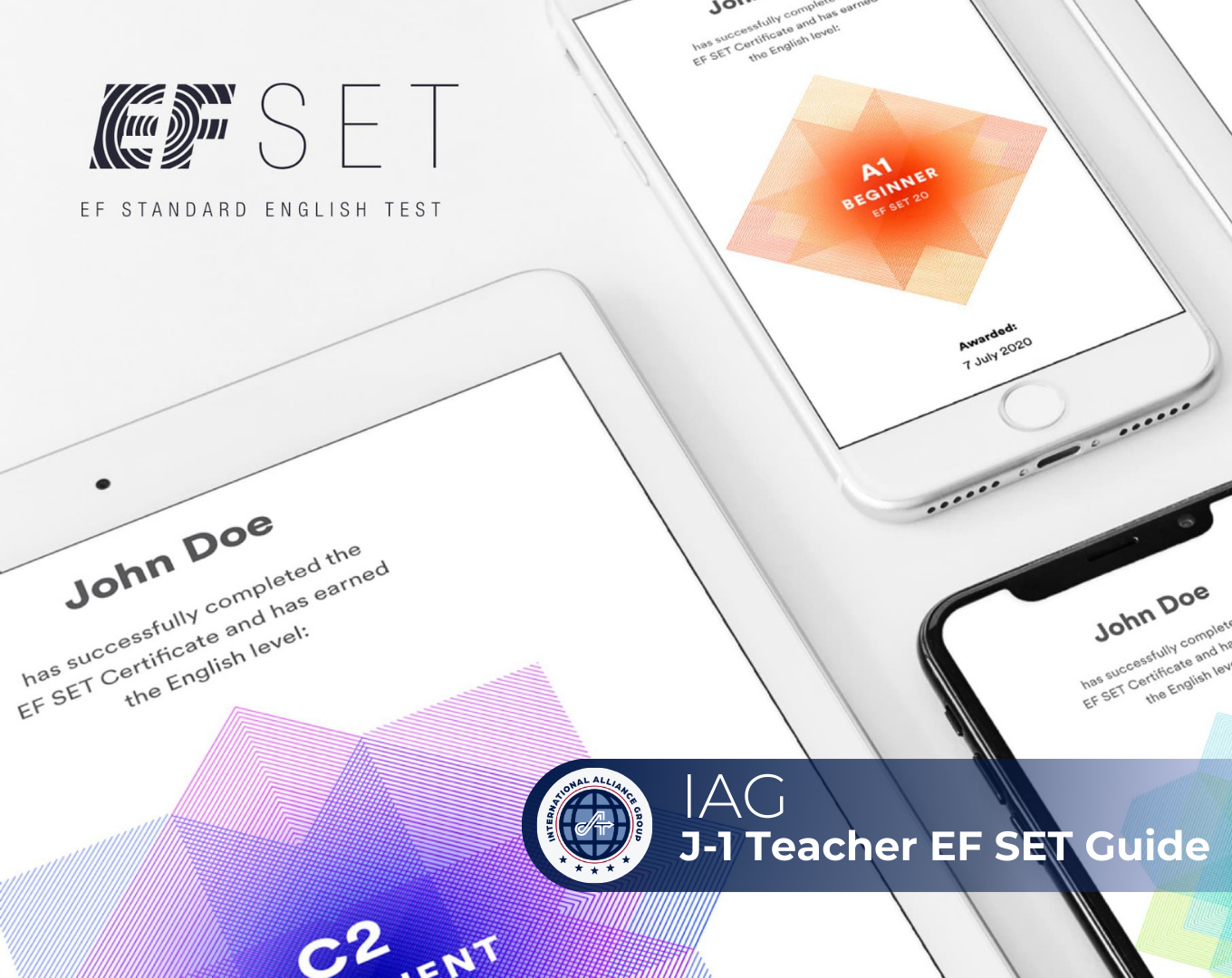
The EFSET is a standardized English test developed by EF Education First in collaboration with top language assessment experts. It is designed to provide a reliable and professional measure of English proficiency for non-native speakers, making it an ideal tool for educators preparing for a U.S. cultural exchange. 

Key Official Features 

  • 100% Free: There are no costs to take the test or to receive your official certificate. 

  • CEFR Aligned: Scores are mapped directly to the Common European Framework of Reference for Languages (CEFR), from A1 (Beginner) to C2 (Proficient). 

  • Professional Certification: Upon completion, you receive a personalized digital certificate that is recognized globally. 

The 90-Minute 4-Skill Test: Why It’s Required 

While EF SET offers shorter versions, the 90-minute 4-Skill Test is the comprehensive standard for the J-1 Teacher program. This version ensures you have the necessary fluency to lead a classroom and engage in a deep cultural exchange. 

Test Structure and Duration 

  • Reading (20 minutes): Evaluates your ability to understand professional and academic texts. 

  • Listening (20 minutes): Tests your comprehension of spoken English in various accents and educational contexts. 

  • Writing (35 minutes): Assesses your ability to articulate complex ideas clearly in written form. 

  • Speaking (15 minutes): Measures your verbal fluency, pronunciation, and instructional clarity. 

To ensure you are taking the correct version for your IAG application, please use the official links below: 

How to Succeed: Preparation Tips 

Because the EF SET uses adaptive testing technology, the difficulty of the questions changes based on your answers. This ensures your final score is a highly accurate reflection of your true level. 

  1. Check Your Tech: Ensure you have a stable internet connection and functioning speakers/microphone for the listening and speaking portions. 

  1. Choose a Quiet Environment: Since the test is 90 minutes long and includes speaking, find a space where you will not be interrupted. 

  1. No Preparation Needed: The EFSET is designed to measure your current level. However, taking a few minutes to explore the platform ensures that your score truly reflects your skills by eliminating any “technical surprises” on the day of the assessment. 

The Standard for Success 

For a successful application with International Alliance Group (IAG) and for the J-1 visa program, it is essential to demonstrate at least a B2 level (Upper Intermediate). This level ensures you can communicate complex pedagogical concepts with clarity and engage fully in the depth of the cultural exchange experience. 

Once you complete the assessment, ensure you keep the unique digital URL or download the PDF version of your certificate for your professional records. It is then essential to provide this certificate link to your IAG coordinator during your initial registration to confirm your profile eligibility for the cultural exchange program. 

Ready to Embark on Your Cultural Exchange Journey? 

The path to becoming a global educator and a cultural ambassador starts with a single, decisive step. You do not need to have every document ready today to begin your journey for the 2026 cycle. The most important action you can take right now is to confirm your eligibility and verify your English proficiency. 

At International Alliance Group (IAG), we are looking for dedicated professionals ready to share their culture and instructional expertise in a U.S. classroom. Even if your portfolio is still in progress, starting your registration now allows our team to guide you through the process and help you prepare for a successful exchange experience. 

Take the first step toward your 2026 cultural exchange today! 

03Feb

How a Filipino Math Expert is Elevating Student Achievement in the U.S. 

For many students, mathematics can feel like a daunting challenge, but in Ainee Grace Dollete’s classroom in Broward County, Florida, it sounds more like a song. Ainee, a dedicated educator from the Philippines, transitioned to the U.S. school system with a clear mission: to make math accessible, engaging, and fun for her 6th and 8th-grade students. 

From Mindanao to the Sunshine State 

With a Master of Arts in Education and five years of teaching experience in her home country, Ainee brought a wealth of academic expertise to the International Alliance Group (IAG) program. A graduate of Mindanao State University, she was motivated by the opportunity to contribute to a global community and grow professionally in a multicultural environment. 

Overcoming Challenges with “Math Magic” 

Every international teacher faces an adjustment period, and for Ainee, the most challenging part was adapting to new classroom routines and expectations. However, she quickly bridged the gap by introducing innovative strategies from her home country. 

  • The Power of Song: One of her most rewarding moments was seeing her sixth graders master the addition of integers through the “integer song”. 
  • Multiplication Tricks: Ainee’s colleagues and students’ families were amazed by the basic hand tricks she teaches to simplify multiplication. 
  • Active Engagement: She begins every class with an “energizer” or motivational activity to ensure students are ready to learn. 

A Culture of Collaboration 

While Ainee is focused on numbers, she hasn’t forgotten the importance of cultural connection. She shares the Filipino tradition of “Bayanihan” with her colleagues, emphasizing the value of communal unity and helping one another. Simultaneously, she has embraced U.S. traditions, such as Hispanic Heritage Month, finding inspiration in the diverse cultures of her students. 

Recognized Excellence 

Ainee’s impact hasn’t gone unnoticed by her administration. During a recent classroom walkthrough, her Assistant Principal recognized her with “Super Star Moments,” highlighting her ability to create “Level-Up Opportunities” for her students. 

Today, Ainee sees a significant change in her classroom: students are more willing to participate in discussions and enjoy solving problems through instructional software. For Ainee, the journey with IAG it is about proving that international teachers are resilient, dedicated, and capable of bringing unique value to any school district. 

“I am thankful that school districts are open to us and to what we can bring to the school,” Ainee shares. 

Looking Ahead: A Legacy of Resilience and Excellence 

For Ainee, the journey is just beginning. Her goals for the coming years are focused on achieving excellence in classroom management and continuing to bridge the gap between complex mathematical concepts and student understanding. Her story is a testament to what happens when school districts remain open to the diverse perspectives and dedication that international educators bring to the table. 

Ainee’s message to superintendents and district leaders is one of gratitude and advocacy: international teachers are not only highly qualified but also incredibly resilient and dedicated to their students’ success, even when faced with the challenges of a new country. As she continues to transform her classroom in Broward County, Ainee proves that when we share our cultures and our “tricks,” everyone wins. 

Are you ready to follow in Ainee’s footsteps and become a cultural ambassador? This journey with IAG is about more than an international experience—it is a unique opportunity to bridge cultures, share your heritage, and return home with a global perspective that will transform your classroom forever. 

26Jan

The International Teacher Profile: What U.S. Districts Look For  

When a U.S. hiring team reviews an international application—whether it’s a Human Resources director, a recruitment specialist, or a school principal—they aren’t just looking for a teacher who knows Math or Science. They are looking for a specific profile—a combination of hard qualifications, soft skills, and cultural adaptability that proves you can thrive in an American classroom. 

At IAG, we know exactly what these decision-makers want. We have broken down the “Ideal International Candidate” into three distinct pillars.  

The “Hard” Skills (The Non-Negotiables) 

These are the technical requirements. Without these, your application likely won’t make it past the initial HR screening. 

    • Degree & Experience:

      You must hold the equivalent of a U.S. Bachelor’s degree (or higher) and have at least 2 years of full-time teaching experience post-graduation. Student teaching, internships, or classes taught before you received your final diploma do not count toward this 2-year minimum. 

Note: It is not enough to just have the diploma and 2 years of full-time teaching experience post-graduation. Districts will require a Credential Evaluation to officially certify that your foreign degree matches U.S. standards. 

    • Subject Mastery

      Districts love specialists. General “primary” experience is good, but specialized experience in Special Education (SPED), Math, Science (Chemistry, Physics, Biology), or Bilingual Education is “gold” in the current market. 

    • English Proficiency

      Speaking English is not just about delivering a lesson; it is about navigating the entire school ecosystem. You should aim for a B2 or C1 level (Upper Intermediate to Advanced) to handle three critical areas: 

    • The Classroom

      You must explain complex concepts clearly and possess the vocabulary to manage behavioral issues in real-time without hesitation. 

    • The Community

      You will interact daily with colleagues and administrators. Can you participate actively in staff meetings and collaborate on lesson planning? 

    • The Parents

      You must be able towrite professional, sensitive emails to parents or conduct phone calls regarding their children without relying on translation tools. In U.S. schools, clear communication with families is often just as important as the teaching itself. 

The “Soft” Skills  

This is where the interview is won or lost. U.S. classrooms are dynamic, loud, and active. Districts look for personalities that fit this energy. 

    • Classroom Management 

In U.S. classrooms, students are often encouraged to be expressive and energetic. Rather than relying on strict authority or raising your voice—which can be perceived as losing your composure—the most successful teachers focus on building genuine trust and rapport. School districts highly value educators who use Positive Behavioral Interventions and Supports (PBIS) to guide behavior through connection and understanding, rather than just enforcement. 

    • Growth Mindset 

You must be open to coaching. U.S. administrators observe teachers frequently. It is normal routine. Principals and instructional coaches visit classrooms weekly or monthly to give feedback. 

  • Student-Centered Approach 
In U.S. classrooms, the teaching style shifts away from the traditional ‘sage on the stage’ model of lecturing and moves toward being a ‘guide on the side’ who facilitates learning. This means the focus is not on how well the teacher presents information, but on how actively the students process it. To demonstrate this mindset in an interview, you should describe how you prioritize student engagement through hands on learning rather than passive listening. It is also essential to explain how you use differentiation—adapting your teaching to meet different needs—to ensure that every student can participate and succeed in this interactive environment. 

Bringing Your Heritage to Life 

The heart of the J-1 Visa program is the unique opportunity it gives you to serve as a cultural ambassador, enriching the school community with your personal heritage. U.S. districts are eager to hear about specific, engaging ways you plan to share your culture, rather than just general intentions. It is highly beneficial to describe concrete activities you would love to lead, such as connecting your current students with your former ones through a digital ‘pen-pal’ exchange, or hosting a monthly celebration where the class can taste traditional foods, listen to folk music, and explore the geography of your home country. By sharing these detailed visions, you demonstrate a genuine passion for bridging cultures and offer a glimpse of the vibrant, inclusive atmosphere you will bring to their school. 

Essential Additional Skills: The Modern Toolkit 

The American classroom has evolved. It is no longer just about a chalkboard and a textbook; it is a digital ecosystem. To effectively manage a U.S. class and connect with digital-native students, your profile must demonstrate comfort with modern educational tools. 

    • The Platforms

      You must be comfortable managing a Learning Management System (LMS) like Google Classroom, Canvas, or Schoology. Principals expect you to troubleshoot basic tech issues and use software for grading (like PowerSchool) efficiently. You don’t need to be a programmer, but you must be “digitally confident.” 

    • The Hardware

      Expect to use Smartboards or interactive panels daily. 

  •  

Ready to Begin Your Journey? Meeting the standards of the “International Teacher Profile” might seem like a tall order, but remember: U.S. districts are not looking for perfection; they are looking for potential, passion, and adaptability. If you see yourself in these descriptions—if you are ready to guide, grow, and share your culture—then you are exactly the kind of educator U.S. students need.  

If you meet the essential qualifications and are ready to embrace this professional adventure, we invite you to take the next step with us.