20Aug

Chapter One in Colorado: Celebrating Rea Mea Pino’s Journey

Every great journey begins with a single step. A step filled with excitement, nervousness, and immense bravery. At International Alliance Group (IAG), we know that an exchange teacher’s first year is one of the most challenging, and at the same time, most transformative. It is the year when seeds are planted that will blossom for a lifetime.

Today, we proudly and admiringly celebrate Rea Mea Pino, who has completed her first year in our program, leaving an indelible mark on her new community.

A year ago, Rea packed her dreams and her passion for teaching to embark on a new adventure that brought her to Commerce City, Colorado, USA. There, she joined the family at Dupont Elementary School, a place where young, curious minds were ready to receive not only knowledge, but a new window to the world.

The first year is a symphony of new beginnings. It’s about learning each child’s name, understanding their small worlds, and earning their trust. It’s about adapting teaching methods, discovering the traditions of a new community, and above all, building bridges of affection and respect. In an elementary school, this work is even more fundamental. Rea has not only taught academic lessons; she has taught her young students about diversity, empathy, and the beauty of a world bigger than they had imagined.

Every day of her first year, Rea has been planting seeds. Seeds of curiosity in children who now ask questions about the faraway place their teacher comes from. Seeds of friendship that cross cultures. Seeds of self-confidence as they watched their teacher also bravely adapt to a new environment.

Rea Mea Pino’s story in her first year is the heart of the International Alliance Group mission. It is proof that the courage of a single teacher can open up the world for an entire classroom. Her dedication is the foundation upon which a legacy of mutual understanding and learning will be built at Dupont Elementary.

We congratulate Rea on her incredible first year. For every challenge overcome, every smile earned, and every seed planted. We are certain that her garden in Commerce City will continue to flourish in wonderful ways. Thank you, Rea, for your courage and your dedication!

This blog was written by Global Workforce Development, powered by IAG, an organization dedicated to creating international job opportunities for professionals.

12Aug

When a Classroom Becomes a Home: The Story of Mary Grace Canto

A teacher’s first year of exchange is an adventure of discovery. The second is a journey of finding your footing. But the third year is a testament to something deeper—it’s proof that a teacher has found a second home. At International Alliance Group (IAG), we are immensely proud to see our educators not only adapt, but flourish and become pillars of their communities.

This is the story of Mary Grace Canto, who is celebrating three years of dedication, growth, and impact in the vibrant city of Phoenix, Arizona.

Three years ago, Mary Grace arrived in the sunny landscape of Phoenix to join the Griffith school community. What began as a new professional assignment has, over time, transformed into a lasting, personal connection. Three years in the same place means watching the youngest students grow, advance through grades, and become confident young individuals. It means going from being “the new teacher” to becoming a familiar, trusted face in the hallways for students, parents, and colleagues alike.

In the heart of the Arizona desert, Mary Grace has cultivated a garden of learning and affection. Her classroom at Griffith is no longer just a workspace; it’s a home filled with shared histories, overcome challenges, and countless moments of joy. Her commitment goes beyond the lesson plans; it is reflected in her deep understanding of the community and the bonds she has forged.

Mary Grace’s journey is a brilliant example of the International Alliance Group’s vision. We believe in the power of sustainable cultural exchanges, where relationships have time to mature and impact has room to deepen. Teachers like her prove that true cultural exchange happens when you become part of the very fabric of a community.

We congratulate Mary Grace Canto on these three years of incredible dedication. We thank her for her unwavering commitment to the students of Griffith and for showing the world that with an open heart, any place can become a home.

This blog was written by Global Workforce Development, powered by IAG, an organization dedicated to creating international job opportunities for professionals.

06Aug

Why Cultural Competency in the Classroom is No Longer a Soft Skill 

For decades, the foundation of a “good education” was built on three pillars: reading, writing, and arithmetic.

Other abilities—like communication, collaboration, and empathy—were often categorized as “soft skills,” valuable but secondary to the core academic curriculum. In the 21st century, that paradigm is not just outdated; it’s holding our students back. 

In today’s deeply interconnected global economy, a student’s ability to understand, respect, and collaborate with people from different backgrounds is not a soft skill.

It is a core professional competency, as critical to their future success as coding, data analysis, or financial literacy. Consequently, the schools that recognize this shift and intentionally cultivate this skill are the ones that will produce the next generation of leaders. Ultimately, the most effective way to do this isn’t through a textbook; it’s by building a faculty that reflects the world. 

The High Cost of the “Soft Skill” Misconception 

Indeed, the term “soft skill” has always been a misnomer, suggesting that these abilities are somehow less rigorous or essential. The modern professional world proves the opposite. On the other hand, today’s challenges are solved by international teams collaborating across time zones. Moreover, products are designed and marketed for diverse global audiences. Supply chains are managed through complex cross-cultural partnerships. 

In this environment, a lack of cultural competency is a hard liability. It can lead to miscommunication, broken deals, and failed projects. The ability to navigate different cultural norms, communication styles, and perspectives is a tangible asset that companies actively seek. What were once called “soft skills” are now recognized as “power skills”—the essential drivers of innovation and success. 

The Classroom: A Training Ground for a Globalized World 

Therefore, if we expect our students to thrive in this globalized landscape, we cannot wait until they enter the workforce to expose them to it.

The classroom must serve as their first training ground—a microcosm of the world where they can learn to engage with different viewpoints in a safe and structured environment. 

This raises a critical question for education leaders: Does our school environment truly reflect the world we are preparing our students for?

While curriculum can teach theory, genuine understanding comes from lived experience. This, ultimately, is where the composition of a school’s teaching staff becomes one of the most powerful tools at our disposal. 

The Teacher as the Catalyst for Competency 

When a student interacts daily with teachers from different countries and cultural backgrounds, the learning process becomes organic and profound. A diverse faculty doesn’t just teach a lesson on global perspectives; they are the lesson. Students learn firsthand by: 

  • Breaking Down Stereotypes: Regular, positive interaction with a teacher from another country is the most effective way to dismantle preconceived notions and biases. 
  • Developing Empathy: Students naturally learn to see the world from their teacher’s perspective, understanding different holidays, traditions, and social norms. 
  • Improving Cross-Cultural Communication: They learn to navigate different accents, expressions, and communication styles, building the adaptability and patience required for global collaboration. 
  • Modeling Global Citizenship: An international teacher is a living example of courage, adaptability, and cross-cultural success—a powerful role model for students who will one day navigate their own global careers. 

To prepare students for the world of tomorrow, we must build the world of tomorrow within our schools today. Investing in cultural competency is no longer an optional enrichment; it is a strategic imperative. The most effective way to teach students about the world is to bring the world to them.

By intentionally building a faculty that reflects global diversity, we give our students the most valuable asset for their future: the ability to thrive in a deeply connected world. 

As education leaders, our challenge is to think bigger about faculty development. It’s time to ask: Does our team reflect the world we are preparing our students to lead? 

This blog was written by Global Workforce Development, powered by IAG, an organization dedicated to creating international job opportunities for professionals.

29Jul

One Year of Impact: Celebrating Jhoan Bustaleno’s Journey in Arizona

One year ago, Jhoan Bustaleno began her journey as an international teacher, bringing her passion and expertise to a new community. Today, we celebrate her one-year anniversary and the incredible impact she has made at The Odyssey Institute for Advanced and International Studies – The Odyssey Preparatory Academy in Buckeye, Arizona.

Jhoan’s story is a perfect example of the spirit of the J1 Visa program: a deep commitment to education, community, and cultural exchange.

A Commitment to School and Community

From day one, Jhoan has embraced her role with enthusiasm and dedication. She describes her experience as one of active involvement that extends far beyond the classroom walls. “Attached are photos showcasing my involvement at school, in the classroom, and within the community,” she shared with us.

This holistic approach is what makes an international teacher so valuable. By participating in school-wide and local events, Jhoan has woven herself into the fabric of the Buckeye community, building relationships and fostering a spirit of collaboration.

Bridging Cultures Through Education

At the heart of Jhoan’s mission is her dual role as both an educator and a cultural ambassador. She highlights her “active participation in both academic and cultural activities,” which reflects her dedication to enriching her students’ lives on multiple levels.

This means that while students at The Odyssey Preparatory Academy are learning from Jhoan’s academic expertise, they are also gaining a priceless global perspective. Through shared stories, traditions, and activities, she opens a window to the world, promoting understanding and curiosity. This is the beautiful, powerful exchange that the J1 program is all about.

We are immensely proud to have Jhoan Bustaleno as part of our program. Her commitment to her students and her new community in Arizona is truly inspiring. Thank you, Jhoan, for a fantastic first year of learning, leading, and community engagement! We look forward to seeing all that you’ll accomplish in the year ahead.

This blog was written by Global Workforce Development, powered by IAG, an organization dedicated to creating international job opportunities for professionals. 

15Jul

A Spotlight on Charhyll: A Teacher’s Journey from the Philippines

A truly great education opens students’ eyes to the world. And sometimes, the best way to do that is to bring the world right into the classroom. Today, we shine a spotlight on one of our own inspiring educators, Charhyll, who joins us from the Philippines.

A Leap of Faith Across Continents

The journey of an international teacher is one of profound courage. It begins with a brave decision: to leave behind the familiar—family, friends, and culture—and embrace a new professional and personal adventure.

Driven by a passion for teaching and a desire for growth, educators like Charhyll take a leap of faith, bringing their invaluable skills and unique perspectives to new communities.

When a teacher like Charhyll steps into a classroom, she brings more than just lesson plans and subject expertise. She brings a rich cultural tapestry. She offers students a living, breathing connection to a different part of the world, enriching their learning in ways that a textbook never could. Through her stories, her accent, her traditions, and her very presence, she fosters curiosity, empathy, and a genuine global perspective.

While we celebrate the vibrant energy Charhyll brings, we also recognize the immense resilience her journey represents.

Adapting to a new educational system, navigating a different culture, and building a new home thousands of miles from the original is a testament to her strength and dedication. She is not just a teacher; she is a pioneer, a cultural ambassador, and an inspiration to our entire school community.

So, when you see Charhyll in our hallways, know that you are seeing more than a teacher. You are seeing a bridge between the Philippines and our community. You are seeing the embodiment of courage, resilience, and the beautiful, borderless spirit of education.

We are incredibly fortunate to have her with us. Thank you, Charhyll, for choosing to share your journey with us!

This blog was written by Global Workforce Development, powered by IAG, an organization dedicated to creating international job opportunities for professionals. 

09Jul

A Teacher’s Journey of Courage and Growth

“Teaching is more than just a profession; it is a journey filled with moments that challenge us, shape us, and inspire us.”

These words set the stage for a heartfelt conversation with the incredible Jacqueline Castillo, a dedicated teacher hailing from the Philippines.

In a recent IAG blog interview, Jacqueline shared her personal story of growth, resilience, and the profound emotional connections forged in the classroom. Her journey is a testament to the power of self-belief and the importance of a supportive community.

For Jacqueline, the path to her current role was not without its hurdles. She spoke of the initial challenges and the immense courage it took to leave her home country and embark on a new professional chapter.

“If I don’t have that courage to believe in myself, then I think I am now in the Philippines,” she reflected, emphasizing the critical role that self-belief played in her journey.

This inner strength was bolstered by the encouragement of her family, who urged her to do her best. However, Jacqueline stressed that external support can only take you so far. Ultimately, the decision to step out of her comfort zone and strive for professional growth was hers alone. “You can do it,” she affirmed, “and you will grow professionally here. That’s the thing that I keep in my mind always.”

Throughout the interview, Jacqueline offered invaluable advice for fellow educators, especially those who may be new to a country or a school. “Don’t ignore the advices that your co-teachers give you,” she urged, highlighting the wisdom and support that can be found within a collaborative professional environment.

She also passionately advocated for the power of asking questions. “Please don’t hesitate to ask questions because that will really help you grow,” she advised. “Don’t pretend that you know everything… especially if you came from the other country. You do know nothing in here. Ask questions, don’t be afraid to ask questions, especially to your admin.” This vulnerability and willingness to learn, she explained, are key to navigating new challenges and achieving professional development.

Jacqueline’s parting words were a simple yet powerful reminder to “be positive always.” Her story is a beacon of inspiration for all educators, reminding us that with courage, a willingness to learn, and a positive mindset, the journey of teaching can lead to incredible personal and professional growth. We thank Ms. Castillo for sharing her beautiful and empowering experience with our IAG community.

This blog was written by Global Workforce Development, powered by IAG, an organization dedicated to creating international job opportunities for professionals. 

24Jun

How One Teacher Bridges Cultures and Builds Community

In the world of education, the most profound transformations often happen when the walls of the classroom expand to embrace the entire community. A strong bond between school and home can be the very foundation of a child’s success. To explore this vital connection, we spoke with the inspirational Amayali “Ame” Garrido, a teacher from Guadalajara, Mexico, whose work in Colorado showcases the transformative power of fostering deep family and community engagement.

The Power of Being Seen

For any student or parent, walking into a school and feeling understood is paramount. For Ame Garrido, this begins with representation. As a Latin American teacher, she recognizes that her presence has an immediate and tangible impact. “I do believe there’s an impact,” Garrido states. “I think it matters for students to feel represented. It matters for families to feel represented.”

This shared cultural identity becomes a crucial bridge. Consequently, Garrido has been able to cultivate trust and open dialogue with parents in a unique way. “I’ve been grateful for being able to speak the same language than parents,” she explains, “and being able to have all the transparent communication.” This is not merely about translating words; it’s about translating a culture of support and partnership, ensuring that everyone feels seen, heard, and valued. To further support this, she notes that technology and translation apps are also excellent tools for ensuring communication flows freely, regardless of language.

The Support Behind the Teacher

However, building such a strong community for others requires an equally strong support system for the teacher. Garrido emphasizes the importance of schools investing in their educators, particularly through collaborative professional development. “I think these initiatives can be lead by American teachers by including the teachers in professional developments,” she suggests.

These sessions, she notes, become invaluable spaces for shared growth. “It’s been great because at the professional developments, teachers share a lot, so we can learn because of other teachers. So it’s like a learning community.” In essence, just as it takes a village to raise a child, it also takes a village of supportive peers and administrators to empower a teacher.

A Rewarding Challenge

Given her deep understanding of these dynamics, Garrido offers powerful, heartfelt advice for other educators considering a similar path. She is honest about the realities of the job but unwavering in her encouragement. “I would say don’t be afraid of the challenge,” she advises. “It is challenging, but it is also extremely rewarding.”

Her final words are a call for resilience and an open heart. She urges teachers to adopt a growth mindset and to never hesitate to ask for help. “Be open and remember, it’s a challenge. There’s a learning curve. But if you always seek for support from your admin, from your school, from your peers, you’re going to make it,” she insists. “Don’t get discouraged.”

Ultimately, Amayali Garrido’s experience is a vibrant testament to the fact that teaching is about more than just lesson plans; it’s about building bridges, fostering understanding, and creating a village where every single member feels like they belong.

This blog was written by Global Workforce Development, powered by IAG, an organization dedicated to creating international job opportunities for professionals. 

20Jun

More Than a Profession: A Teacher’s Journey of Resilience and Heart

In a world that often measures success in numbers, the true impact of a teacher can be found in the moments of connection, the breakthroughs in understanding, and the unwavering belief in a student’s potential.

To illustrate this, we recently had the honor of sitting down with the inspiring Jasibe Jaimez, a dedicated special education teacher whose story is a powerful reminder that teaching is not just a profession—it’s truly a journey of the heart.

To begin, for nearly twelve years, Jasibe honed her skills and passion for special education in the middle schools of Jalapa, Veracruz, Mexico. Then, last July, she brought her invaluable experience to a new classroom, embarking on a new chapter as a resource teacher. In this role, her responsibilities are multifaceted, involving leading her own class while also providing vital support to other students through team-teaching, push-in services, and pull-out sessions.

A case in point is a particularly proud moment for Jessica, which came when she saw the tangible results of her dedication in her students’ data. “When I saw that data, I was like, yeah, I can do it,” she shared, her voice filled with emotion. “It really works…it’s right there.” Unquestionably, this validation of her efforts was a testament to her perseverance and a powerful affirmation of her impact.

Furthermore, beyond the numbers, the power of recognition from her peers has also been a significant source of encouragement for Jessica. At her current school, a system where teachers can praise one another has created a supportive and uplifting environment.

“When I find that one in my…mailbox, I was like, ‘Oh my God, someone else is looking at my job,'” she says with a smile. “That was very, very special for me.”

Turning to her reflections, when asked what advice she would give her younger self, Jessica’s answer was filled with compassion and wisdom. “I will hug myself and say you’re going to make it,” she shared. In addition, she spoke of the importance of collaboration, not just with fellow special education teachers, but with all educators.

She admitted it took her some time to realize the value in understanding the strategies of her math teacher colleagues and to know that “they are struggling with the same things that I.” Ultimately, this realization brought a sense of solidarity, reminding her that “you’re not alone in this journey where it could be hard.”

In conclusion, Jessica’s story is a poignant illustration of the emotional depth and resilience required in the teaching profession. It is a narrative of struggle, connection, and ultimately, triumph.

Her honesty and vulnerability remind us of the immense power of teaching to shape not only the lives of students but also the educators themselves.

Therefore, to all the teachers who pour their hearts into their classrooms each day, we see you, and we thank you. Your dedication creates a ripple effect of positive change that extends far beyond the four walls of your classroom.

This blog was written by Global Workforce Development, powered by IAG, an organization dedicated to creating international job opportunities for professionals. 

28May

The Bilingual Brain: Unlocking Cognitive Power in US Classrooms

In today’s increasingly interconnected world, the presence of diverse languages and cultures in our communities and schools is a powerful asset. As US schools welcome international teachers, they also often embrace a richer linguistic environment. Beyond simply gaining a new language for communication, learning in bilingual settings – whether as an English Language Learner (ELL), studying a foreign language, or simply being exposed to multiple languages in the classroom – offers profound benefits that actually reshape the brain and boost cognitive skills.

Let’s delve into the specific neurological and cognitive advantages of bilingualism and explore the unique role international teachers play in unlocking this potential for students in US schools.

The Cognitive Benefits of Bilingualism

Research consistently shows that the bilingual experience does much more than expand vocabulary. The constant mental juggling required to manage two or more language systems strengthens critical cognitive functions, often referred to as “executive functions.”

  • Enhanced Executive Function: Bilingual individuals often demonstrate superior skills in:
    • Attention and Focus: The brain learns to prioritize information in one language while suppressing the other, improving the ability to focus and ignore distractions. This is supported by studies showing that bilinguals exhibit better attentional control, as noted by Bialystok, Craik, and Luk (2012) [1] and Green and Abutalebi (2013) [2].
    • Task Switching: Effortlessly moving between languages trains the brain to switch between tasks more efficiently (Prior & MacWhinney, 2010) [3].
    • Problem-Solving: Managing two language systems requires flexible thinking, which translates into better problem-solving abilities across various domains
  • Improved Metalinguistic Awareness: Bilinguals tend to have a deeper understanding of how language works – grammar, sentence structure, and word meanings – because they have multiple linguistic frameworks for comparison (Bialystok, 2001) [4].
  • Boosted Creativity: Exposure to different linguistic structures and cultural perspectives can foster more divergent thinking and creativity (Leikin, 2011) [5].
  • Delayed Cognitive Decline: Studies increasingly suggest that the consistent mental workout of navigating two languages can help delay the onset of age-related cognitive decline and conditions like dementia later in life. (Bialystok, Craik, & Freedman, 2007) [6]; (ScienceDaily, 2024, October 22) [7].

A Neurological Powerhouse

These cognitive advantages are rooted in tangible changes within the brain itself. Learning and using multiple languages can lead to:

  • Increased Grey Matter Density: Areas of the brain associated with language processing and executive control show higher density in bilingual individuals (Mechelli et al., 2004) [8].
  • Stronger Neural Connections: Recent research, demonstrated that bilingual individuals exhibit stronger whole-brain connectivity compared to monolinguals. This effect was particularly pronounced between the cerebellum and the left frontal cortex, and it was found to be stronger in those who learned a second language at a younger age. This suggests that early bilingualism promotes a more efficient brain organization in terms of functional connectivity. (Zeus Gracia Tabuenca and colleagues, 2024) [9]
  • Greater Brain Plasticity: The continuous learning and adaptation inherent in bilingualism promote neuroplasticity, the brain’s ability to reorganize and form new connections (Bak & Alladi, 2015) [10].

Bilingual Learning with International Teachers

This is where international teachers become invaluable. They don’t just bring subject matter expertise; they bring a linguistic and cultural richness that can actively foster the bilingual brain advantage in their students.

International teachers often provide authentic exposure to another language (whether they are teaching it or it is their native language), offering students real-world pronunciation, intonation, and usage. This immersive experience is crucial for language acquisition and can be particularly beneficial for developing accurate linguistic representations (Gass & Selinker, 2008) [11].

By sharing their culture, perspectives, and experiences, international teachers make language learning and cultural diversity come alive, motivating students and broadening their worldview. This exposure is vital for developing global competence in students.

They can naturally integrate elements of their native language or culture, making bilingualism visible and valued, benefiting both students who share that language and those learning a new one. This creates an inclusive environment that validates students’ linguistic backgrounds. (García. O,2009) [12].

For students in US schools, learning in an environment influenced by international teachers can mean:

  • Developing stronger cognitive skills beyond just language acquisition.
  • Gaining a deeper appreciation for different cultures and global perspectives.
  • Improving outcomes for English Language Learners by having empathetic and experienced educators.
  • Being better prepared for a future where global communication and cognitive flexibility are increasingly important.

The “bilingual brain advantage” is a powerful testament to the brain’s incredible adaptability. By promoting cognitive flexibility, enhancing executive functions, and physically reshaping neural networks, bilingualism offers lifelong benefits. International teachers, with their unique linguistic backgrounds and cultural insights, play a vital role in cultivating this advantage in US classrooms, enriching the learning experience and equipping students with cognitive skills essential for success in our diverse and interconnected world.

This blog was written by Global Workforce Development, powered by IAG, an organization dedicated to creating international job opportunities for professionals. 

References

[1] Bialystok, E., Craik, F. I. M., & Luk, G. (2012). Bilingualism: Consequences for mind and brain. Trends in Cognitive Sciences, 16(4), 236–242. https://doi.org/10.1016/j.tics.2012.03.001

[2] Green, D. W., & Abutalebi, J. (2013). Language control in bilinguals: The adaptive control hypothesis. Journal of Cognitive Psychology, 25(5), 560–571. https://pmc.ncbi.nlm.nih.gov/articles/PMC4095950/

[3] Prior, A., & MacWhinney, B. (2010). A computational model of bilingual lexical access. Bilingualism: Language and Cognition, 13(2), 173–193. https://www.cambridge.org/core/journals/bilingualism-language-and-cognition/article/abs/bilingual-advantage-in-task-switching/CC68F518019E8D5471D0B0381AC945E7

[4] Bialystok, E. (2001). Bilingualism in development: Language, literacy, and cognition. Cambridge University Press. https://psycnet.apa.org/record/2001-01047-000

[5] Leikin, M. (2011). The creative thinking of bilingual children. International Journal of Bilingual Education and Bilingualism, 14(1), 9–28. https://journals.sagepub.com/doi/abs/10.1177/1367006912438300

[6] Bialystok, E., Craik, F. I. M., & Freedman, M. (2007). Bilingualism as a protection against the onset of symptoms of dementia. Neuropsychologia, 45(2), 459–464. https://pubmed.ncbi.nlm.nih.gov/17125807/

[7] ScienceDaily. (2024, October 22). Bilingualism may maintain protection against Alzheimer’s. ScienceDaily. https://www.sciencedaily.com/releases/2024/10/241022154131.htm

[8] Mechelli, A., Crinion, J. T., Long, U., Friston, K. J., Ashburner, A., Price, C. J., & Green, D. W. (2004). Structural plasticity in the bilingual brain. Nature, 431(7006), 757.

https://www.researchgate.net/publication/8232283_Neurolinguistics_Structural_plasticity_in_the_bilingual_brain

[9] Gracia-Tabuenca, Z., Barbeau, E. B., Kousaie, S., Chen, J.-K., Chai, X., & Klein, D. (2024). Enhanced efficiency in the bilingual brain through the inter-hemispheric cortico-cerebellar pathway in early second language acquisition. Communications Biology, 7(1), 1269. https://www.nature.com/articles/s42003-024-06965-1

[10] Bak, T. H., & Alladi, S. (2015). Bilingualism and neuroplasticity. Current Opinion in Neurology, 28(6), 598–602.

[11] Gass, S. M., & Selinker, L. (2008). Second language acquisition: An introductory course (3rd ed.). Lawrence Erlbaum Associates. https://bpb-us-e2.wpmucdn.com/websites.umass.edu/dist/c/2494/files/2015/08/Gass.Second-Language-Acquisition.pdf

[12] García, O. (2009). Bilingual education in the 21st century: A global perspective. Wiley-Blackwell. https://www.wiley.com/en-us/Bilingual+Education+in+the+21st+Century%3A+A+Global+Perspective-p-9781444359787

13May

IAG Teacher Experiences: Lester’s incredible journey from Honduras to Texas

At International Alliance Group (IAG), we’re proud to connect passionate educators from around the world with rewarding opportunities in the United States.

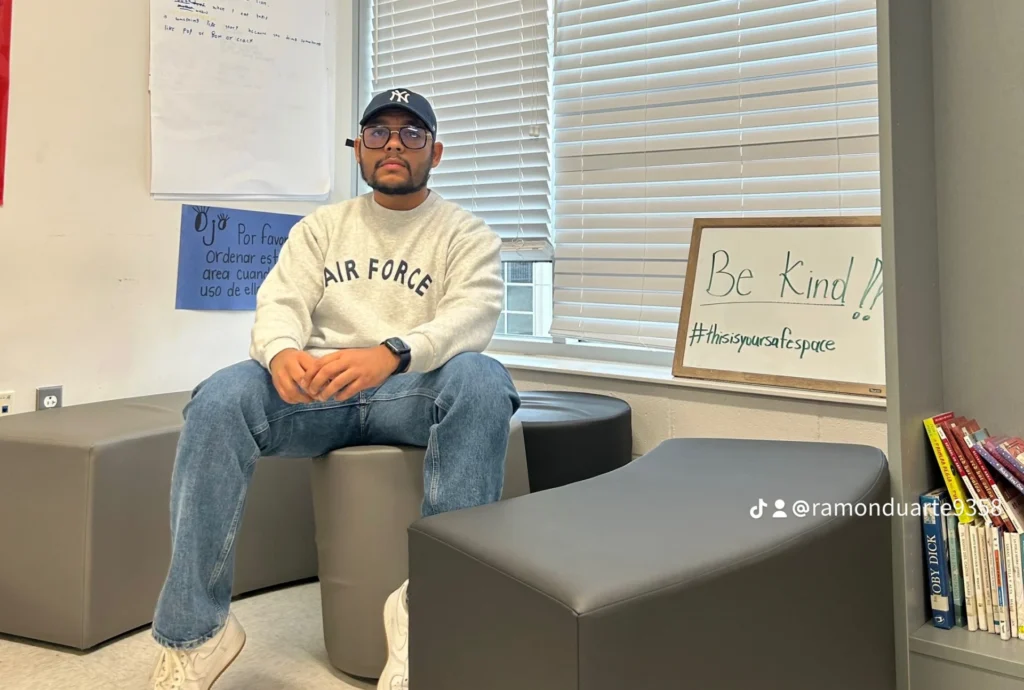
Today, we’re thrilled to share the experience of Lester Duarte, an Honduran international teacher who is making a significant impact as a High School ESL teacher in San Antonio, Texas.

Now, in his third year, Lester’s decision to teach in the US was driven by a powerful combination of professional ambition and a desire to connect cultures.

He sought to gain invaluable professional experience, make a positive difference in the lives of his students and colleagues, and share the richness of his Honduran culture through his teaching.

“My journey as an international teacher has been deeply transformative. I feel like I’ve grown so much personally, and my teaching skills have really sharpened. This experience has also opened doors to diverse career opportunities, enriching both my professional and personal life.

“I really want to emphasize the unwavering support I’ve received throughout my entire journey, which truly shows IAG’s commitment to its teachers.They have always supported me throughout my journey. I can only say thank you.”

Lester’s story powerfully exemplifies the positive impact international teachers have on US classrooms and the profound personal and professional growth they can achieve. His dedication highlights the rewarding experiences awaiting educators who choose this incredible journey.

Stay tuned for more inspiring stories from IAG teachers who are making a difference in schools across the United States!

This blog was written by Global Workforce Development, powered by IAG, an organization dedicated to creating international job opportunities for professionals.