11May

What Happens to Students When Their Teacher Comes From the Other Side of the World?

When a teacher who grew up in Manila, Nairobi, or Guadalajara walks into an American classroom for the first time, something happens in that room that cannot be replicated by any curriculum update, technology tool, or professional development program. Something shifts — in the students, in the dynamic, and in the culture of the school itself. 

What exactly changes? More than most people expect. 

They Start Asking Bigger Questions 

Something shifts in a classroom when an international teacher arrives — and one of the first places it shows up is in the questions students ask. Not just about the lesson. About everything: “How do kids my age live in your country?” , “What is the biggest celebration of the year in your country?” ,   “What do kids eat for breakfast in your country?”  

These are not distractions from learning. They are learning — the kind that cannot be found in a textbook and cannot be tested on a standardized exam, but that shapes the kind of thinker a child becomes for the rest of their life. 

When a student realizes that the person standing at the front of their classroom grew up in a completely different reality — speaking a different language, eating different food, navigating a different culture — their understanding of the world expands in a way that stays with them. They begin to see their own life as one of many possible lives, rather than the only one. 

That shift in perspective is the foundation of critical thinking, empathy, and global awareness. And it happens naturally, organically, simply because a different kind of teacher walked through the door. 

They See Excellence From Unexpected Places 

Representation matters in education — and not only in the ways that are most commonly discussed. 

When students encounter a teacher who is brilliant, passionate, and deeply skilled, and that teacher comes from a country they have never thought much about, something important is recalibrated in their understanding of the world. 

Excellence, they learn, does not belong to any one country, language, or background. It comes from everywhere. It looks like everyone. 

For students and communities, seeing a teacher who shares their heritage or speaks their home language is a moment of profound recognition. It tells them, without a single word being spoken, that someone who looks like them, sounds like them, or comes from where they come from can stand at the front of a classroom and be extraordinary. 

For students who have never encountered that kind of diversity before, it teaches something equally valuable: that the world is full of people worth learning from, and that wisdom does not have a single face. 

They Develop Skills That Last a Lifetime 

The presence of an international teacher in a classroom trains students in the art of human connection across difference. 

They learn to listen carefully to someone whose accent is different from their own. They learn to ask clarifying questions with curiosity rather than impatience. They learn to find common ground with someone whose background is genuinely unlike theirs — and to enjoy the discovery of what they share. 

These are not soft skills. They are survival skills for a globalized world — and the students who develop them early carry a significant advantage into every professional and personal relationship they will ever have. 

Research consistently shows that students who are exposed to diverse perspectives and cultural backgrounds in their formative years demonstrate stronger social-emotional development, greater adaptability, and more sophisticated communication abilities. They are better prepared for college, for the workforce, and for life in communities that are growing more diverse every year. 

A New Lens on Familiar Subjects 

The benefits of cultural exchange in the classroom are not limited to social and emotional growth. Academic outcomes improve too — and the mechanisms behind this are well understood. 

When students are engaged, they learn more. When they feel that their classroom is a dynamic, interesting place where unexpected things happen, they show up differently — more present, more curious, more willing to take intellectual risks. 

International educators bring fresh approaches to content that students have sometimes stopped paying attention to precisely because the presentation has become too familiar. A math lesson framed around a tradition from another country. A science concept illustrated through a cultural practice that has existed for centuries. A history discussion that suddenly includes a perspective the textbook never mentioned. 

These moments of surprise and novelty are neurologically significant. They signal to the brain that something worth paying attention to is happening — and that signal translates directly into deeper learning and better retention. 

The World Is Bigger Than Their Classroom 

Perhaps the most lasting impact of having an international educator is the simplest one to describe and the hardest one to measure. 

Students who spend a school year with a teacher from another part of the world finish that year knowing, in a deeply personal way, that the world is larger, more varied, and more interesting than they previously understood. 

They know this not because they read it in a book or watched a documentary. They know it because they experienced it — through conversations, through lessons, through cultural references that became familiar over months of shared time, through the simple human reality of knowing someone whose life unfolded somewhere completely different. 

That knowledge does not expire. It travels with them into every classroom, every community, and every relationship that follows. 

One Teacher. One Classroom. One Community Changed. 

The impact of a single international educator ripples outward in ways that are difficult to predict and impossible to contain. It reaches the students in the classroom, the families at home, the colleagues in the building, and the community beyond the school walls. 

That is what cultural exchange does. It does not just change a lesson — it changes the people in the room. 

At IAG, we connect passionate international educators with school communities across the United States through the J-1 Cultural Exchange Program. If your district is ready to experience that ripple effect firsthand, we would love to connect. Learn how your district can partner with IAG 

08May

The Power of “Mano Po” in the Science Lab: A Cultural Exchange Story

Science teachers will tell you that the best lessons happen when a student stops seeing the subject as a course and starts seeing it as a lens — a way of understanding everything around them. Jossel G. Navarro has spent a decade building that lens for students, first in the Philippines, and now in the hallways of a dual-language charter school in Bethlehem, Pennsylvania. 

A graduate of Philippine Normal University with a Bachelor of Secondary Education in General Science, Jossel carries remarkable credentials: a Licensed Professional Teacher in the Philippines, 45 graduate units in Educational Management, and a decade of experience that includes serving as both Values Education Department Head and School Guidance Designate under the Department of Education (DepEd). She now channels all of that experience into 7th and 8th grade science classrooms in one of Pennsylvania’s most linguistically rich school communities. 

A Calling Across Borders 

Jossel frames her journey not just as professional development, but as a matter of purpose. “I was inspired to apply with IAG because I wanted to grow beyond borders — to experience teaching in a multicultural classroom, share my Filipino values, and learn from diverse perspectives,” she explains. “I also believe this journey is part of God’s perfect timing, opening doors not only for professional growth but also for meaningful cultural exchange.” 

That sense of mission — rooted in both faith and professional conviction — gives Jossel an unusual steadiness in the face of the inevitable disorientation of starting over in a new country. 

Navigating a New Educational System 

Jossel is candid about the steepness of the learning curve. “Teaching in the U.S. requires adapting to diverse learning styles, instructional expectations, and technology-based approaches that differ from what I was used to in the Philippines. At first, it felt overwhelming — from lesson planning and assessments to understanding each student’s unique needs.” 

Add to that the weight of being far from family, and the early weeks were genuinely hard. But Jossel reframed every challenge through her core purpose: “Every challenge reminds me why I chose this path — to grow, to serve, and to continue fulfilling my purpose as an educator wherever God leads me.” 

“My students often tell me they enjoy coming to class because I make Science fun, relatable, and connected to their everyday lives.” 
— Jossel G. Navarro 

The Culture She Carries Into the Lab 

At the Lehigh Valley Dual Language Charter School — where most colleagues and students are Spanish-speaking — Jossel has added a third cultural layer to an already rich community. She has taught her students Filipino traditions of respect: the “Mano po” greeting, the terms “Ate” and “Kuya” for older peers, and simple Tagalog phrases that her students have enthusiastically adopted. 

One of my students greets me with ‘Mano po’ every morning when she arrives. Hearing them say, ‘Magaling ka pong guro, salamat po, gusto ko ang iyong buhok’ — these moments remind me how culture can create genuine, joyful connections in the classroom. 
— Jossel G. Navarro 

Beyond language, Jossel has imported a deeply student-centered pedagogy from her Philippine teaching practice: building relationships first, academics second. “I make sure every student feels seen, valued, and included,” she says. The impact has been visible even in just two months on the job: students who once struggled to meet expectations have come back to apologize and commit to doing better. Students who used to be sent to the assistant principal now give her a hug at dismissal. 

What a Decade of Leadership Brings to a Classroom 

Jossel’s background isn’t just that of a classroom teacher — it’s that of a school leader. Having served as Values Education Department Head and School Guidance Designate, she arrives in Pennsylvania with a systems-level understanding of what students need. That perspective shapes how she thinks about her contribution to Lehigh Valley. 

FEEDBACK FROM THE SCHOOL COMMUNITY 

  • Students feel seen, included, and never left behind 
  • Positive, high-engagement classroom environment noted by administrators 
  • Strong positive relationships built, even within first weeks 
  • Models respect, inclusivity, and care that aligns with school values 

A Bilingual School, a Trilingual Heart 

Working in a dual-language school has been one of the most joyful discoveries of Jossel’s American experience. “I’ve been touched by the kindness, friendliness, and openness” of her Spanish-speaking colleagues and students, she says. “I love the diversity here, where it doesn’t matter your appearance, skin color, or body type — everyone is treated with respect and inclusivity.” 

That ethos — radical welcome, daily acceptance — resonates deeply with the Filipino values of “kapwa” (shared identity) that Jossel has always carried with her. In Bethlehem, she has found a community that speaks her language, even when the words are different. 

Looking Forward 

Jossel’s goals for the coming years are anchored in the same core values she’s always led with. Professionally, she wants to refine her teaching strategies, support colleagues, and contribute to building inclusive classrooms across her school. Personally, she wants to deepen her roots in this new community while staying connected to the Filipino values that define her. 

Her message for district leaders is direct and compelling: “Cultural exchange enriches both students and educators by fostering understanding, empathy, and global awareness. International teachers can be catalysts for creating welcoming and culturally rich school environments that benefit the entire school community.” 

And to her community back home, she has a message of both pride and invitation: “No matter how far we go, we can make a difference, inspire others, and share our culture and values. I hope my journey encourages other teachers to embrace new opportunities and believe in themselves.” 

Let’s build a global classroom together. Join a community of districts dedicated to fostering mutual understanding and excellence through international teacher exchange. Reach out to learn more about our cultural programs.”


04May

From Día de Muertos to Fractions: How Mexican Culture Is Enriching American Education 

Picture this: a fifth-grade classroom in San Antonio, Texas. It is a Tuesday morning, and the teacher is writing a math problem on the board. But instead of the usual abstract numbers, the problem reads: 

“If a family needs to make 4 dozen tamales for a holiday celebration, and each batch requires ¾ of a cup of masa, how much masa do they need in total?” 

The room, which moments ago was quietly restless, is now completely alive. Students are sketching tamales in their notebooks. A girl in the third row raises her hand for the first time all week. A boy who rarely speaks leans over to help his classmate. The math hasn’t changed — but everything around it has. 

This is what happens when a Mexican educator brings their culture into the classroom. And it happens more often than most people realize. 

For years, the conversation around student engagement has focused on technology, curriculum design, and classroom management. But one of the most powerful engagement tools available to any school district is far simpler and far more human: cultural connection. 

When students encounter a concept through something they can taste, celebrate, or recognize from their own lives — or feel genuinely curious about because it is unlike anything they have seen before — their brains engage differently. The material stops being abstract. It becomes real. 

Mexican educators who participate in IAG’s J-1 Cultural Exchange Program bring with them a rich, layered cultural toolkit that naturally lends itself to this kind of teaching. Not as a novelty or a one-time activity, but as a consistent, integrated approach to making learning stick. 

Inside the Classroom: How It Actually Works 

Mathematics through the kitchen 

Mexican culinary tradition is, at its core, an exercise in precision. Ratios, fractions, proportions, unit conversions — all of it lives inside a recipe for mole, a batch of agua fresca, or a tray of pan dulce. Mexican educators instinctively reach for these references because they are part of their daily language. 

In classrooms where this approach is used, students who previously struggled with fractions begin to see them differently. The numbers are no longer floating on a page — they are connected to something warm, familiar, and real. For Latino students, it is a moment of recognition. For non-Latino students, it is a doorway into a world they did not know existed. 

History and civics through Día de Muertos 

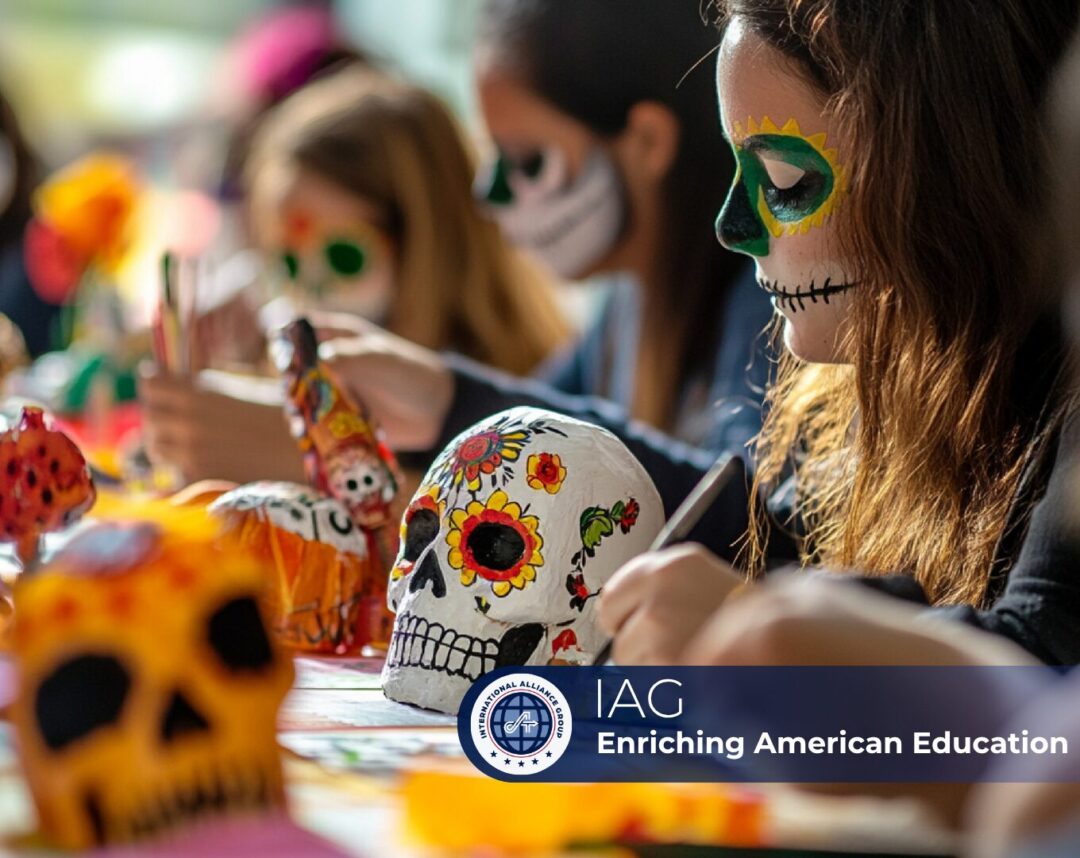
Few cultural traditions spark more genuine curiosity in American students than Día de Muertos. When a Mexican educator explains the meaning behind the ofrenda, the marigolds, the photographs of loved ones, and the belief that the boundary between the living and the dead dissolves for two days each year, something shifts in the room. 

Students begin asking questions that go far beyond the lesson plan. What do other cultures believe about death? How do different communities grieve? Why do some families celebrate ancestors while others don’t talk about them at all? 

These are not small questions. They are the foundation of critical thinking, empathy, and civic awareness — skills that every school district in the country is actively trying to develop in its students. 

Science through tradition and the natural world 

Long before modern astronomy, the civilizations of ancient Mexico were mapping the stars, predicting eclipses, and building calendars of extraordinary precision. When a Mexican educator brings this history into a science class, it does two things simultaneously: it teaches the content, and it expands the student’s understanding of where knowledge comes from. 

The same principle applies to topics like agriculture, ecology, and biology. The traditional practice of milpa farming — growing corn, beans, and squash together in a system that has sustained communities for thousands of years — is a living lesson in symbiosis, soil health, and sustainable ecosystems. These are concepts that appear in science standards across the country, and Mexican educators can teach them with a depth and authenticity that no textbook can replicate. 

Language and literacy through storytelling 

Mexican oral tradition is extraordinarily rich. Legends, dichos, folk tales, and the kind of storytelling that gets passed from grandparents to grandchildren around a table — all of it carries language, structure, metaphor, and meaning. Mexican educators often weave this material into reading and writing lessons, giving students access to narratives that feel different from what they typically encounter. 

For struggling readers, a story that feels genuinely new — one that doesn’t follow the predictable arc they have seen a hundred times — can be the spark that makes them want to turn the page. 

When a Classroom Becomes a Window to the World 

One of the most remarkable outcomes of culturally responsive teaching is what it does for students who have no personal connection to the culture being shared. 

When a child who grew up in rural Ohio encounters Día de Muertos for the first time through a teacher who lived it — not through a Wikipedia article or a worksheet, but through a human being who can answer every question with personal experience — something opens up in that child. 

They begin to understand, perhaps for the first time, that the world is larger and more complex than their immediate experience. That there are other ways of celebrating, grieving, cooking, counting, and understanding the universe. That their classmate who brings a different lunch, speaks a different language at home, or observes different holidays is not foreign — they are fascinating. 

This is global citizenship being built in real time, inside an ordinary classroom, through the presence of one teacher. 

Why This Matters for School Districts 

The benefits of culturally responsive instruction are well documented. Students in classrooms where their cultural background — or the cultural backgrounds of their peers — is actively incorporated into learning show higher levels of engagement, stronger academic performance, and greater social-emotional development. 

But the impact goes beyond data. School districts that welcome international educators through cultural exchange programs are investing in something that cannot be purchased through a curriculum package or a professional development workshop: genuine human diversity at the front of the classroom. 

A Mexican educator does not just teach Mexican culture. They teach American students how to be curious, how to connect, and how to find meaning in a world that is far bigger than the one they were born into. 

And sometimes, it all starts with a math problem about tamales. 

Bring Cultural Exchange to Your School District 

At IAG, we connect experienced, passionate international educators with school communities across the United States through the J-1 Cultural Exchange Program. If your district is ready to experience the impact of genuine cultural exchange in the classroom, we would love to connect. 


28Apr

21 Years of Passion: How Hilder Nyaga is Shaping Futures in the U.S. 

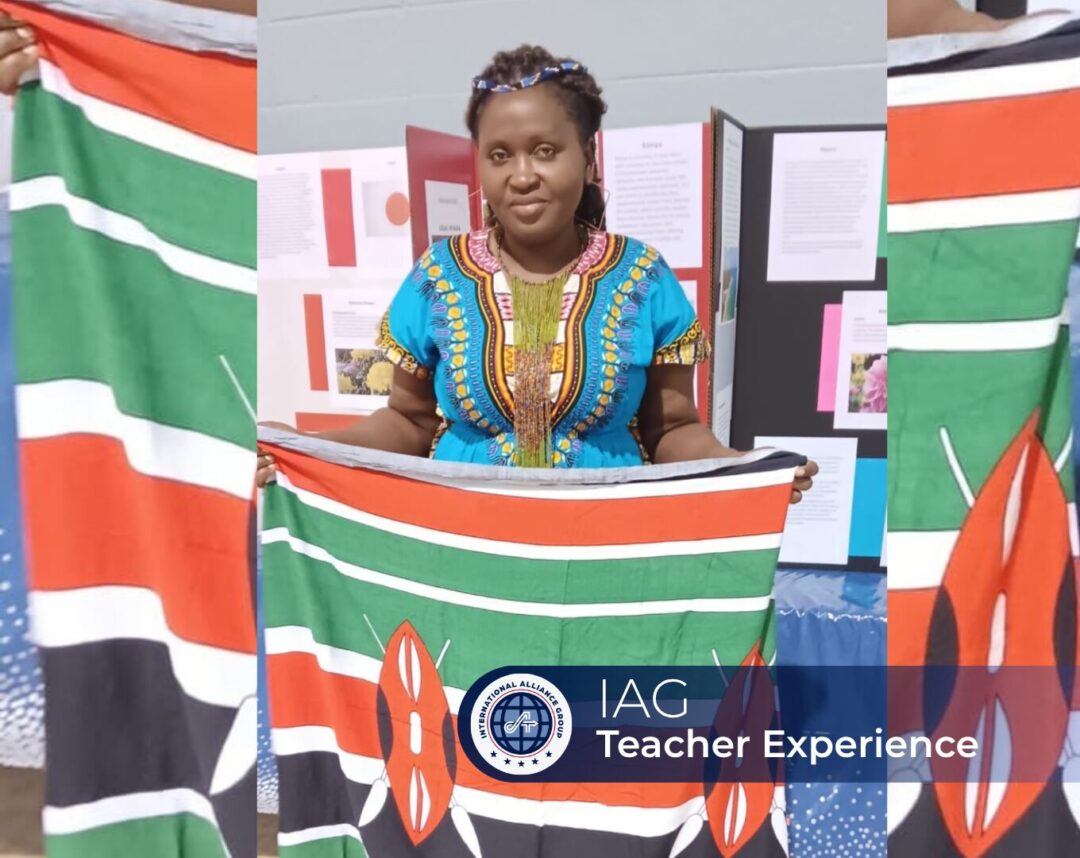
True mastery in education lies not just in degrees, but in the ability to connect with students’ hearts. Hilder Muthoni Nyaga, originally from Kenya, personifies this philosophy in her second-grade classroom in Richland County School District One, South Carolina. With 21 years of teaching experience in her home country and a Bachelor’s degree in Early Childhood Education from Mount Kenya University, Hilder has brought a lifetime of wisdom to the U.S. school system. 

For Hilder, this cultural exchange with IAG is the fulfillment of a lifelong passion for growth and sharing in diverse environments, proving that teaching is as much about connection and kindness as it is about academics. 

“Habari” and “Asante”: Language as a Bridge of Affection 

One of the most rewarding moments of Hilder’s journey has been hearing her American students try to speak Swahili. With pride and bright smiles, they greet her with a warm “Habari!” (Hello) or say “Asante” (Thank you) at the end of the day. 

Beyond language, Hilder has enriched her classroom with: 

    • Storytelling and Song: She has introduced traditional Kenyan strategies, using music and oral stories to make learning more engaging and build teamwork skills. 
    • Cultural Discovery: By sharing films and stories that showcase the warmth of the Kenyan community, she has sparked curiosity and a deeper global awareness in her students. 
    • Community Values: Hilder encourages respect and kindness, creating a supportive environment where every student feels proud of their background. 

Results That Inspire 

Hilder’s impact in Richland One has been formally recognized by her school for her dedication to cultural diversity and student success. Under her guidance, students have shown significant progress in reading and writing, as well as increased confidence in expressing themselves. 

On a personal level, Hilder has embraced local traditions, from the value of punctuality and independence to celebrating Thanksgiving and participating in school pep rallies. 

“Cultural exchange in education builds bridges of understanding and respect… it prepares students to become compassionate global citizens”. 

At IAG, we are honored to have educators like Hilder, whose vast experience and open heart are leaving an indelible mark on international education. 

Hilder’s journey is a testament to the transformative power that emerges when we open our classrooms to the world. By integrating international educators, school districts do more than strengthen their academic curriculum; they cultivate a generation of students with a global, empathetic, and respectful vision. At International Alliance Group (IAG), we are committed to facilitating these connections that transcend borders and turn every lesson into an opportunity for mutual discovery. 

Is your district ready to build bridges of understanding? Join our cultural exchange network today. 


27Apr

How Teacher Diversity Fosters Inclusion and Equity in the Global Classroom 

In today’s interconnected world, school districts across the United States are increasingly prioritizing diversity in education as a cornerstone of student success. While much of the conversation focuses on diversifying the student body, forward-thinking superintendents recognize that true equity starts at the front of the classroom. 

Bringing international educators into the school community is a transformative strategy that does more than just share a different culture—it fundamentally enriches the social and academic fabric of the entire district. 

The Power of Representation: Mirrors for Minority Students 

For many students, particularly those from minority or immigrant backgrounds, seeing a teacher who shares a similar heritage or has navigated the challenges of a different culture is a powerful experience. 

When a district hosts international educators, it provides students with “mirrors”—opportunities to see their own identities and potential reflected in a professional role model. This representation fosters a sense of belonging and validates the student’s own cultural background, which is a critical component of an inclusive curriculum. When students feel represented, their engagement increases, their confidence grows, and the achievement gap begins to close. 

Fostering Global Mindedness: Windows to the World 

While international teachers serve as mirrors for some, they serve as “windows” for all. By introducing diverse perspectives and unique life experiences, these educators help students develop global mindedness

An international exchange teacher brings more than just a lesson plan; they bring a living history and a global worldview. This presence challenges stereotypes, encourages critical thinking, and prepares students to navigate a globalized workforce with empathy and cultural competence. The “social fabric” of the school is strengthened as students and staff alike learn to value differences and find common ground through mutual respect. 

Enriching the Inclusive Curriculum through Exchange 

Equity in education also means ensuring that the curriculum reflects a wide range of human experiences. International educators naturally infuse their teaching with diverse examples, storytelling, and cultural nuances that traditional textbooks may miss. 

Whether it is a Science teacher sharing environmental challenges from South America or an ELA teacher introducing literature from the Philippines, the curriculum becomes more dynamic and inclusive. This exposure teaches students that knowledge is not monolithic—it is a tapestry of global contributions. 

A Strategic Advantage for District Leaders 

For school leaders and superintendents, participating in a cultural exchange program with International Alliance Group (IAG) is a commitment to excellence. International teachers: 

  • Promote Cultural Competency: They act as peer mentors for local staff, sharing best practices for reaching diverse learners. 
  • Support Inclusivity: They help schools move beyond “celebratory diversity” (holidays and food) toward “deep diversity” (shared values and collaborative learning). 
  • Prepare Global Citizens: They equip students with the cross-cultural skills necessary to thrive in an interconnected society. 

Cultivating a Legacy of Equity 

True equity is achieved when every student feels seen, heard, and prepared for the world beyond their zip code. By embracing the spirit of the J-1 cultural exchange, districts do more than host a guest; they embark on a journey toward a more inclusive and equitable future. 

When we open our doors to the world, we open our students’ minds to endless possibilities. Cultural exchange through International Alliance Group (IAG) is a bridge to a more inclusive future where every student feels represented and every classroom becomes a window to the globe. Let’s build a legacy of equity, one cultural ambassador at a time. 

Elevate Your District’s Global Impact 

The journey toward a truly equitable and globalized education starts with the voices leading your classrooms. By partnering with International Alliance Group (IAG), your district joins a dedicated mission to broaden student horizons, challenge stereotypes, and prepare the next generation to thrive in an interconnected world. 

Ready to transform your school community? Host a cultural ambassador and weave a richer social fabric within your district. Contact us today to learn how participating in our cultural exchange programs can help you build a legacy of equity that resonates far beyond the classroom walls.

21Apr

A Taste of Mexico in Ypsilanti: Building Bridges through Tradition

Education goes far beyond textbooks and exams; it is an opportunity to build bridges between cultures and broaden the horizons of new generations. Esteban Alberto Luna Vindiola, a passionate educator from Hermosillo, Mexico, is experiencing this transformation at Ypsilanti Community Middle School in Michigan

With a Bachelor’s Degree in Secondary Education majoring in English and eight years of teaching experience in his home country, Esteban joined this exchange program to challenge himself and proudly represent the richness of his culture. 

Language as a Cultural Bond 

In his current role as an EL-Support and ESL-Bilingual teacher for 8th grade, Esteban uses his specialty to make language a tool for unity. He has implemented innovative strategies brought from Mexico, such as: 

  • Project-Based Learning (PBL): Collaborative activities that connect language learning with culture. 
  • Mexican Gastronomic Showcase: A project where students explore traditions, practice public speaking, and develop teamwork while discovering Mexico’s culinary wealth. 
  • Motivation and Confidence: Thanks to his approach, he has noticed that his students show greater curiosity, participate more actively, and have significantly improved their confidence when expressing themselves in both English and Spanish. 

From Sonora to Michigan 

One of the most rewarding aspects for Esteban has been sharing the reality of his homeland. Originally from Hermosillo, where temperatures can exceed 45°C, Esteban enjoys seeing his students’ surprise when comparing such different climates. 

In addition to sharing stories about the extreme heat, he has introduced beloved traditions to his school, such as carne asada gatherings, Día de Muertos, and Mexico’s Independence Day celebrations, always explaining that food and family are at the heart of his culture. 

Integration and Recognition 

His adaptation has not only been academic. Esteban has enthusiastically embraced American traditions, from community events and school football games to Thanksgiving celebrations. His enthusiasm has not gone unnoticed: his principal has publicly recognized him on social media, making him feel like a valued part of the  

For IAG, having professionals like Esteban is key to fostering empathy, respect, and global awareness within the U.S. educational system. School districts play a fundamental role in this journey; by welcoming international educators, your district can provide students with a unique window into the world, creating a more inclusive and globally-minded environment. 

If your school district is interested in enriching its community through our cultural exchange program and bringing these transformative experiences to your classrooms, we invite you to learn more about our partnership opportunities. 

20Apr

The Magic of Inclusion with IAG’s International SPED Educators 

As April 2026 unfolds, we welcome Autism Acceptance Month. This year’s global theme invites us to view neurodiversity not as a challenge to be solved, but as a natural and vibrant part of the human experience. At International Alliance Group (IAG), we celebrate this month by highlighting the extraordinary cultural ambassadors at the heart of this mission: our international Special Education (SPED) educators

The Power of Global Representation 

In special education classrooms across the United States, student diversity is at an all-time high. This is where the cultural exchange spirit of IAG truly shines. When a neurodivergent student from a diverse background sees a teacher from the Philippines, Mexico, India, or Jamaica, a profound connection occurs. Representation matters, and in the SPED environment, seeing a successful, passionate professional from a different corner of the world tells students: “You belong here, and your unique perspective is a gift.” 

The International Advantage: Innovation with a “Human Accent” 

Why do schools thrive with IAG cultural ambassadors? Because our educators bring a world of experience that redefines the inclusive classroom through these tangible benefits: 

  • Unlocking Individual Potential (The “Superpower” Benefit): Our educators specialize in a Strengths-Based Approach, where every lesson is built upon the unique capabilities of each student. By integrating a student’s deep interests—whether in space, music, or technology—as the primary engine for learning, they foster genuine engagement and accelerated academic growth. 
  • Sensory-Smart Environments (The “Global Harmony” Benefit): Drawing from diverse international pedagogical backgrounds, IAG teachers implement classrooms that respect each child’s unique biological rhythm. By integrating “calm corners” and sensory breaks, our teachers create an atmosphere of emotional safety that reduces behavioral incidents and fosters a space where neurodivergent students feel regulated and ready to learn. 
  • Global Pedagogy & The “Human Accent” (The Innovation Benefit): Our teachers bring a unique “toolkit” of innovative techniques learned in their home countries—from creative storytelling to collaborative community-based learning. While they adapt to the US curriculum, they infuse it with the “Human Accent”—that essential connection of empathy, warmth, and shared cultural perspective that ensures growth is always heart-centered and deeply personal. 

A Bridge Between Cultures and Needs 

The BridgeUSA spirit is about more than just a classroom; it is a two-way street. While our international specialists  innovative methodologies to US schools, they also gain invaluable insights to eventually share with their home communities. This April, IAG reaffirms its commitment to being the bridge that connects the world’s most dedicated specialists with the students who need them most. 

Elevating the Standard of Inclusion in Your District

Integrating international cultural ambassadors does more than enrich the curriculum—it transforms school culture into a truly global community. At International Alliance Group, we facilitate partnerships with school districts that seek to go further, integrating specialists who bring a “pedagogy of the heart” and a diverse perspective essential for the success of neurodivergent students.

Bring the world to your classrooms. Learn how our international teacher program supports your district’s commitment to global citizenship and inclusive excellence.

14Apr

Digital Tools and the Power of Exchange in the Classroom

Modern education is about building bridges between different realities, and Emayette Gungob, an educator from the Philippines, is a prime example of how cultural exchange transforms the learning experience. With eight years of teaching experience in her home country and a Bachelor’s degree in Elementary Education, Emayette also brings the expertise of 30 graduate credits toward a Master’s in Education with a focus on Administration and Supervision. Currently, she teaches 5th-grade Math and Science at Brunswick County Public Schools

Her participation in this program is driven by a desire for professional growth and the opportunity to share her own culture with students and colleagues while learning from theirs. 

Bridging Borders Through Technology 

As a specialist in elementary education, Emayette has excelled at integrating digital tools into her instruction to enhance student learning. Her impact was recognized when she was awarded “Technology Teacher of the Year”. Beyond her work in the classroom, she serves as the school’s technology coach, mentoring colleagues in the effective use of Chromebooks, Smart Boards, and other digital resources. 

One of her most cherished projects involved facilitating an international cultural discourse through Padlet. This project allowed her students in the U.S. to collaborate and share experiences directly with students in the Philippines, sparking curiosity and promoting a deeper understanding of global diversity. 

Strategies for Success and Accountability 

Emayette has introduced pedagogical methods that foster student independence and critical thinking: 

  • Student-Centered Learning: She incorporates collaborative projects and hands-on activities that encourage students to take ownership of their education. 
  • A Culture of Responsibility: From the fifth grade, she teaches her students to monitor their own grades and assess their progress, promoting accountability from an early age. 
  • Tangible Results: Students who once felt frustrated with complex concepts like fractions and decimals now approach their work with confidence and independence. 

A Legacy of Global Citizenship 

In her school community, Emayette has shared Filipino traditions, including holidays, food, and cultural stories, helping students appreciate different perspectives. Simultaneously, she has embraced new cultural experiences in the U.S., such as learning how families come together for Thanksgiving and Halloween. She believes that such exchanges are vital for preparing students to thrive in an interconnected world. 

“Cultural exchange in education is invaluable… it exposes students to diverse perspectives… helping them become more open-minded, empathetic, and globally aware”. 

At IAG, we are proud to see how Emayette’s dedication and innovative spirit are helping to raise student achievement and strengthen the school community. 

Bring Global Innovation to Your Schools

If you are a school leader or district administrator looking to enhance your educational community with world-class talent and transformative cultural experiences, we invite you to partner with International Alliance Group. Together, we can strengthen student achievement and foster a more inclusive, globally-aware learning environment.


13Apr

Ambassadors of Excellence: The Transformative Impact of IAG Educators in the U.S. 

In today’s educational landscape, true innovation stems from the exchange of human perspectives. At International Alliance Group (IAG), our mission goes beyond administration; we are dedicated to cultivating a global network of educators who serve as cultural bridges. By integrating high-level professionals into American classrooms, we foster a learning environment where academic excellence and global awareness converge to prepare students for the challenges of the 21st century. 

This year has been historic for our community, marked by prestigious recognitions that validate the quality and commitment of our cultural ambassadors. 

A Legacy of Compassion: Jhamcarlos Escoto, Teacher of the Year 

One of the most notable achievements of this school cycle is the naming of Jhamcarlos Escoto Reyes as the “2025-2026 Teacher of the Year” at Yearling Middle School in Florida. Originally from Nicaragua, Jhamcarlos has demonstrated that teaching English Language Arts (ELA) can be a powerful tool for social empowerment. 


      • Multidimensional Leadership: Beyond his classroom work, he serves as the 7th Grade ELA PLC (Professional Learning Community) Lead and the school’s Yearbook Sponsor. 


        • A Philosophy of Impact: Guided by his heritage, he believes education is a “passport to a better future” and strives to educate the “whole person”—heart, mind, and spirit. 


          • A Culture of Success: He has transformed his classroom into a space where one student’s success is everyone’s success, breaking cultural barriers through collaboration. 

        Inclusion and Trust: The Recognition of Isaura Medina 

        In Arizona, Isaura Mayeli Medina Mendoza was honored with the Mosaic Staff Award within the Glendale Elementary School District. This award recognizes her exceptional effort in creating an inclusive and culturally responsive environment for her 5th-grade students. 


            • Ambassador of Nicaragua: She has enriched the curriculum by sharing traditions such as La Purísima and the history of Nicaraguan Independence Day. 


              • Innovative Methodologies: Her ability to adapt her teaching style to an environment that prioritizes student independence and critical thinking has been highly praised by administrators. 


                • Impact on Peers: Isaura has shared strategies involving music, games, and storytelling, which colleagues have adopted to create more interactive learning environments. 

              Elite Academic Results: The Triumph of Eliderky Sanchez 

              The excellence of International Alliance Group (IAG) educators also translates into tangible results in state evaluations. Eliderky Sanchez Mercedes, a Dominican educator in the Littleton Elementary District, Arizona, received the “Best 6th Grade Achievement of the Year” award. 


                  • Academic Mastery: Holding a Master’s Degree in Applied Linguistics and 12 years of prior experience, Eliderky led her 6th-grade ELA students to earn first place in the district on state assessments. 


                    • Dynamic Exchange: She has integrated merengue, bachata, and Dominican cuisine—such as mangú and sancocho—to spark historical and cultural curiosity among her students. 


                      • Communication Strategies: She utilizes oral presentations, role-playing, and debates to strengthen students’ confidence and critical thinking skills. 

                    The IAG Mission: Fostering Global Understanding 

                    The presence of these award-winning educators proves that cultural exchange is a vital investment in educational quality. School districts gain innovative perspectives and role models who personify lifelong learning and adaptability. 

                    For International Alliance Group (IAG), every award received by our educators is a confirmation that we are fulfilling our purpose: preparing students to thrive in a globalized society through empathy, respect, and academic excellence. 

                    The success stories of Jhamcarlos, Isaura, and Eliderky are a testament to the profound impact that international educators bring to American school districts. By embracing the spirit of cultural exchange, districts do more than fill a seat at the front of the classroom; they gain award-winning ambassadors who foster equity, drive academic results, and prepare students for a globalized world. Partner with International Alliance Group (IAG) today to bring a world of perspective and excellence to your educational community. 

                    Elevating Excellence through Cultural Exchange

                    For educational leaders, partnering with International Alliance Group (IAG) is a strategic commitment to both academic mastery and global citizenship. By hosting these award-winning ambassadors, your district does more than fill a space in the classroom—it integrates world-class expertise and diverse perspectives that prepare students to thrive in an interconnected society.

                    The success of our educators proves that cultural exchange is a vital investment in educational quality. We invite you to collaborate with IAG to bring transformative leadership, elite academic results, and a world of perspective to your educational community.


                    07Apr

                    From Jamaica to Florida: A Journey of Mathematical Excellence and Cultural Exchange 

                    Education is a universal language, but the way it is shared can change lives across borders. This month, we are proud to highlight the experience of Deneva Jackson-Whyte, a dedicated educator from Jamaica who has brought her passion for mathematics and her rich cultural heritage to the classrooms of Florida

                    With a Bachelor’s degree in Mathematics Education from the University of the West Indies and ten years of teaching experience in her home country, Deneva embarked on this exchange program to grow professionally and experience the vibrant nature of a multicultural classroom. 

                    A Record of Academic Success 

                    Currently teaching 6th Grade Accelerated and 8th Grade Mathematics in the Palm Beach school district, Deneva has made a staggering impact on her school’s academic standing. Her results are a testament to her dedication: 

                    • Top-Tier Performance: She has been recognized as a Highly Proficient teacher for two consecutive years. 
                    • Exceptional Results: Her students consistently perform above 90% on the Florida Assessment State Test (FAST). 
                    • District Leadership: In her first year, she helped her school earn first place in the district. 
                    • Measurable Growth: Under her guidance, 7th-grade mathematics scores increased from 74% to 91%, contributing to her school maintaining an “A” rating. 

                    Empowering Students Through Critical Thinking 

                    Deneva’s success stems from her unique pedagogical approach, blending traditional Jamaican teaching methods with modern strategies. She has introduced a constructivist approach, where children learn by doing through active practice. 

                    By prioritizing hard copies over technological devices, she encourages her students to think critically and become efficient problem solvers rather than simply copying information. This method ensures students truly capitalize on their potential and understand the value of working toward their goals. 

                    Building Cultural Bridges 

                    Beyond the numbers and formulas, Deneva is an ambassador of her culture. She has shared traditional Jamaican dishes and dances with her colleagues, fostering a deeper understanding of her home country. 

                    In return, she has embraced the diversity of the U.S. by participating in celebrations of American, Hispanic, Haitian, and African traditions. This mutual exchange is what Deneva believes drives the development of schools today. 

                    “Cultural exchange is the main reason behind the development of several schools, both culturally and academically.”  

                    Deneva’s message to her community back home is one of humility and wisdom: “It is an extraordinary experience… be humble and respectful to everyone.”. We at IAG are honored to support educators like Deneva as they continue to reach for their goals and inspire the next generation of scholars. 

                    If you’re interested in teaching in the USA through our cultural exchange program, you can start your application here: https://iagusa.schoolspring.com/ 

                    Before applying, we recommend reviewing the full process and requirements:  https://iagusa.org/help-center/watch-the-application-process/