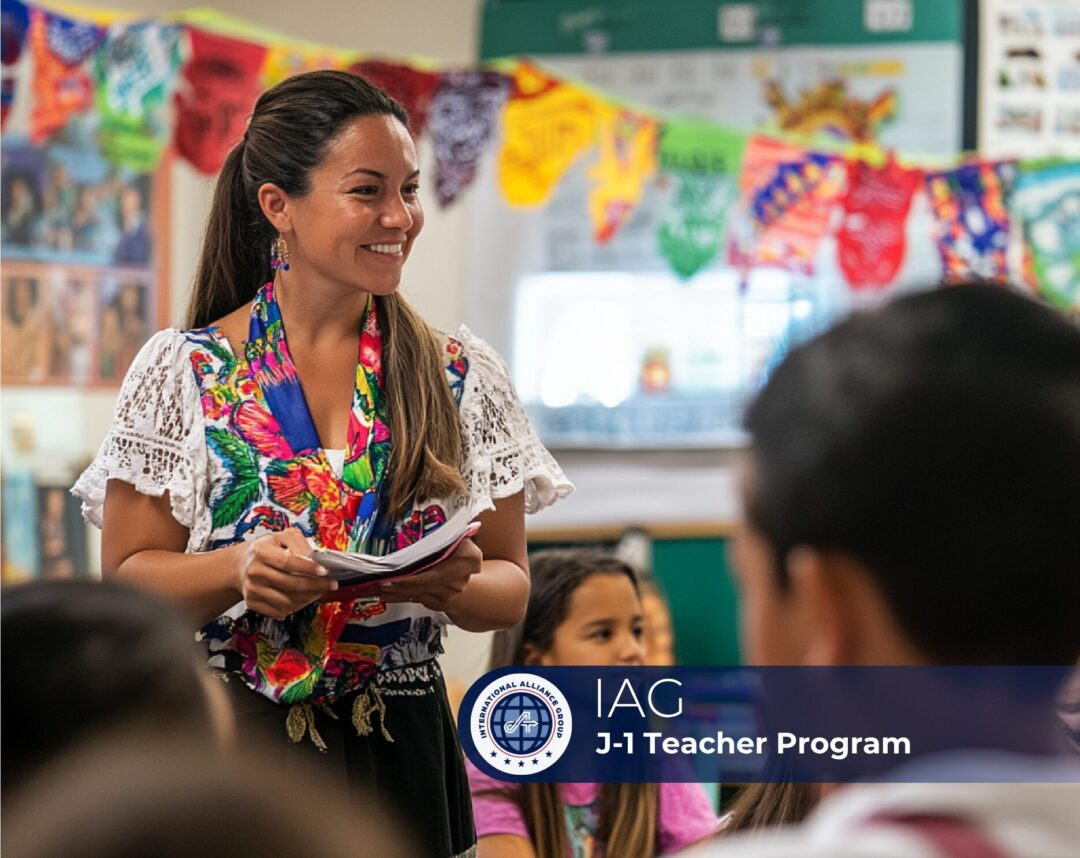
The J-1 Teacher Program is a temporary educational and cultural exchange program that allows qualified international educators to teach full-time in accredited U.S. primary and secondary schools. Participants share the culture and educational perspectives of their home countries while learning about the U.S. education system and building international connections within their host school communities.
A classroom can become a meaningful place for international connection.
Through the J-1 Teacher Cultural Exchange Program, qualified educators from other countries participate in U.S. school communities while sharing their knowledge, teaching perspectives and cultural traditions.
The experience is designed to promote mutual understanding. Students learn about another part of the world directly from an international educator, while the exchange teacher gains new perspectives on education and culture in the United States.
The program has a defined duration and specific participation requirements. It should be understood as an educational and cultural exchange experience rather than a permanent relocation pathway.
What Is the Main Purpose of the J-1 Teacher Program?
The central purpose of the J-1 Teacher Program is to increase mutual understanding between people in the United States and people in other countries through educational and cultural exchange.
The exchange benefits both sides.
Exchange teachers can:
- Share their home-country culture with students.
- Introduce different educational perspectives.
- Bring international context into everyday lessons.
- Learn about teaching practices in the United States.
- Build relationships with educators and school communities.
- Develop personally, professionally and interculturally.
- Create connections between students in different countries.
The program is not only about what the teacher teaches. It is also about what students, colleagues and communities learn from interacting with someone from another cultural and educational background.
What Does an Exchange Teacher Do?
An exchange teacher participates as a full-time educator in an accredited host school.
Depending on the school and teaching assignment, participants may:
- Plan and present lessons.
- Guide student learning.
- Evaluate student progress.
- Communicate with families and school colleagues.
- Participate in school activities.
- Introduce students to their home-country culture.
- Develop international classroom connections.
- Learn about the practices of the host school.
- Participate in required cultural activities.
Exchange teachers should arrive prepared to carry out the responsibilities of a professional educator while also embracing their role as cultural ambassadors.
Why Is Cultural Exchange So Important?
Cultural exchange distinguishes this program from a conventional international teaching arrangement.
Exchange teachers are expected to help students understand another country through authentic, personal and educational experiences.
A participant might:
- Present traditions from their home country.
- Share music, literature, art or celebrations.
- Compare educational experiences between countries.
- Introduce students to another language.
- Organize an international classroom project.
- Connect U.S. students with students abroad.
- Participate in community cultural events.
- Share global perspectives within the curriculum.
These activities help students see the world from different points of view.
They also give the exchange teacher opportunities to reflect on their own culture and learn how it is understood by others.
What Cultural Activities Are Expected?
The cultural component is a formal part of the Teacher category.
During each year of participation, exchange teachers are expected to complete cultural activities that:
- Introduce the teacher’s classroom, host school, school district or surrounding community to an aspect of the teacher’s home-country culture.
- Encourage dialogue between U.S. students and schools or students in another country, preferably the participant’s home country.
Examples could include:
- A classroom presentation about the participant’s country.
- An international reading project.
- A virtual exchange between classrooms.
- A cultural celebration at the host school.
- A collaborative project between students in two countries.
- A lesson comparing traditions or educational experiences.
- A community event featuring food, music, stories or art.
The purpose is meaningful interaction, not simply displaying flags or decorations.
Where Do J-1 Exchange Teachers Teach?
Participants in the Teacher category may teach full-time in accredited public or private U.S. primary and secondary schools.
This can include:
- Elementary schools.
- Middle schools.
- High schools.
- Accredited public schools.
- Accredited private schools.
The appropriate school setting depends on the teacher’s education, qualifications, subject area, grade-level background and program requirements.
Who Is the Program Intended For?
The program is intended for qualified international educators who are prepared to participate in both the educational and cultural dimensions of the exchange.
Potential participants generally need:
- Appropriate academic preparation.
- Professional teaching qualifications.
- Relevant classroom experience.
- Sufficient English proficiency.
- Readiness to participate in a U.S. school community.
- Interest in sharing their culture.
- Openness to learning about U.S. education and culture.
- The ability to adapt to a different environment.
- Commitment to the temporary nature of the exchange.
Being interested in traveling to the United States is not enough. Candidates should understand and support the educational and cultural purpose of the program.
Is the Program Only About Teaching?
Teaching is a central part of the participant’s experience, but it is not the only purpose.
The exchange also includes:
- Cultural learning.
- International relationship-building.
- Professional reflection.
- Community participation.
- Educational collaboration.
- Sharing teaching methodologies.
- Creating cross-cultural classroom experiences.
The strongest participants understand that they are both educators and cultural ambassadors.
Is the J-1 Teacher Program Permanent?
The J-1 Teacher Program is a temporary exchange experience with an established program period.
Participants should approach it as an opportunity to:
- Share their culture.
- Learn from another education system.
- Build international connections.
- Develop new perspectives.
- Bring their exchange experience back to their home-country communities.
It should not be presented as a permanent migration program.
How Is It Different From a Traditional International Position?
The J-1 Teacher Program has a specific exchange mission.
Participants do not simply enter a school to deliver instruction. They also have responsibilities connected to cultural exchange, international understanding and educational collaboration.
The experience includes:
- A designated program sponsor.
- Eligibility screening.
- A defined exchange period.
- Program monitoring and support.
- Cultural activity requirements.
- Host-school participation.
- Compliance with BridgeUSA regulations.
- A focus on mutual cultural understanding.
These elements are fundamental to the identity of the program.
What Is a Designated Sponsor?
A designated sponsor is an organization authorized by the U.S. Department of State to administer an Exchange Visitor Program.
A sponsor may be responsible for:
- Screening candidates.
- Verifying program eligibility.
- Reviewing English-language proficiency.
- Providing required program information.
- Issuing applicable exchange documentation.
- Monitoring participants throughout the program.
- Supporting compliance with program requirements.
- Confirming the cultural component of the exchange.
Candidates cannot independently create their own J-1 Teacher Program participation. They must be accepted into a program administered by an authorized sponsor.
What Is the Role of the Host School?
The host school provides the educational setting where the exchange teacher participates.
The host school may:
- Assign the participant to an appropriate classroom.
- Provide information about teaching expectations.
- Introduce the teacher to the school community.
- Support classroom integration.
- Facilitate cultural activities.
- Collaborate with the sponsor.
- Help the participant understand school practices.
- Encourage connections with students, families and colleagues.
The school community plays an important role in making the exchange meaningful for both the participant and U.S. students.
What Is the Role of International Alliance Group?
International Alliance Group supports international educators as they explore and prepare for J-1 Teacher cultural exchange experiences.
The IAG process may include:
- Providing accurate information about the J-1 Teacher Cultural Exchange Program.
- Reviewing eligibility and explaining program requirements.
- Guiding teachers through the application process step by step.
- Assisting with the preparation and review of academic, professional, and personal documentation.
- Coordinating interviews, evaluations, and required program documentation.
- Supporting teachers throughout visa preparation and pre-departure orientation.
- Helping participants prepare for relocation, cultural adjustment, and life in the United States.
- Providing ongoing guidance and support during the entire exchange program.
- Assisting participants, schools, and host communities whenever questions arise throughout the exchange experience.
- Monitoring participant well-being and program compliance as part of the sponsor’s responsibilities.
What Can Teachers Gain From the Exchange?
The J-1 Teacher Program can help educators develop through direct cultural and educational interaction.
Participants may gain:
- Exposure to different teaching practices.
- New classroom strategies.
- Intercultural communication skills.
- Broader educational perspectives.
- Relationships with international colleagues.
- Greater understanding of U.S. school communities.
- Experience presenting their culture to new audiences.
- Ideas they can later share in their home countries.
- Personal growth through adaptation and reflection.
The experience should benefit not only the participant but also the students, host school and home-country educational community.
What Do U.S. Students Gain?
Students can benefit from learning directly from an educator with a different cultural and educational perspective.
They may:
- Learn about another country.
- Hear different stories and experiences.
- Explore global issues through a personal connection.
- Build curiosity about languages and cultures.
- Challenge stereotypes.
- Develop intercultural communication skills.
- Connect with students in another country.
- Understand that education exists in many different contexts.
For many students, an exchange teacher may be one of their first meaningful connections with someone from another country.
What Should Teachers Consider Before Participating?
Teachers should consider:
- Their ability to adapt to a new school culture.
- Their confidence communicating in English.
- Their readiness to share their culture.
- Their interest in learning from others.
- Their ability to manage change.
- Their professional classroom preparation.
- The temporary nature of the program.
- Program fees and personal expenses.
- Housing and transportation planning.
- Separation from family and familiar support systems.
- Compliance with sponsor and program requirements.
An informed participant is better prepared to experience the exchange successfully.
Is This Program Right for You?
The J-1 Teacher Program may align with your goals if you:
- Are a qualified educator.
- Have at least two years of appropriate teaching experience.
- Want to share your culture.
- Are curious about U.S. education.
- Enjoy learning from different perspectives.
- Are prepared to participate actively in a school community.
- Understand that the program is temporary.
- Are willing to complete a detailed eligibility process.
- View yourself as both an educator and cultural ambassador.
- Have English proficiency at the B2 level or above.
The next step is to understand whether your academic and professional profile may meet the eligibility requirements.
Frequently Asked Questions
What is the J-1 Teacher Program?
It is a temporary cultural and educational exchange program for qualified international teachers who participate in accredited U.S. primary and secondary schools.
Is cultural exchange required?
Yes. Cultural exchange is a core component of the program. Participants are expected to share their home-country culture and create international connections for U.S. students.
Do exchange teachers teach full-time?
Yes. Participants in the Teacher category teach full-time in qualifying accredited host schools.
Is this a permanent immigration program?
No. It is a temporary exchange program with a defined period of participation.
Can anyone participate?
No. Candidates must meet specific academic, professional, English-language, sponsor and program requirements.
Do participants need to share their culture?
Yes. Exchange teachers are expected to complete cultural activities during each year of program participation.
What kinds of cultural activities can teachers organize?
Activities may include classroom presentations, international projects, cultural celebrations and dialogue between U.S. students and students in another country.
Can participants teach at universities?
The J-1 Teacher category is intended for accredited primary and secondary schools. University participation generally falls under other Exchange Visitor Program categories.
Does submitting an application guarantee participation?
No. Submission does not guarantee eligibility, sponsorship, school selection, program participation or visa approval.
Bring Your Culture Into the Classroom
Explore the J-1 Teacher Cultural Exchange Program and learn how international educators can create meaningful connections through teaching and cultural exchange.