
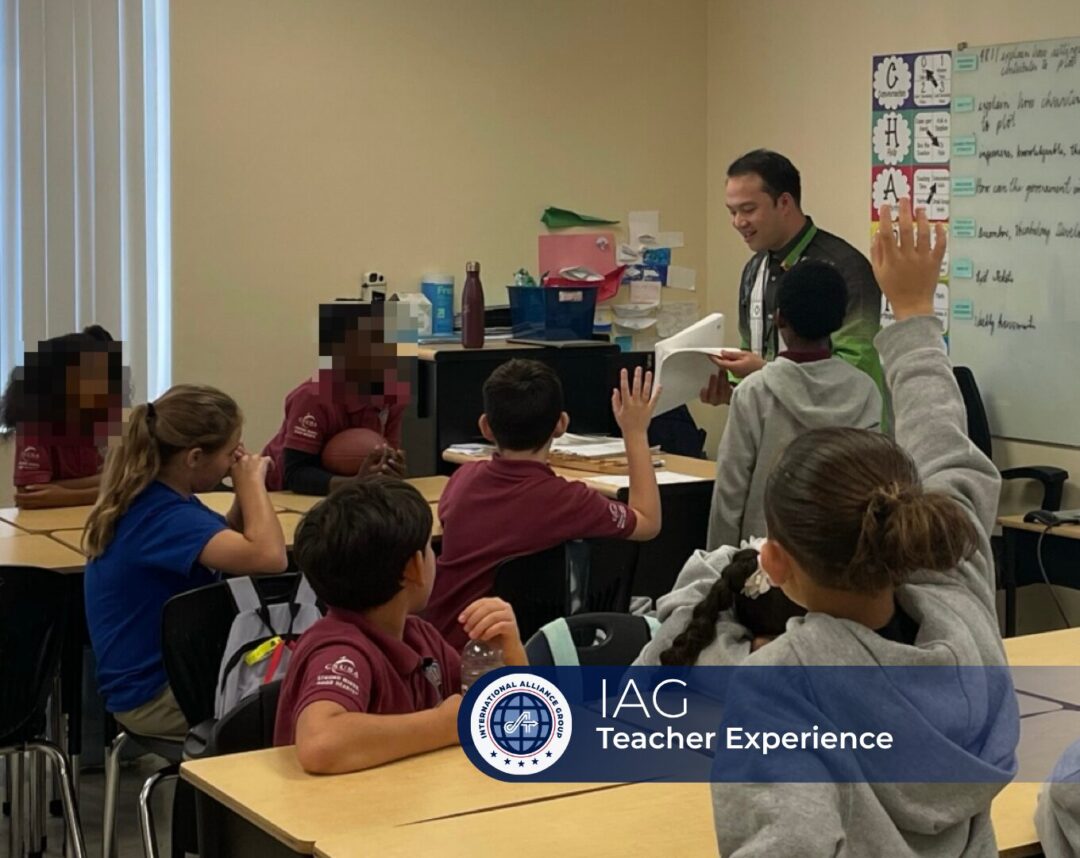
After 11 years shaping young minds in the Philippines, Ian Benedict Roxas brought his passion for language arts — and a set of traditional Filipino games — to a 4th grade classroom in Palm Beach County.
There is a particular kind of courage required to leave a career you love, in a country you know deeply, and start again in a classroom on the other side of the world. Ian Benedict Roxas has that courage — and the classroom to prove it.
A graduate of Southern Luzon State University with a degree in Secondary Education majoring in English, Ian spent 11 formative years as a teacher in the Philippines before joining the IAG International Exchange Program and landing in Palm Beach County elementary schools. He now teaches 4th Grade ELA in Florida, armed with a PRC Teaching License, a Florida Exchange Teacher Certificate, and an unshakeable belief that culture belongs in every classroom.
Why He Made the Leap
For Ian, the move was about purpose. ‘I wanted to broaden my global perspective in an international classroom,’ he explains, ‘while taking pride in my Filipino roots by sharing them with my US school community.”
That duality — growing professionally while staying rooted culturally — is at the heart of what makes international teachers like Ian so valuable.
Navigating a New Educational Landscape
Adapting to a new country is never seamless, and Ian is candid about where the friction has been. On the personal side: food. “Finding the food I’ve gotten so used to in the Philippines has been one of the most challenging parts,” he admits.
Professionally, the steeper climb has been mastering the curriculum and educational technologies that simply didn’t exist in his previous teaching context. U.S. classrooms run on a robust ecosystem of digital tools, and coming up to speed requires genuine effort and dedication.
The rewards have more than matched the challenges. Ian describes the feeling of hearing directly from his students that they are learning — and seeing them feel safe and welcomed in his classroom — as his greatest professional satisfaction. During a local Cultural Celebration Activity, he watched his 4th graders become completely absorbed as he presented the culture, traditions, and values of the Philippines.
Bringing the Philippines Into Room 4
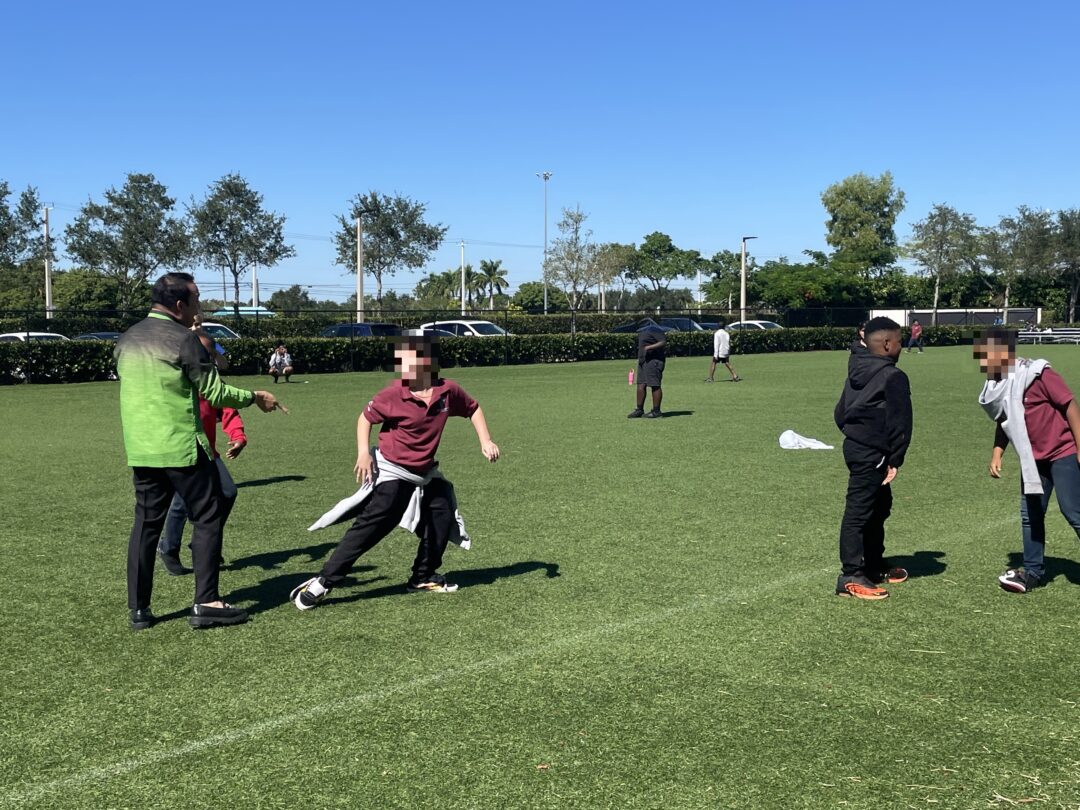
Ian doesn’t just teach English Language Arts — he teaches through culture. With his 4th graders, he has introduced traditional Filipino games including Sungka (a strategy board game played with shells), Dama (a Filipino variant of checkers), and Patintero (a team street game). These aren’t just fun diversions; they are living artifacts of a culture that most Florida 9-year-olds would never otherwise encounter.
In the classroom, Ian has also applied the Philippine tradition of Question-Answer type discussions — a hallmark of Filipino pedagogy that centers active dialogue. “I noticed that it really triggers the students’ creative and critical thinking,” he says.
WHAT ADMINISTRATOR WALKTHROUGHS SAY
- Classroom is well-organized and structured
- Great collaboration observed in learning centers
- Lessons are well-prepared with real-world connections
- Lesson plans are thoroughly completed
- Students are actively engaged throughout
A Perspective on Global Education
When asked what a school district gains by welcoming international teachers, Ian reaches for a vivid metaphor: “Consider the spices that add flavors to the dishes — it’s the same flavor and quality that the diversity of international teachers brings to the classroom.”
His message for district leaders draws on IB philosophy: cultural exchange develops inquirers, thinkers, risk-takers, and open-minded students — “characteristics that are deemed useful when they go out to see the world” and key to “a sustainable and peaceful world.”
And for his community back home in the Philippines, he has a message as simple as it is powerful: “Close one door, open another — the world awaits you.”

Ian’s goals for his time in the United States are both professional and personal. He wants to continue developing his teaching craft through professional development opportunities. And personally, he wants to grow while staying grounded. “I wanted to grow, but at the same time stay grounded amidst all the opportunities given and provided for me in this cultural exchange program.”
That balance — of ambition and humility, of growth and rootedness — may be the most teachable thing about Ian Benedict Roxas.
Every great educator leaves a mark. By welcoming international exchange teachers, your district provides students with a window to the world. Are you ready to start this journey of cultural and educational discovery?