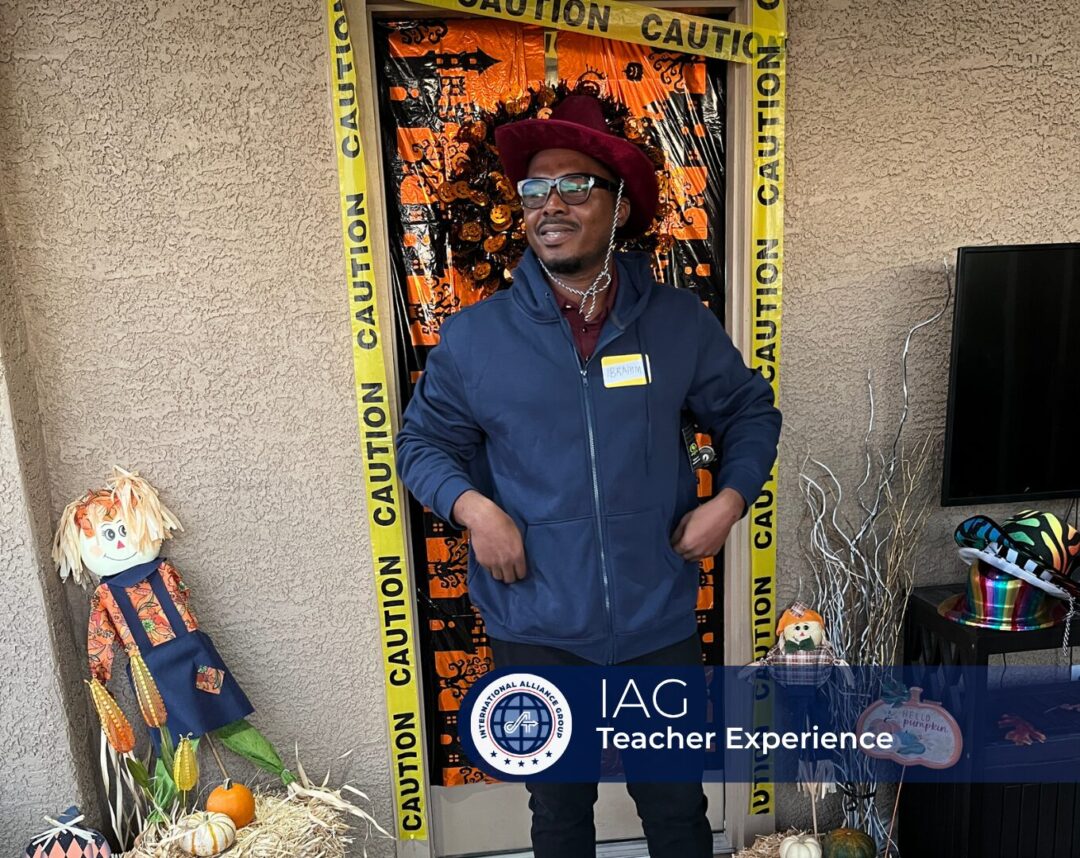
When Ibrahim Mohammed first walked into a classroom in Arizona, he brought with him something no teacher training program can replicate: eight years of lived experience navigating the rich complexity of special education in West Africa.
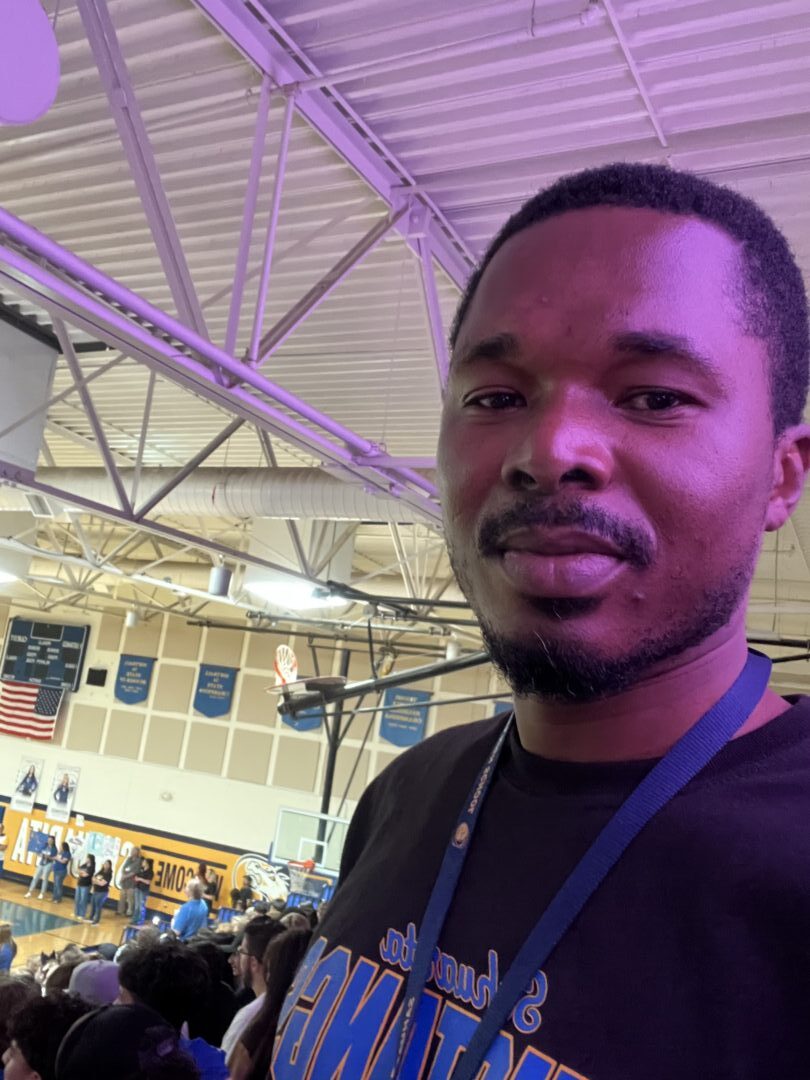
Ibrahim holds a Bachelor of Education in Special Education from the University of Education, Winneba — one of Ghana’s leading teacher training institutions — and a Diploma in Basic Education. Today, he teaches SPED English to K-9 and K-10 students at the Sahuarita Unified School District in Arizona, part of the IAG International Teacher Exchange Program.
A Mission Bigger Than a Classroom
Ibrahim didn’t apply to teach in the United States on a whim. His motivation was deliberate and outward-looking: “I wanted to equip myself with international best practices in teaching and to prepare myself as a global teacher while I share my experiences and culture with students in the United States of America.”
That framing — preparing himself and sharing himself simultaneously — captures the dual value of international teacher exchange. It isn’t a one-way transfer of talent. It’s a sustained conversation between educational cultures.
“My principal told me I’m doing so well and he believes I will leave a mark.”
— Ibrahim Mohammed, on feedback from his administrator
Teaching with RPK: A Ghanaian Pedagogical Gift
Among the most tangible contributions Ibrahim has brought from his Ghanaian training is a deliberate, structured approach to Relevant Previous Knowledge (RPK) — a foundational principle of Ghanaian pedagogy that begins every lesson by connecting new content to what students already know from their own lives and experiences.
“I build and present my lessons taking into consideration the relevant previous knowledge of my students and it has been very helpful,” he explains. In a special education setting, this approach is especially powerful: students with learning differences benefit greatly when new material is anchored in the familiar, reducing cognitive load and increasing engagement.
WHAT IS RPK-BASED INSTRUCTION?
Relevant Previous Knowledge (RPK) is a teaching method rooted in Ghanaian educational tradition. Rather than introducing new concepts in isolation, teachers begin every lesson by surfacing what students already know — their experiences, prior learning, and cultural context — and building new knowledge from that foundation. It aligns closely with Universal Design for Learning (UDL) principles widely recognized in U.S. special education.
The Culture He Carries, the Culture He’s Found
In his interactions with colleagues and students, Ibrahim has shared what makes Ghana distinctly Ghana: its educational philosophy, its vibrant festivals, and the cultural meaning behind Ghanaian names — each one carrying a story, a lineage, a worldview.
WHAT IBRAHIM SHARES WITH HIS SCHOOL
- Ghana’s educational system and its philosophy
- Traditional Ghanaian festivals and tourist landmarks
- The cultural significance of Ghanaian names
Perhaps the most meaningful result he has observed in his students is a growing capacity for self-advocacy. “My students are able to advocate for themselves,” he says. In special education, that outcome is not incidental — it is the goal.
What Districts Gain — and What the World Needs
Ask Ibrahim what a school district gains by hiring international teachers, and his answer is expansive: “It helps the students and staff to see the World beyond the United States of America.”
For district and school leaders, he offers a message as urgent as it is hopeful: cultural exchange makes students not just better learners, but better global citizens — equipped to embrace diversity and participate meaningfully in an interconnected world.
For his community in Ghana, he has a different kind of testimony: “I have experienced growth and development in my career as a teacher.” Simple. True. And a powerful invitation for others considering the same path.
What Comes Next
Ibrahim’s goals in the United States are ambitious and concrete. He wants to be counted among the best teachers in his district — and to see measurable improvements in his students’ academic performance. Both goals reflect the same core drive: excellence in service of others.
His principal already believes he’ll leave a mark. His students are learning to speak up for themselves. And an entire school community in southern Arizona is getting a window into a world they might never have seen otherwise. That is what international teaching looks like when it works.
The Value of Opening Doors to the World
For school districts, integrating international exchange teachers is far more than a way to strengthen the faculty; it is an invitation to expand the horizons of the entire educational community. The presence of educators like Ibrahim Mohammed allows students—particularly those in special education settings—to develop deeper empathy and a genuine understanding of cultural diversity.
By participating in cultural exchange programs, districts do more than just adopt innovative pedagogical methodologies like RPK; they foster an environment where global curiosity is woven into the daily curriculum. It is an opportunity to transform the school into a true international meeting point, preparing students to participate meaningfully in an increasingly interconnected world.
Enrich your school community with the gift of global diversity. Discover how hosting international exchange teachers can transform your district’s culture and broaden your students’ horizons far beyond the classroom walls.