24Mar

Rhythms of Success: Eliderky Sanchez’s Cultural Exchange Journey in Arizona 

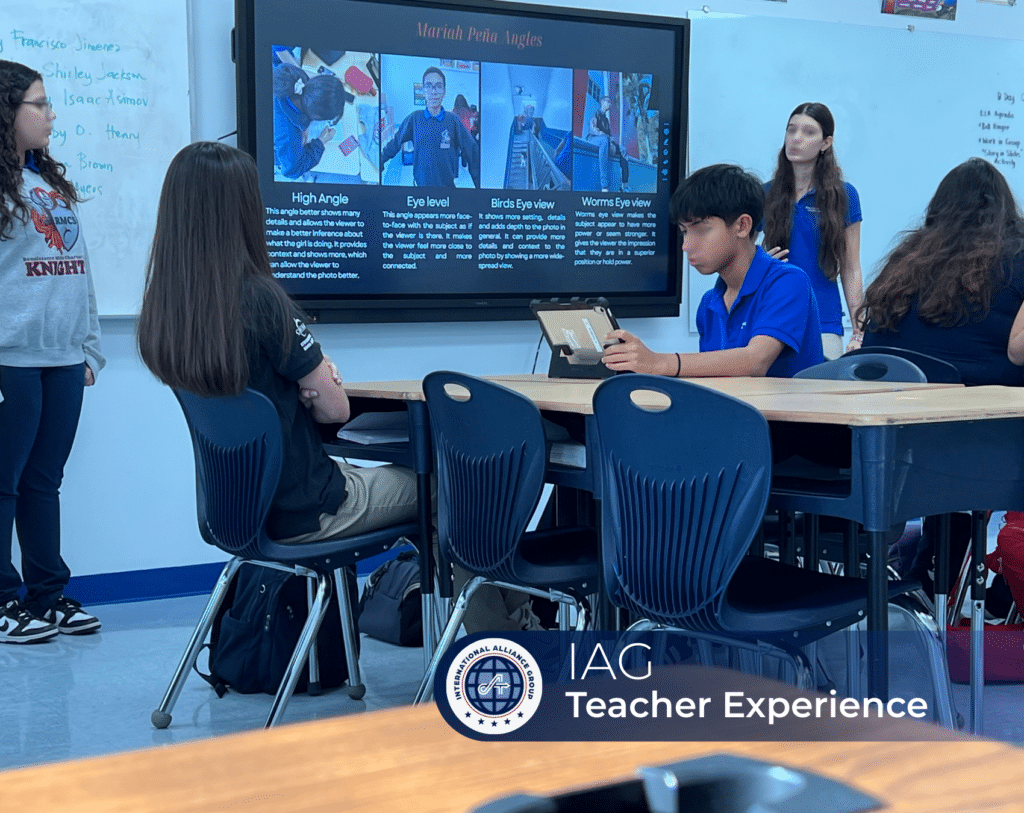
For Eliderky Sanchez Mercedes, the classroom is a space where language, culture, and academic excellence converge. Originally from the Dominican Republic, Eliderky has brought over a decade of expertise to Littleton Elementary District in Arizona, where she inspires 6th-grade students in English Language Arts (ELA)

A Foundation of Academic Mastery 

Eliderky arrived in the U.S. with a profound academic background, including a Master’s Degree in Applied Linguistics for Teaching English as a Foreign Language. With 12 years of teaching experience in her home country and certifications from institutions like Cambridge University and the National Writing Project, she represents the high caliber of international educators participating in this exchange. 

Her motivation for joining the IAG program was rooted in a passion for continuous learning and a desire to immerse herself in a multicultural environment where she could exchange innovative instructional strategies. 

Bringing the Spirit of the Caribbean  

Eliderky has transformed her Arizona classroom into a vibrant hub of cultural awareness. By sharing the traditions of the Dominican Republic, she has fostered a deeper global understanding among her students and colleagues: 

  • Music and Dance: She introduced her school community to the rhythmic heritage of merengue and bachata
  • Culinary History: Discussions about traditional dishes like mangú and sancocho sparked meaningful conversations about history and culture. 
  • Festivals: She organized interactive activities centered around Dominican Independence Day and Carnival

In return, Eliderky has embraced the unique cultural tapestry of Arizona, exploring Native American art and the vibrant Mexican influences found in local food and community events. 

Award-Winning Impact and Academic Growth 

The results of this cultural exchange are reflected in the outstanding achievements of her students. Under Eliderky’s guidance, her 6th-grade ELA students achieved first place in the district on the state assessment. This incredible success earned her the prestigious “Best 6th Grade Achievement of the Year” award in her district. 

Administrators and families have praised her dedication, noting her ability to foster effective academic conversations and create a supportive, high-achieving environment. 

Innovative Strategies for the Classroom 

By integrating successful methods from the Dominican Republic, Eliderky has enriched the American learning experience: 

  • Interactive Learning: Using storytelling, music-based lessons, and interactive group activities to make learning dynamic. 
  • Communication Skills: Implementing oral presentations, role-playing, and debates to build student confidence and critical thinking. 
  • Peer Mentoring: Emphasizing collaborative learning where students support one another’s growth. 

“Cultural exchange in education is invaluable for preparing students to thrive in a diverse and interconnected world. It fosters empathy, critical thinking, and global awareness.” — Eliderky Sanchez Mercedes. 

Join the Global Movement 

The International Alliance Group (IAG) exchange program offers highly qualified, certified educators like Eliderky the opportunity to transform their professional practice while serving as cultural ambassadors. This journey is about more than teaching; it is about building a more inclusive, globally-minded future for students and educators alike. 

Thank you for following our “Teacher Experiences” series! Stay tuned for more stories of impact and cultural connection. 
23Mar

Spring Without Borders: How International Teachers Share the Essence of Home

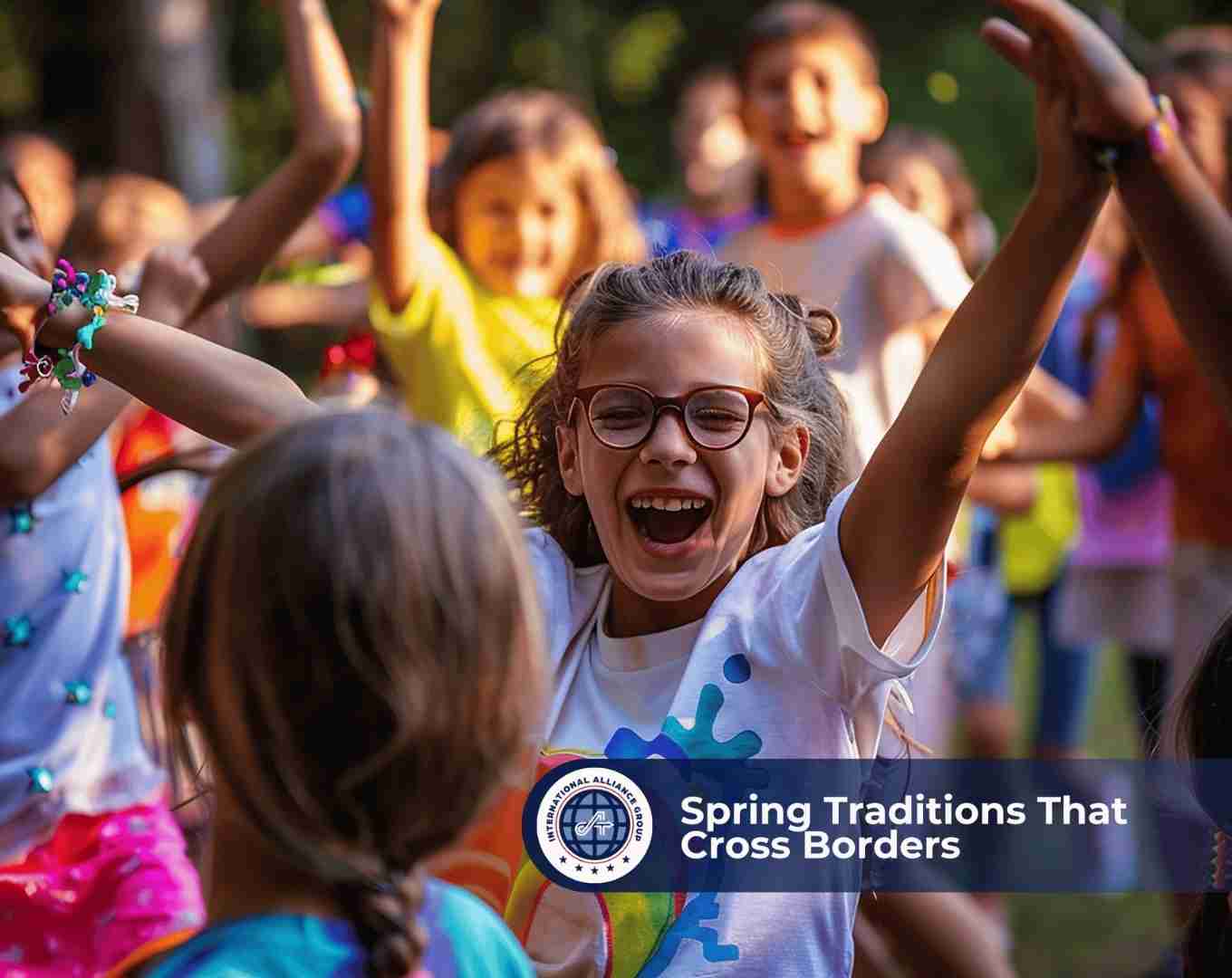
As the winter chill fades and the first buds appear on the trees, a sense of transformation fills the air. March 20th marks the Spring Equinox, a universal symbol of new beginnings, hope, and growth. In the world of international education, spring is more than just a change in weather; it is a milestone in the cultural exchange journey

At International Alliance Group (IAG), we see this season as the perfect opportunity to turn the classroom into a vibrant “Cultural Fair.” It’s a time for J-1 Visa Program teachers to share how their home countries welcome the renewal of life, creating a bridge of understanding through the colors, sounds, and stories of spring. 

Global Traditions: From Ancient Pyramids to Flower Parades 

Every culture has a unique way of saying “hello” to the sun. When international teachers share these traditions, they aren’t just giving a history lesson; they are inviting their students to see the world through a different lens. 

  • Mexico: The Descent of the Serpent. In Mexico, the spring equinox is a spiritual and architectural marvel. Teachers often share the story of Chichén Itzá, where the ancient Mayans designed a pyramid so that, on this exact day, the sun creates a shadow that looks like a feathered serpent descending the stairs. It’s a powerful lesson in history, astronomy, and the deep connection between culture and nature. 
  • The Philippines: Panagbenga, the Season of Blooming. While the Philippines is a tropical paradise, the month of March kicks off the famous Panagbenga Festival in Baguio City. The word itself means “a season of blooming.” Teachers share the vibrant energy of floral floats and traditional dances that celebrate the resilience and beauty of the land. It’s a lesson in gratitude and the joy of community. 
  • The Southern Hemisphere: The September Memory. Teachers from countries like Argentina or Colombia bring a fascinating “reverse” perspective. While the U.S. celebrates spring now, they share memories of their Día de la Primavera in September. This contrast helps students understand the wonders of our planet’s geography and how, somewhere in the world, someone is always experiencing a “new beginning.” 

The “Exchange” Angle: Blooming Together 

Just as nature blooms in the spring, the relationship between an international teacher and their students reaches a special maturity during this season. By March, the initial “getting to know you” phase has turned into a deep, rooted connection. 

The classroom “Cultural Fair” becomes a space where students might wear traditional floral crowns, listen to folk songs about renewal, or plant seeds while learning the words for “flower” or “growth” in a new language. These activities foster a sense of global citizenship, showing students that despite our different traditions, we all share the same hope for a bright future. 

A Season to Reflect on Your Journey 

For the thousands of educators currently in the J-1 Visa Program, spring is a time to look back at how much they have grown since they first arrived. Just like a seed that was planted months ago, their impact in the U.S. school system is now in full bloom. 

At International Alliance Group, we believe that every cultural exchange is a story of renewal. We honor the teachers who bring the spirit of their spring to American classrooms, reminding us all that when we share our traditions, our understanding of the world grows more beautiful. 

17Mar

From the Philippines to Miami: Ciarra Colline Santos and the Power of “Bayanihan” 

For Ciarra Colline Santos, teaching is not just about grammar and literature; it is about building a community where every voice is heard. Originally from the Philippines , Ciarra has brought her deep passion for English Language Arts to Miami-Dade, Florida , where she is helping 6th-grade students find their own voices while sharing the richness of her own. 

A Foundation of Professional Excellence 

Ciarra’s journey is built on a high level of academic preparation. She holds a Bachelor of Secondary Education Major in English and a Master of Education Major in English from Republic Central Colleges. With seven years of teaching experience in her home country before embarking on this exchange , she arrived in the U.S. as a Licensed Professional Teacher ready to contribute to a diverse learning environment. 

Her motivation was clear from the start: to grow professionally, experience a multicultural classroom, and make a lasting positive impact on students in the U.S. while serving as a cultural ambassador for the Philippines. 

Cultivating Unity through “Bayanihan” 

One of the most profound cultural gifts Ciarra has shared with her school is the spirit of “Bayanihan”. In Filipino culture, Bayanihan refers to a community coming together to achieve a common goal, often in difficult situations. 

  • Collaborative Learning: Ciarra introduced this concept to her students through group activities, fostering an environment where they work together to overcome academic challenges. 
  • Value-Based Discussions: She uses value-based lessons to build respect, teamwork, and global awareness within her classroom. 
  • A Two-Way Street: While Ciarra shares her heritage, she has also embraced American culture, noting the unique local tradition of “small talk” with strangers as a new and interesting discovery. 

Academic Success and Administrative Recognition 

The impact of Ciarra’s presence in Miami-Dade is reflected in the success of her students. She has noted that when students initially struggle with specific standards, her focus on collaborative learning and reteaching strategies has led them to reach and exceed passing percentages. 

This dedication to excellence has been recognized by school administrators, who have commended her lesson plans and consistently praised her for the positive learning environment she has created. By promoting inclusivity and global understanding, she is helping her colleagues with new ideas for student engagement and classroom management. 

A Vision for Global Citizenship 

Ciarra believes that international educators bring a vital perspective to any school district. By fostering empathy and respect, cultural exchange prepares students to be true global citizens. 

“Teaching in the U.S. has been a rewarding experience that helped me grow professionally and personally. I’m proud to share my culture while learning from others.” — Ciarra Colline Santos. 

Join the Cultural Exchange Journey 

The International Alliance Group (IAG) exchange program offers highly qualified educators like Ciarra the chance to transform lives while experiencing the world. This is a unique opportunity to act as a cultural ambassador, gain international exposure, and return home with a global perspective that enriches your entire community. 

Follow our series to discover the next story of impact! 

16Mar

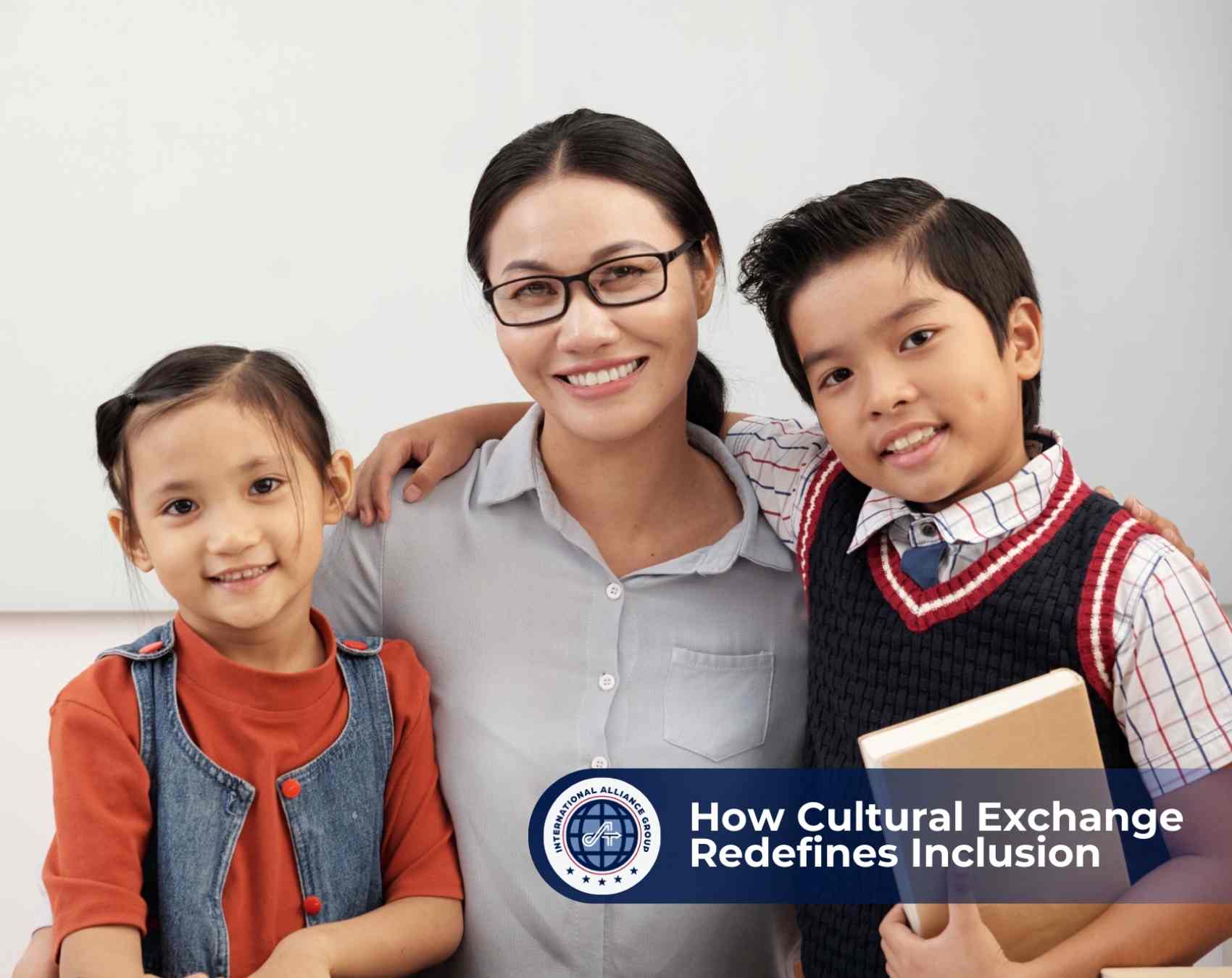
Special Education: How Cultural Exchange Redefines Inclusion 

March is Developmental Disabilities Awareness Month, a time to reflect on how we can build more inclusive communities where every individual has the opportunity to succeed. In the world of education, “inclusion” is a goal we all share, but the way we achieve it can be as diverse as the students we serve. 

At International Alliance Group (IAG), we believe that diversity in the teaching staff leads to diversity in solutions. Through the J-1 Visa Program, international special education teachers are bringing fresh, global methodologies into U.S. classrooms, proving that when it comes to supporting students with developmental disabilities, there are no borders. 

A Global Toolkit for Diverse Learners 

Every country has its own history and approach to inclusion. When an international educator arrives in a U.S. classroom, they don’t just bring a curriculum; they bring a unique pedagogical “toolkit” shaped by their home country’s best practices. 

  • Sensory and Emotional Approaches 

A teacher from South America might bring a deeply warm, sensory-focused approach to the classroom, emphasizing emotional regulation through music, rhythm, or community-based tactile activities. In the Philippines, music is more than just an art form; it is a universal language of connection. We see this come to life in the classrooms of our Filipino educators, like Manilyn, who has mastered the art of teaching through music. 

In a Special Education (SPED) setting, rhythm and melody become powerful tools for students. By integrating songs and rhythmic patterns into daily routines, these teachers help students improve their focus, memory, and emotional expression. It’s a harmonious blend of cultural tradition and specialized pedagogy that creates a “rhythm of success” for every child. 

  • Sensory Warmth and Emotional Regulation 

Teachers coming from México and South America often bring a deeply warm, sensory-focused approach to the classroom. In these cultures, the “human touch” and emotional connection are foundational to learning.  

These educators emphasize emotional regulation through community-based tactile activities. Whether it’s using specific sensory textures to calm a student or creating “learning circles” that feel like a supportive family unit, they bring a level of cariño (care and affection) that helps students feel safe enough to take risks in their learning. This focus on the “whole child” is a cornerstone of the international exchange spirit. 

  • Creative Problem Solving 

Many of our international teachers have experience working in diverse environments where resources may be limited. This has turned them into masters of “thinking outside the box.” When a traditional method doesn’t resonate with a student, an IAG teacher might reach into their experience to find a low-tech, highly personalized solution. From creating handmade manipulative tools to inventing new ways to use everyday objects for physical therapy or motor skills, their ability to adapt is a gift to the U.S. school system. They prove that with creativity and a global perspective, there are no barriers to learning. 

Innovation Through Collaboration 

The cultural exchange doesn’t just happen between the teacher and the student; it happens between colleagues. When a U.S.-based SPED team welcomes an IAG teacher, a beautiful “cross-pollination” of ideas occurs. 

U.S. teachers share their expertise in individualized education programs (IEPs) and technology, while the international teacher shares diverse perspectives on behavioral support or social integration. This exchange creates a richer, more robust environment where the ultimate winner is the student. By combining the best of both worlds, we create a specialized education plan that is truly world-class. 

Empowering the Unique Learner 

For a student with a developmental disability, having a teacher who comes from a different background can be a transformative experience. It teaches them—and the entire school community—that being “different” is a global commonality. Seeing a teacher navigate a new language or culture with success and grace serves as a powerful lesson in resilience. It shows students that their own unique way of learning and interacting with the world is not a barrier, but a different way of being part of a global family. 

At the end of the day, inclusion is about making sure every voice is heard and every potential is realized. By fostering Inclusion Without Borders, we aren’t just teaching; we are building a more empathetic world. 

In International Alliance Group, we celebrate the international educators who bring their expertise and their hearts to the SPED classroom. Your unique perspective isn’t just a bonus—it might be the very key that unlocks a student’s future. 

10Mar

Voices of Kenya in Arizona: Catherine Obwaka’s Journey of Inclusion 

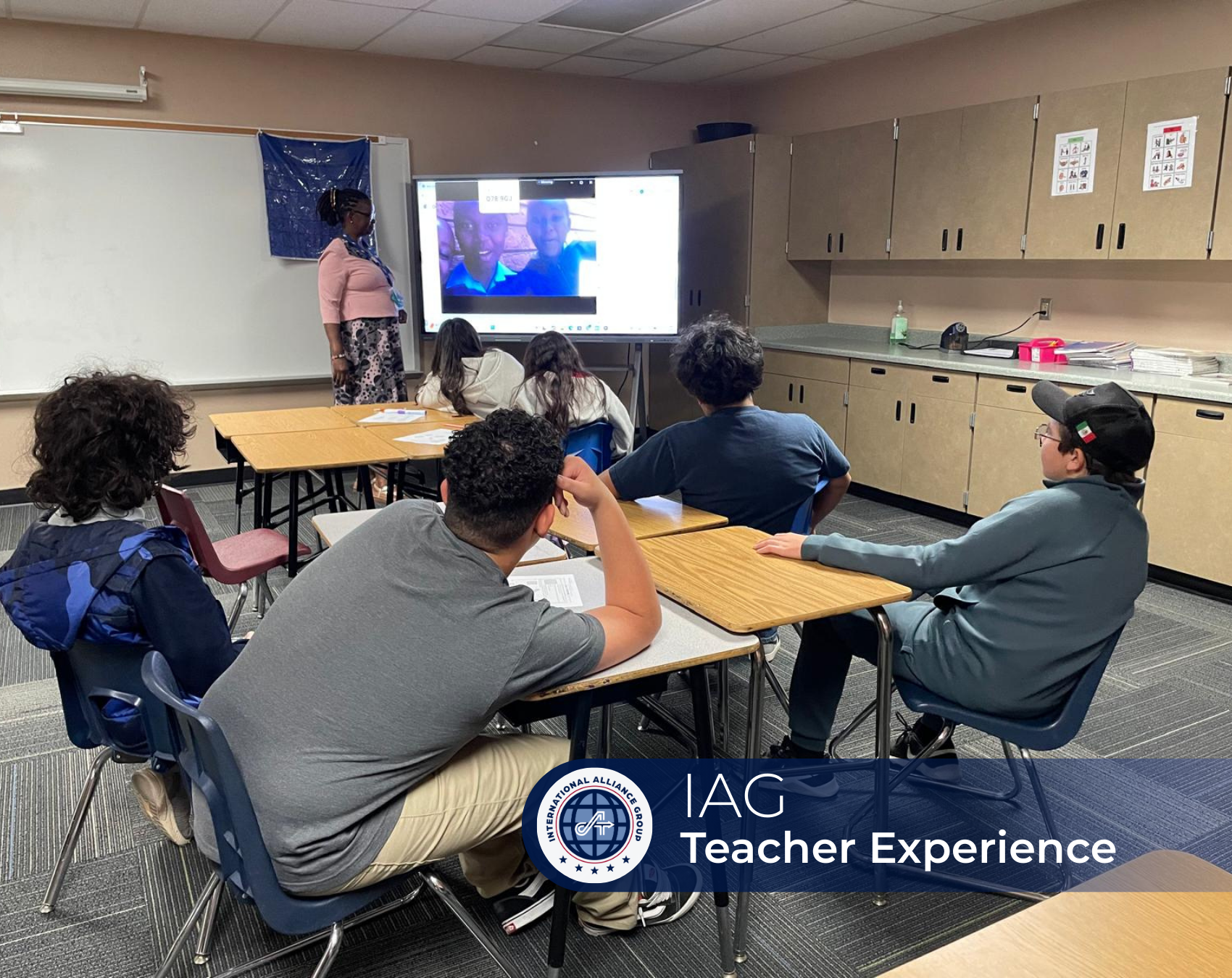
True education is about finding a common language that transcends borders, and for Catherine Atieno Obwaka, that language is a mix of specialized support and Kenyan melody. Originally from Kenya , Catherine has brought her profound expertise in Special Needs Education to the Buckeye Elementary School District in Arizona , where she serves as a Resource Teacher for grades 6, 7, and 8. 

A Foundation of Specialist Excellence 

Catherine’s journey is rooted in a deep academic commitment to inclusion. She holds a Bachelors in Education in Special Needs Education from Kenya Methodist University , supplemented by a Diploma in Special Needs Education (Inclusion). With a solid background as a Primary Teacher in her home country , she arrived in the U.S. driven by a desire to grow her professional journey and experience diverse learning environments on a global scale. 

As a SPED specialist, Catherine provides essential support to students, ensuring that every learner, regardless of their challenges, has the opportunity to thrive in a multicultural setting. 

The Melody of Cultural Exchange 

Beyond the curriculum, Catherine has enriched her Arizona school community by sharing the vibrant heritage of Kenya. One of the most touching moments of her exchange journey has been hearing her American students sing local Kenyan songs

“Seeing my students sing my local songs in a different accent really amuses me,” she shares. 

To bring her culture to life, Catherine has shared traditional Maasai attire and jewelry with her students and colleagues. These moments do more than just decorate a classroom; they foster global empathy and curiosity, allowing students to experience the beauty of East African traditions firsthand. 

Real Results, Lasting Impact 

The impact of Catherine’s presence is evident in both the data and the classroom environment. Since she began her cultural exchange, she has noted significant progress in her students’ reading and writing skills. Perhaps more importantly, she has helped her students develop the focus and discipline needed to settle into their assignments and take pride in their work. 

Her dedication has not gone unnoticed. Her Principal recently reached out via email to express deep appreciation for her hard work and the positive energy she brings to the district. 

A Message for the Future 

For Catherine, the essence of being an international educator is about mutual growth. While she navigates the nuances of American social life and enjoys discovering local favorites like fast food and coffee , she remains focused on her goal: becoming a more versatile, globally-aware professional. 

Her story serves as a reminder that when we open our classrooms to the world, we don’t just teach—we transform. 

09Mar

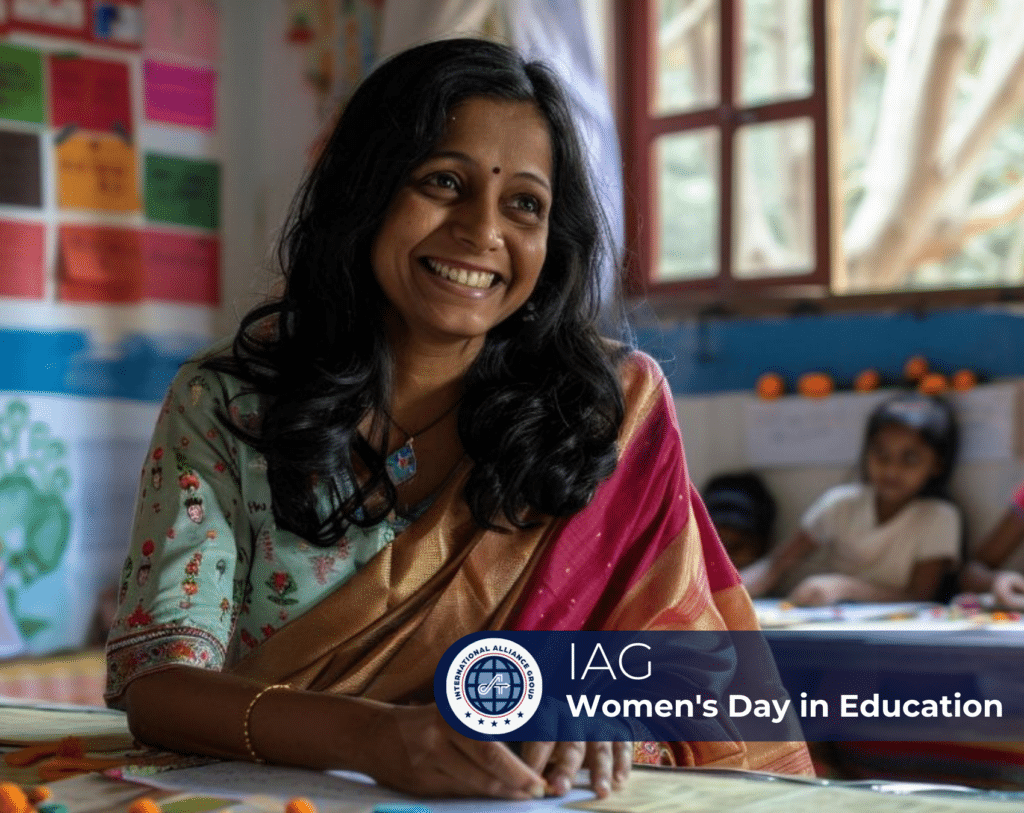
Celebrating International Women’s Day in Education  

On March 8th, the world pauses to celebrate International Women’s Day, a time to honor the resilience, leadership, and transformative power of women everywhere. In the field of education, this day holds a special significance, especially for the hundreds of women who participate in the J-1 Visa Program. These educators do more than share a curriculum; they cross borders, bridge cultures, and redefine what it means to be a global leader. 

The Bravery of the Journey 

Choosing to become an international teacher is an act of profound dedication. It requires the bravery to leave one’s home, family, and familiar landscapes to embrace the unknown. At International Alliance Group (IAG), we witness this courage every day. 

These women aren’t just traveling to teach; they are pioneers of cultural exchange. By stepping into a U.S. classroom, they bring with them the richness of their heritage and the strength of their personal stories. They prove that while borders may exist on maps, the heart of a teacher knows no boundaries. 

The “Multiplier Effect”: Role Models Without Borders 

One of the most powerful aspects of having a female international educator in the classroom is what we call the “multiplier effect.” When a young student—especially a young girl—sees a woman from another part of the world leading a classroom with expertise, passion, and grace, her own horizon expands. She no longer sees the world as a distant place, but as a space full of possibilities. 

  • Representation Matters: Seeing a female teacher from México, India, or the Philippines successfully navigating a new culture and language teaches students that they, too, can be brave. 
  • Global Perspectives: These educators challenge stereotypes and provide a living example of female empowerment in a global context. 
  • Empathy in Action: By sharing their journey, these women foster mutual understanding, teaching their students that diversity is a strength to be celebrated. 

Education: The Ultimate Tool for Empowerment 

At the core of the J-1 Visa Program is the belief that education is the most powerful tool for change. We honor the women who use this tool to foster peace and cooperation between nations. These educators are not just teaching lessons from a book; they are inspiring the next generation to think beyond their own neighborhoods and to dream on a global scale. 

The impact of a female international teacher is a ripple effect. It starts with a single lesson, grows into a student’s newfound curiosity about the world, and eventually blossoms into a more inclusive and connected society. 

Want to discover the real-life stories behind this impact? 

We invite you to read our previous post: “Voices of IAG: Stories of Courage and Success in the Classroom,” where educators like Isaura from Nicaragua and Jeanie Mae Hernal  from the Philippines share how they’ve seen their students gain confidence and reach for new horizons through the power of cultural exchange. 

Read storie: IAG Teacher Honored: From Nicaragua to Award-Winning Educator

Read storie: The “Classroom Bayanihan” Model: Teaching Collaboration Through Culture 

Read storie: From the Philippines to Detroit: Bridging Cultures Through Science 

At International Alliance Group, we are immensely proud of the women who make our mission possible. To the mentors, the explorers, and the ambassadors of culture: thank you for your dedication. By sharing your global voices, you are creating a local impact that will resonate for years to come. You are not just teaching the future; you are empowering it. 


05Mar

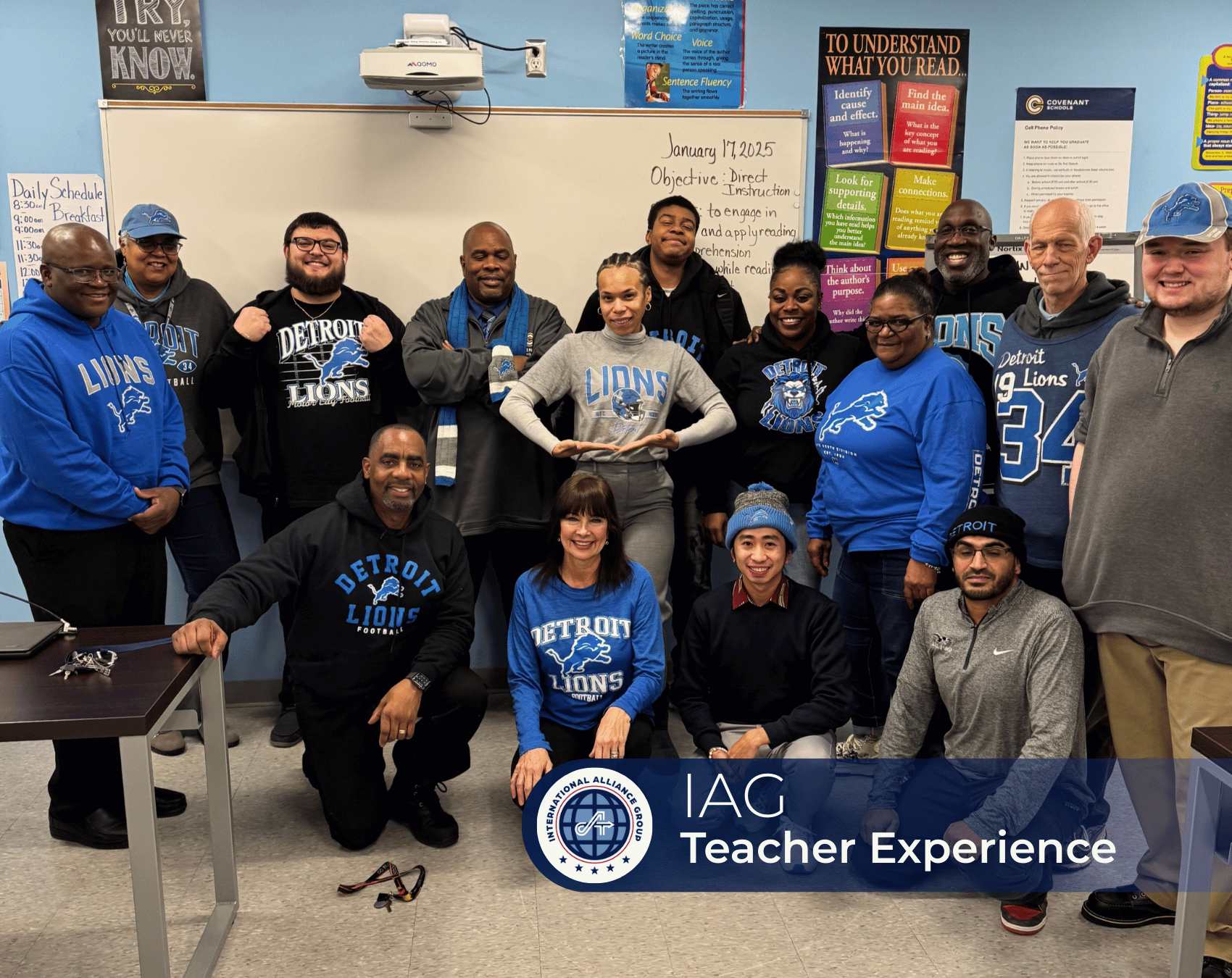
From the Philippines to Detroit: Bridging Cultures Through Science 

Education knows no borders when the goal is to inspire the next generation. Today, we share the inspiring journey of Artem Ubarra, an outstanding Filipino educator who has brought his passion for biological sciences from the Philippines to the state of Michigan, enriching the educational landscape at Covenan High School in Detroit

Academic Excellence with a Global Perspective 

Artem brings years of experience and a solid academic foundation to his classroom. He holds a Bachelor of Secondary Education major in Biological Sciences and a Master of Arts in Education major in General Science. This scientific expertise, combined with being a Licensed Professional Teacher in both the Philippines and Michigan, allows him to provide a high-level learning environment for students in grades 9-12. 

His motivation for joining the International Alliance Group (IAG) cultural exchange program was clear from the start: the desire to grow as a professional in a multicultural setting and the opportunity to make a meaningful impact on his students’ lives while sharing his rich cultural heritage. 

The Spirit of “Bayanihan” in the Classroom 

One of Artem’s most significant contributions has been introducing fundamental Filipino values to his educational community. Through gestures of respect, such as the use of “po” and “opo,” and the celebration of Filipino Month, Artem fosters an environment of courtesy and mutual understanding. 

However, it is the concept of “Bayanihan”—the spirit of communal unity and helping one another—that has truly transformed his classroom. By implementing collaborative group work and using storytelling to explain complex scientific concepts, he has enabled his students to feel more connected and engaged with their learning. 

Transforming Lives and Achieving Excellence 

The impact of this cultural exchange is tangible. Artem has noticed significant growth in his students’ confidence, participation, and critical thinking skills. His dedication has not gone unnoticed; he was honored as the “Featured Teacher of the Month” in his school district. 

Administrators and colleagues have praised his creativity and his ability to create a supportive and inclusive learning environment. For Artem, the greatest reward is seeing his students become independent learners and globally aware citizens. 

“Cultural exchange in education is invaluable because it broadens students’ perspectives, fosters empathy, and prepares them to thrive in a diverse world.” — Artem Ubarra. 

Are you inspired by Artem’s journey and ready to become a cultural ambassador? Embarking on a cultural exchange with International Alliance Group (IAG) offers more than professional development—it is a unique opportunity to share your heritage, foster global empathy, and impact the lives of students in a meaningful way. Start your own journey toward becoming a globally competent educator today.

02Mar

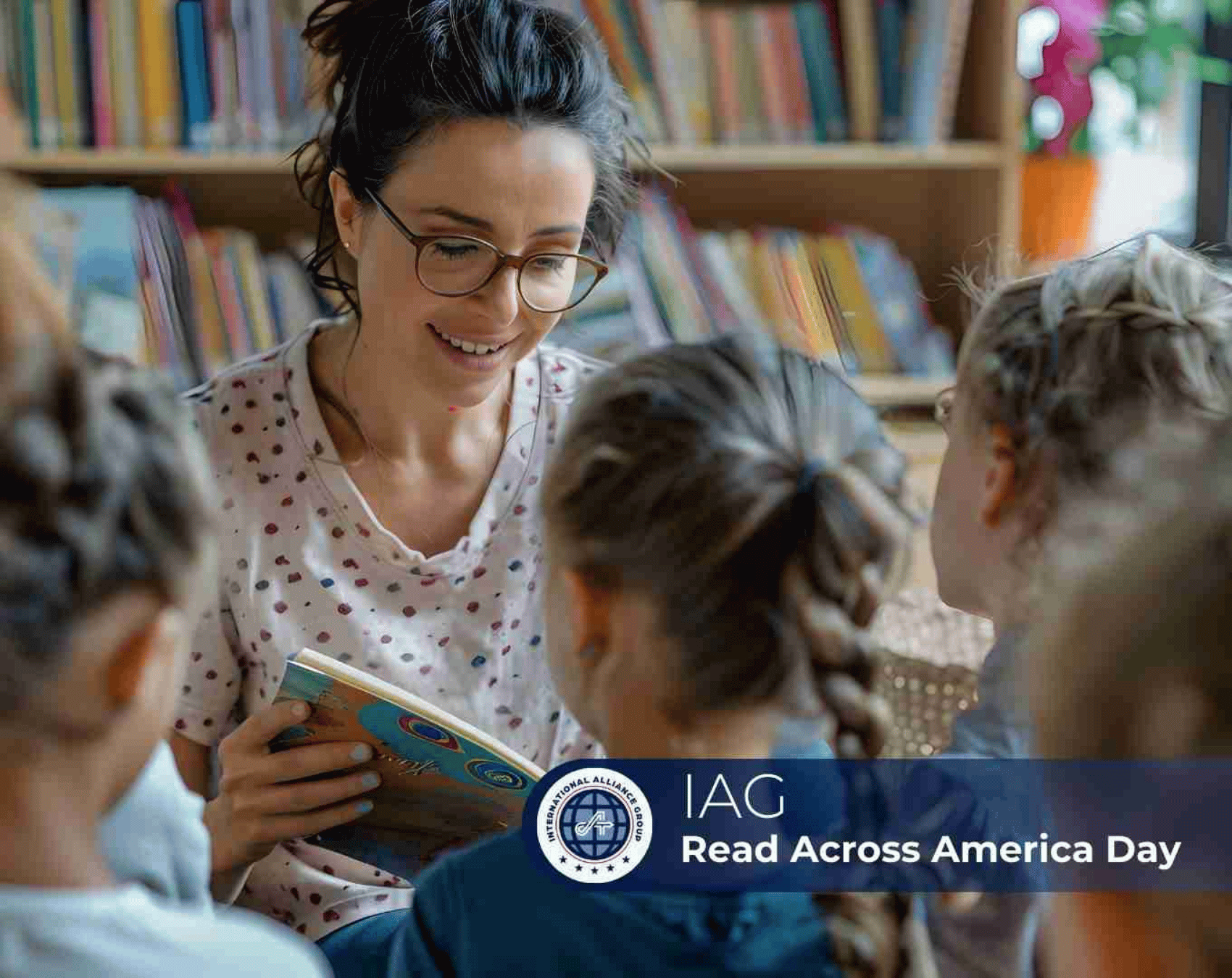
Bringing World Cultures to Life Through Adapted Reading 

Every March 2nd, classrooms across the United States transform into a sea of red-and-white striped hats to celebrate Read Across America Day. It is a day dedicated to the joy of literacy and the magic of a good book. However, for international educators participating in the J-1 Visa Program with International Alliance Group (IAG), this day represents something even deeper: a chance to turn the classroom into a global stage. 

The Heart of the Exchange: Folklore as a Bridge 

While traditional celebrations often focus on local classics, international teachers bring a unique “Exchange” angle to the table. Imagine a classroom in the U.S. where, instead of a standard story, students are transported to the mountains of Argentina through the legend of the Yerba Mate, or to the vibrant landscapes of Mexico through ancient folk tales. 

These educators aren’t just reading words on a page; they are sharing their world. By bringing their home country’s legends to life, they act as cultural ambassadors, fostering a sense of wonder and global curiosity in their students. This is the true spirit of the cultural exchange—breaking down geographical barriers through the power of narrative. 

Making Literacy Universal Through Adapted Reading 

A hallmark of a great educator is the ability to ensure that every child, regardless of their learning style or ability, can access the magic of a story. International teachers at IAG excel in adapted reading, using creative methods to make complex cultural tales accessible to all. 

To bring these “Stories Without Borders” to life, teachers often use: 

  • Sensory Tools: Incorporating the sounds of traditional music, the scent of spices, or the texture of ethnic fabrics to ground the story in reality. 
  • Visual Symbols and Realia: Using physical objects and icons to help students with different processing needs follow the plot. 
  • Simplified, Rhythmic Language: Destiling deep cultural concepts into clear, engaging language that resonates with young learners and English language learners alike. 

By adapting these stories, teachers demonstrate that literacy is a universal right. They ensure that the message of the story—and the culture behind it—is felt by every heart in the room. 

The Lasting Influence on Young Minds 

The presence of an international teacher changes the way a child sees the world. When a student listens to a story from a different continent, told by someone who calls that place home, empathy grows. They begin to see “different” as “fascinating” rather than “foreign.” 

These educators foster global citizenship from an early age. They show their students that while our languages and traditions may vary, the human experience—the love for a hero, the lesson of a fable, and the joy of a shared laugh—is exactly the same everywhere. 

At International Alliance Group, we believe that every story shared is a seed of understanding planted for the future. As we celebrate Read Across America, we honor the international teachers who go beyond the pages to share their essence, their history, and their passion. When we adapt a story, we aren’t just teaching children how to read; we are teaching them how to connect. This bridge between cultures is the most important story we can ever tell.